



Hours of hunching over a keyboard tend to settle in the same places: rounded shoulders, a tight upper back, a neck that feels stiffer by the afternoon. These shoulder stretches target exactly those areas, and they’re simple enough to do without leaving your chair.
Quick Summary: These shoulder stretches focus on shoulder blade mobility and chest opening to counteract the rounded, forward posture common after desk work. They take about 10 minutes total, require no equipment, and work best done in short breaks throughout the day rather than all at once.
This guide covers five stretches worth adding to your day, why desk posture creates this specific kind of tension in the first place, and how often to realistically fit them in.
Editor’s Note: We initially treated these as a once-a-day, end-of-day routine. What actually made a noticeable difference was breaking them up — doing one or two stretches every hour or two rather than saving everything for a single session after work. The tension simply doesn’t build up as much in the first place.
Why Desk Work Creates This Specific Kind of Tension
Sitting for extended periods with shoulders rounded forward and the neck bent toward a screen places sustained strain on the upper back and shoulder muscles. Office workers commonly experience a high prevalence of altered shoulder blade movement patterns linked to this posture, which is part of why neck and shoulder stiffness is such a widespread complaint among people who sit at a desk for most of the day.
The good news is that this kind of tension responds well to short, regular movement — research-backed stretch routines focused on shoulder blade mobility have been shown to help reduce the stiffness associated with prolonged sitting. For deeper upper back stiffness that persists beyond shoulder-level tension, T-Spine Mobility Exercises address the thoracic spine directly and work well alongside these stretches.
5 Shoulder Stretches for Desk Work

1. Shoulder Rolls
Sit or stand with your back straight. Lift your shoulders up toward your ears, then roll them back and down in a slow, controlled circle. Repeat eight to ten times, then reverse direction. This is one of the simplest ways to get blood moving through tight shoulder muscles.

2. Cross-Body Shoulder Stretch
Raise one arm and bring it across your chest. Use your other hand to gently pull the elbow toward your body, holding for 15 to 30 seconds before switching sides. This targets the back of the shoulder, an area that often tightens from hours of typing.

3. Chest Opener
Sitting or standing, draw your shoulder blades back and down while gently opening the front of your shoulders. You can interlace your fingers behind your back and lift your hands slightly, or simply hold the position with your chest lifted. This directly counters the forward-rounded posture that desk work encourages.

4. Neck Side Stretch
Sit upright and gently tilt your head to one side, bringing your ear toward your shoulder without lifting the shoulder itself. Hold for 15 to 20 seconds, then repeat on the other side. This eases tension that often travels from tight shoulders up into the neck.

5. Doorway or Wall Chest Stretch
Standing near a doorway or wall, place your forearm against the frame at shoulder height and gently lean forward until you feel a stretch across the front of your shoulder and chest. Hold for 20 to 30 seconds per side. This deeper stretch is particularly useful at the end of a long day at the desk.
Editor’s Note: A common question is whether these stretches should feel intense to be effective. They shouldn’t. A light, sustained stretch — never to the point of sharp pain — is the goal. If something feels wrong rather than simply tight, that’s a sign to stop and check in with a physical therapist rather than push through it. Pairing these with Back Massage Techniques in the evening creates a more complete tension-relief routine for desk workers.
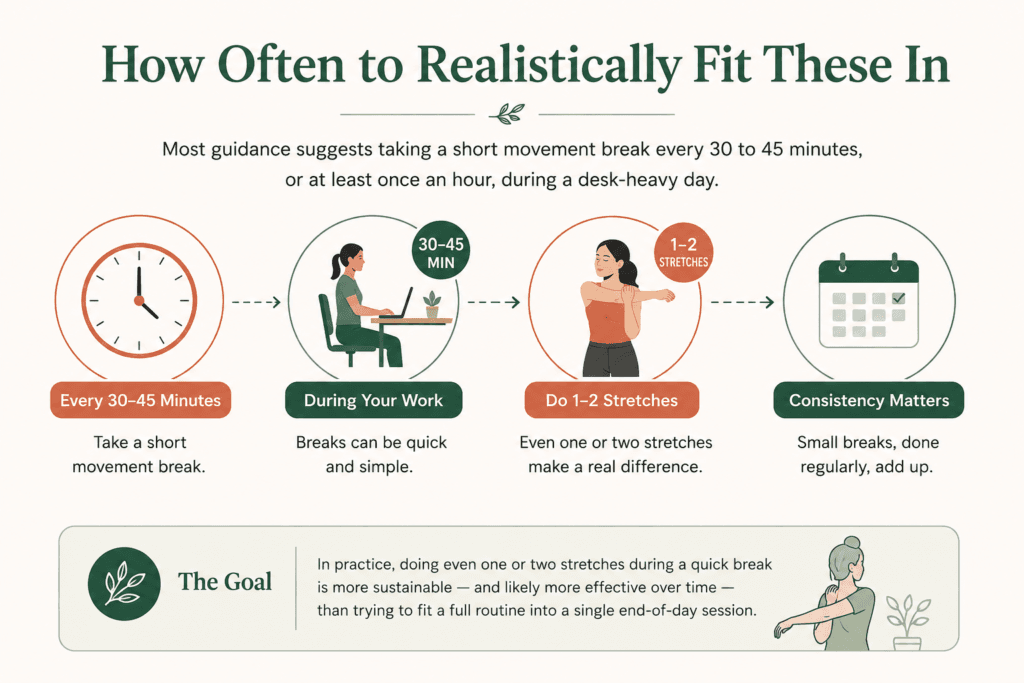
How Often to Realistically Fit These In
Most guidance suggests taking a short movement break every 30 to 45 minutes, or at least once an hour, during a desk-heavy day. In practice, doing even one or two stretches during a quick break is more sustainable — and likely more effective over time — than trying to fit a full routine into a single end-of-day session.
Who These Shoulder Stretches Are Best For
Best for: anyone who sits at a desk or computer for most of the day, people noticing stiffness or tension by the afternoon, those wanting a simple, no-equipment habit to build into work breaks, and anyone building a broader desk-worker wellness routine alongside T-Spine Mobility Exercises or Foot Massage Techniques.
Less ideal for: those with a diagnosed shoulder injury, recent surgery, or significant pain rather than general stiffness — in these cases, a physical therapist can recommend stretches appropriate for the specific condition.
If fitting in a full routine feels unrealistic, starting with just shoulder rolls and the chest opener — done for a minute or two every hour — tends to be the easiest habit to actually maintain.
Frequently Asked Questions About Shoulder Stretches for Desk Work
How long should I hold each shoulder stretch?
Most of these stretches are held for 15 to 30 seconds per side, which is generally enough to feel a release in tension without needing to hold longer.
Can shoulder stretches alone fix poor posture?
Stretching helps, but it works best alongside ergonomic adjustments — monitor height, chair support, and keyboard position — since posture issues are often caused by workstation setup as much as muscle tightness.
Is it better to stretch throughout the day or all at once after work?
Spreading short stretch breaks throughout the day tends to prevent tension from building up in the first place, which is generally more effective than a single longer session after the tension has already accumulated.
When should I see a doctor instead of just stretching?
If pain is sharp, doesn’t improve with rest and gentle movement, or is accompanied by numbness or tingling down the arm, it’s worth seeing a healthcare provider rather than relying on stretching alone.
Final Thoughts: Small Breaks Add Up
These shoulder stretches aren’t a dramatic fix, but consistency tends to matter more than intensity when it comes to undoing the effects of a desk-bound day. A minute or two every hour, repeated regularly, is a realistic habit that can meaningfully reduce how tight and tired your shoulders feel by evening.
Save this guide, set an hourly reminder, and explore more wellness tips at egella.com
Which stretch do you always forget to do? Tell us in the comments below.