

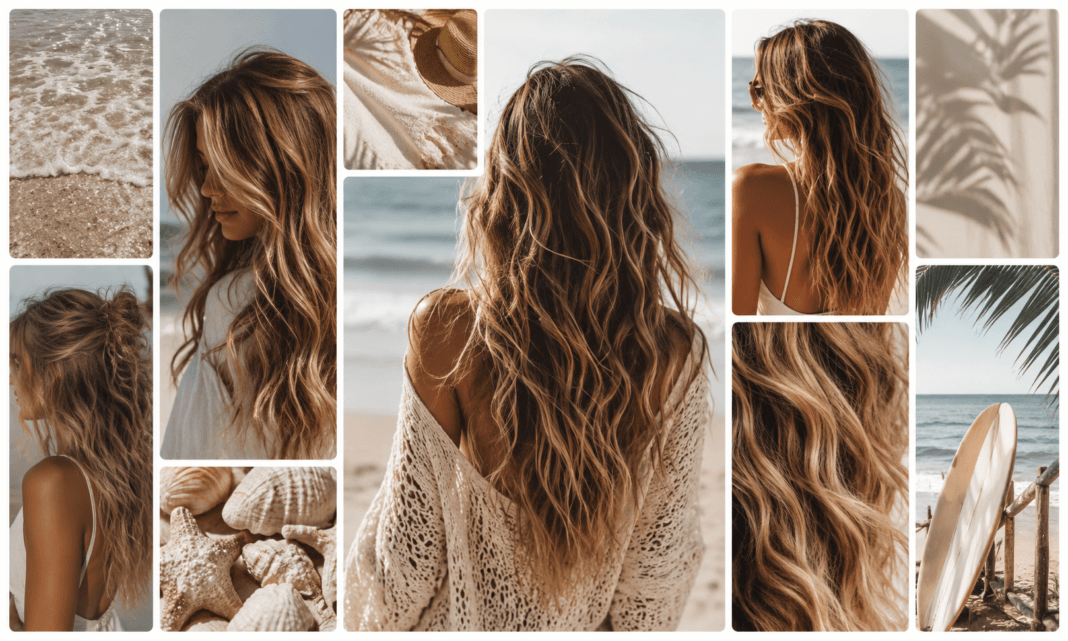

The version of this hairstyle that defined the early 2000s — stiff curls, crunchy salt spray, uniform bends — has quietly retired. In its place, summer 2026 has brought something looser, glossier, and far more wearable. Call it beach waves 2.0: softer bends, flatter roots, and a finish that looks genuinely lived-in rather than deliberately styled.
This guide covers what’s changed about the classic summer look, the “canyon waves” variation leading the trend, and exactly how to recreate the effortless texture at home.
Editor’s Note: Our first attempt looked more “curling iron” than “ocean air” — every wave was the same size and pointed the same direction. What fixed it was alternating the barrel direction section by section and leaving the very ends out of the iron completely. That one change made the difference between looking styled and looking like the wave just happened.
What Makes Beach Waves 2.0 Different
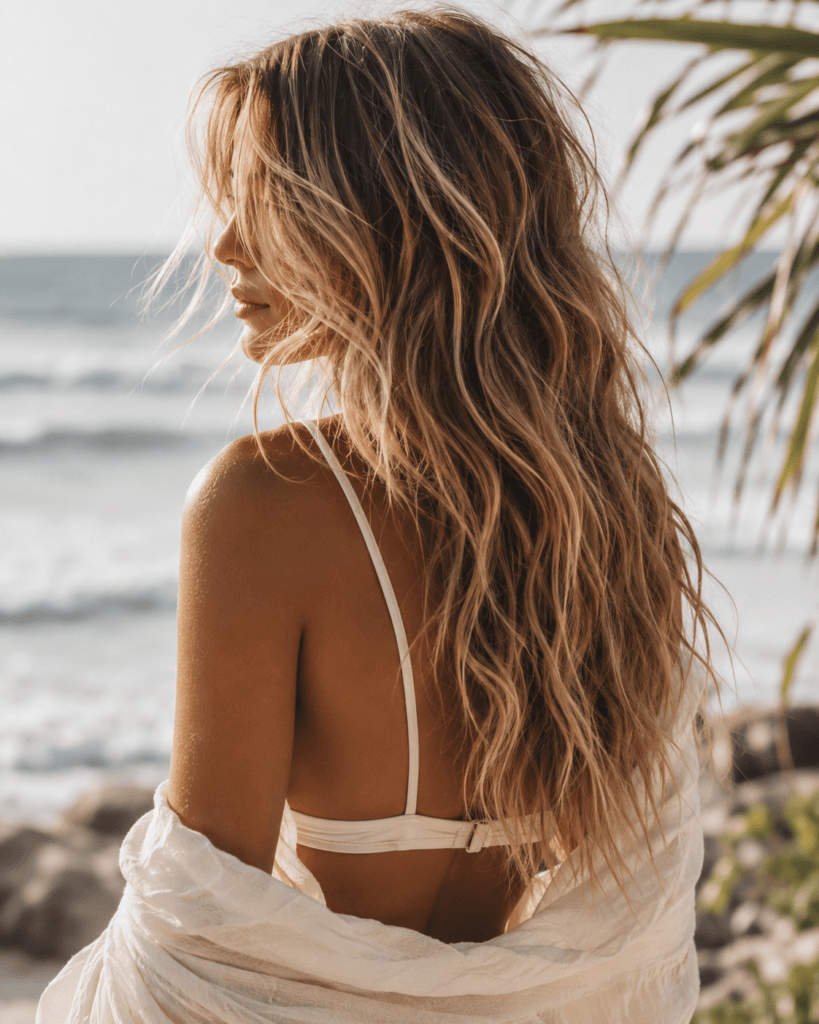
The original version of this look traces back to the late ’90s and early 2000s, when surf-inspired beauty and laid-back California style dominated pop culture — sun-kissed highlights, bronzed skin, and windswept texture became shorthand for effortless cool. By the mid-2000s, that texture had evolved into something more glamorous and voluminous, inspiring countless salon appointments built around big, structured curls.
Summer 2026’s version pulls back from that structure entirely. Rather than heavily styled curls, today’s iteration focuses on natural movement, flatter roots, and touchable texture — a look that prioritizes the appearance of healthy, light-catching hair over the appearance of an obvious styling session.
Canyon Waves: The Trend Within the Trend
If one variation captures where this category is heading in 2026, it’s canyon waves — a softer, more textured alternative that sits between traditional beach waves and classic curls. The waves bend and move differently throughout the hair rather than following one uniform pattern, creating a windswept effect that photographs beautifully from every angle.
Fashion editors and stylists increasingly point to this as a new vision of hair luxury — rather than relying on heavily styled curls, the goal is hair that looks healthy, dynamic, and a little bit lived-in. Part of the appeal is straightforward: people want beautiful hair that requires less maintenance while still delivering real visual impact.
Why This Texture Is Dominating Pinterest This Summer
Social media has played a major role in accelerating the shift, with heatless styling tutorials and sea salt sprays increasingly replacing the ultra-structured curling routines of years past. Part of the trend’s staying power comes from its sheer versatility — it works across hair lengths, textures, and personal styles while still reading as casual and easy.
The look has also gained serious red-carpet validation. Beachy waves and effortless curls were among the most repeated hair statements at major 2026 award shows, with stylists describing the goal as “unrestricted, loose, and free-flowing, with pieces that fell naturally… like they just landed there.” That deliberately undone quality is exactly what separates this version from the more polished, uniform waves of past summers.
How to Get Beach Waves 2.0 at Home — Step by Step
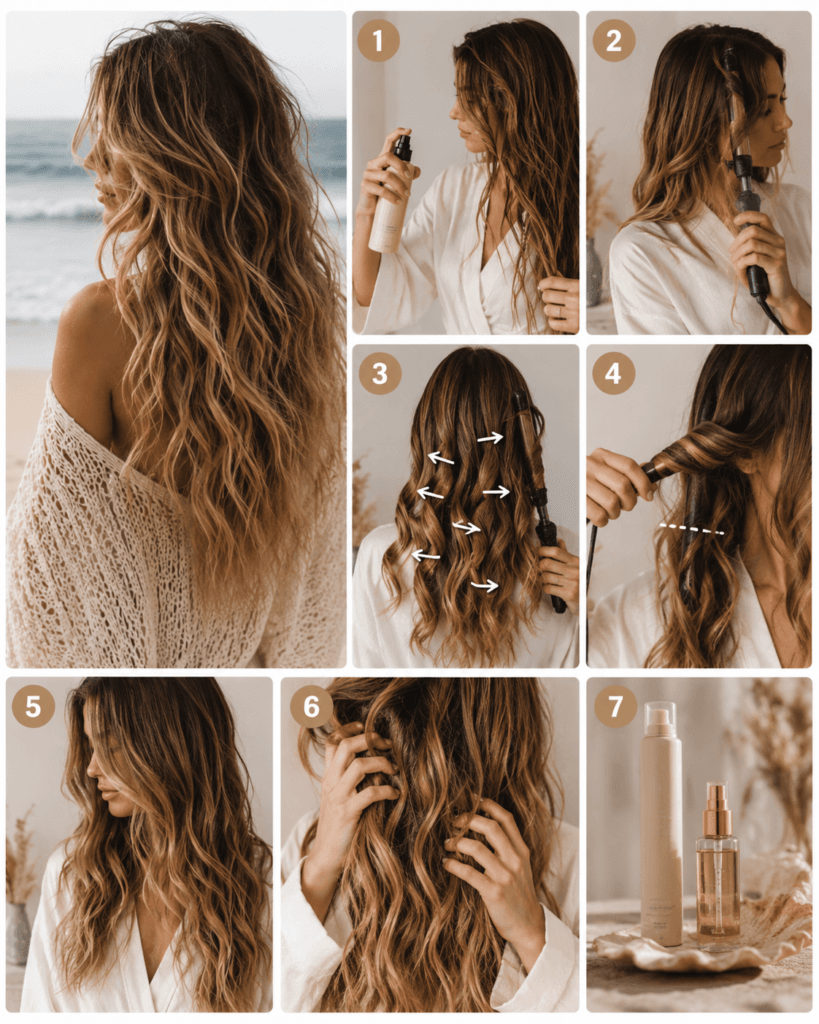
Step 1 — Start with a heat protectant. Apply to dry or slightly damp hair before any heat styling to prevent damage and preserve shine.
Step 2 — Use a large-barrel curling iron or wand. A bigger barrel creates looser, more natural-looking bends than a smaller one — the goal is soft movement, not tight ringlets.
Step 3 — Alternate the curl direction by section. Curling every section the same way creates the uniform, “obviously styled” look this trend specifically avoids. Alternating directions mimics how hair actually moves and dries naturally.
Step 4 — Leave the ends out of the iron. Curling all the way to the tips creates a more structured, pageant-style curl. Stopping short of the ends keeps the finish looser and more textured.
Step 5 — Let everything cool before touching it. Curls set as they cool; brushing or separating them too early loosens the wave before it has a chance to hold.
Step 6 — Separate with fingers, not a brush. Gently pulling sections apart with your fingers breaks up the curl into looser, more natural-looking waves. A brush will smooth out the texture this look depends on.
Step 7 — Finish with texture spray and a touch of shine oil. A lightweight texture spray adds movement without stiffness, while a small amount of oil on the ends keeps everything looking healthy rather than dry or crunchy.
Editor’s Note: A question we hear often is whether this look works without any heat at all. It genuinely can — overnight braiding or twisting on damp hair, combined with a texture spray the next morning, gets remarkably close to the same effect. The trade-off is less control over exactly where the bends land, which some people prefer for an even more undone result.
Who Beach Waves 2.0 Is Best For
Best for: long to medium-length hair with some natural movement already, anyone wanting a low-maintenance summer style, people layering this with Halo Hair for added dimension, and those who find structured curling routines too time-consuming for daily wear.
Less ideal for: very short hair, where the loose bend has less room to read clearly, and anyone wanting a sleek, polished finish rather than deliberately undone texture — a smoother style like a Slicked-Back Ponytail suits that preference better.
If your hair already has some natural wave or texture, this trend may require far less styling than you’d expect — sometimes just a texture spray and finger-separating damp hair is enough to get most of the way there.
Beach Waves 2.0 vs. Classic Beach Waves
| Aspect | Beach Waves 2.0 (2026) | Classic Beach Waves |
|---|---|---|
| Wave pattern | Varied, irregular, soft | Uniform, defined |
| Roots | Flat, natural | Often voluminous |
| Finish | Glossy, lived-in | Textured, salt-spray matte |
| Styling time | Shorter, more forgiving | More structured, precise |
Frequently Asked Questions About Beach Waves 2.0
What’s the difference between beach waves and canyon waves?
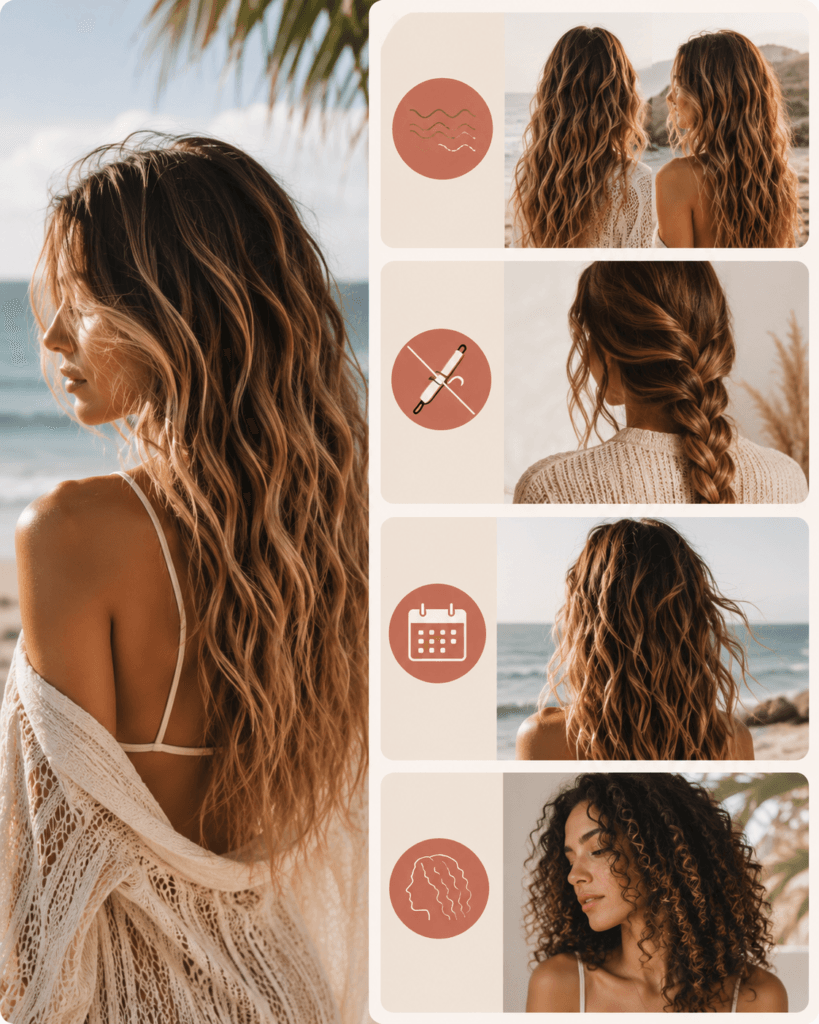
Canyon waves are a softer, more textured variation within the broader beach waves category, with bends that move differently throughout the hair rather than following one uniform pattern — creating a more natural, less structured finish.
Do I need a curling iron to get this look?
Not necessarily. Heatless methods like overnight braiding on damp hair, combined with texture spray the next day, can achieve a similar effortless wave, though with less precise control over placement.
How long does this style typically last?
With a light-hold texture spray and minimal touching, the wave pattern can last one to two days, especially when refreshed with a small amount of dry shampoo or texture spray at the roots.
Does this trend work on curly or coily hair?
Yes — many 2026 styling guides specifically encourage enhancing natural texture rather than fighting it, meaning curly and coily hair types can lean into their existing pattern with light styling rather than reshaping it entirely.
Final Thoughts: Effortless Is the Whole Point
What makes beach waves 2.0 genuinely different from past iterations isn’t a new product or technique — it’s a shift in what “done” hair is supposed to look like. The goal is no longer a perfectly uniform curl pattern but rather texture that looks like it happened on its own, even when it didn’t.
Save this guide, try the finger-separation step this weekend, and explore more hair trends at egella.com