

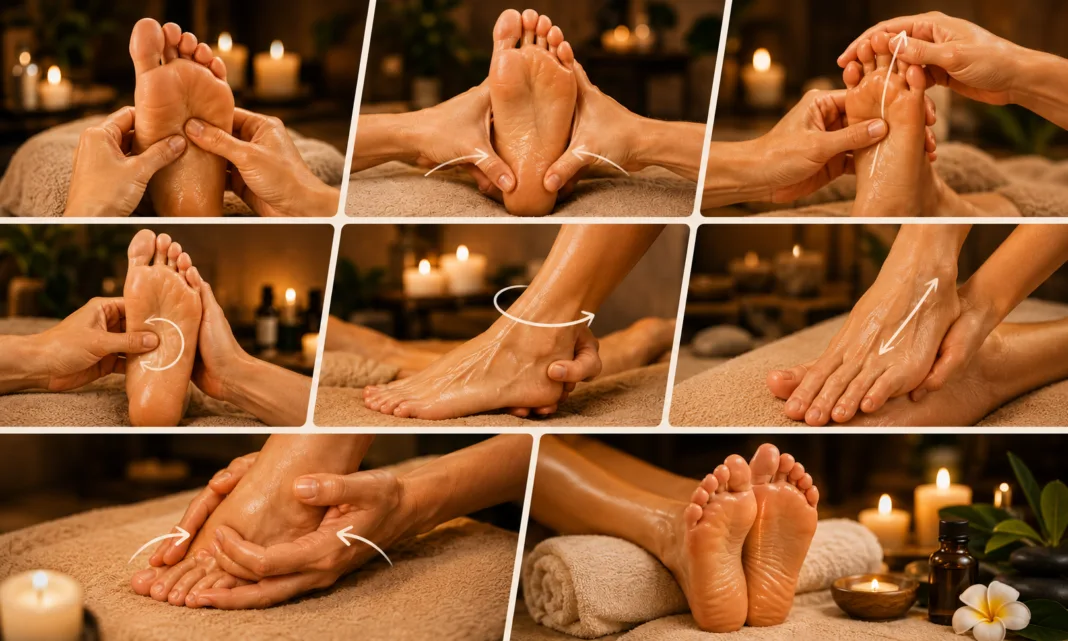

These **foot massage techniques** are simple, take less than ten minutes, and require no equipment — just your hands and a few minutes at the end of the day. Your feet carry you through everything, and most of the time, they get nothing in return.
Your feet carry you through the entire day — and most of the time, they get nothing in return. A few minutes of focused pressure in the right spots can change how the rest of your evening feels, and none of these techniques require a partner, a spa appointment, or any special equipment.
This guide covers seven foot massage moves you can do tonight, in exactly the order they work best — starting at the arch and finishing with a full foot wrap that signals to your whole body that it is time to unwind.
Quick Summary: Seven self-massage techniques for the feet, designed to be done in sequence after a long day on your feet. No equipment needed — just your hands, a few minutes, and a comfortable place to sit. The order matters: starting at the arch before moving to the heel sets up every technique that follows.
Editor’s Note: We tested all seven of these techniques after a full day of standing, and the order matters more than you would think. Starting with the arch before moving to the heel sets up every technique that follows — skipping straight to the toes without warming up the arch first tends to make the whole foot feel more tense rather than less. Work through them in sequence the first time, then adjust based on where you hold the most tension.
What These Foot Massage Techniques Actually Do
Self-massage helps reduce muscle tension and improve circulation after long periods of standing or walking. It is worth being clear about what it is not: a medical treatment, and not a substitute for professional care if you are dealing with a specific foot condition, persistent pain, or a recent injury. Think of these techniques as a relaxation habit — similar to stretching — rather than a cure.
Skip self-massage and see a professional if: you have an open wound or active infection, a suspected stress fracture, diabetes or neuropathy without medical guidance, a history of blood clots, or a recent foot injury within the past 48 hours.
7 Foot Massage Techniques to Try Tonight
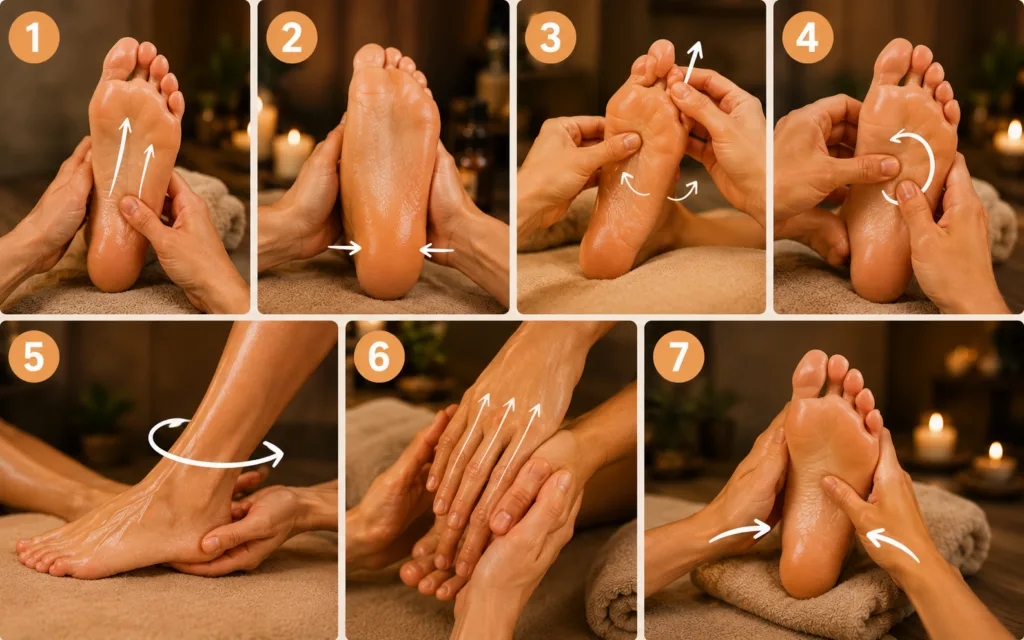
1. Arch Thumb Press
Rest one foot on the opposite knee. Using both thumbs side by side, apply slow, sustained pressure along the arch — from the heel edge to the ball of the foot. Hold each point for three to five seconds before moving forward rather than sliding continuously. The arch absorbs more daily tension than almost any other part of the foot, and it responds better to steady, deliberate pressure than to firm or fast movement. Going too hard here tends to make the foot tense up rather than release. How long: 60-90 seconds per foot.
2. Heel Palm Squeeze
Cup the heel in both palms and apply firm, even pressure from both sides simultaneously, holding for a few seconds before releasing. Repeat with slow circular kneading using the heel of your hand over the pad itself. The heel pad absorbs significant impact throughout the day and is often overlooked in favor of the arch — but loosening it here makes the techniques that follow more effective. How long: 45-60 seconds per foot.
3. Toe Pull and Stretch
Starting with the big toe, gently pull each toe outward with a steady, slow tension — hold for two to three seconds — then twist it slightly side to side before releasing. Work across all five toes. The small muscles between and around the toes accumulate tension that rarely gets addressed. This technique also helps if you wear narrow shoes or heels regularly, since those styles compress the toe joints over time. How long: 30-45 seconds per foot.
4. Circular Sole Massage
Place both thumbs on the ball of the foot and work in firm, overlapping circles moving toward the center of the sole. Use consistent pressure and slow the circles down rather than speeding up when you hit a tender spot. This is the technique that tends to feel most immediately satisfying — the ball of the foot holds concentrated tension, especially for anyone who stands or walks on hard surfaces. How long: 60-90 seconds per foot.
5. Ankle Rotation
Support the heel in one hand and use the other to slowly rotate the foot at the ankle — five to six rotations clockwise, then the same counterclockwise. Keep the movement smooth and controlled rather than forcing the range of motion. Ankle stiffness often contributes to how tired the whole foot feels, and this technique helps ease the surrounding tendons and ligaments rather than the muscles themselves. How long: 30 seconds per foot.
6. Top-of-Foot Glide
Using your thumbs or fingertips, glide firmly along the tendons that run from the ankle toward each toe, working outward from the center. Apply steady upward pressure — toward the ankle rather than toward the toes — and repeat three to four passes per tendon line. The top of the foot is easy to neglect because it does not carry direct pressure the way the sole does, but the tendons here connect everything, and loosening them tends to make the whole foot feel lighter. How long: 45-60 seconds per foot.
7. Full Foot Wrap
Finish by wrapping both hands around the entire foot — palms on the sole, fingers over the top — and apply gentle, even compression for 10-15 seconds. Release slowly. Repeat two to three times, moving the wrap slightly higher toward the ankle each time. This is less a massage technique and more a signal to the foot that the session is ending. The even, wrapping pressure helps the muscles transition out of active engagement, and most people find it noticeably calming. How long: 30-45 seconds per foot.
Editor’s Note: A question we hear often is how long a full session should take. Five to ten minutes per foot is enough to notice a difference — more than that offers diminishing returns for most people. Consistency several times a week matters more than any single long session. If you only have five minutes, prioritize techniques 1, 4, and 7 — arch, sole, and wrap — and you will still cover the three highest-impact areas.
How to Make These Techniques More Effective
Warm up first. A few minutes of soaking your feet in warm water, or even just warming your hands before starting, makes the muscles easier to work with and the whole session feel more relaxing.
Use a small amount of oil or lotion. It reduces friction and makes sustained pressure more comfortable. Any basic body lotion works — you do not need a dedicated massage oil.
Breathe through the pressure. This sounds minor but makes a real difference, especially on tender spots. Holding your breath while pressing tends to increase tension rather than release it.
Sit in a supported position. Trying to massage your feet while hunched forward on a bed is uncomfortable enough to make you stop early. Sit in a chair with your foot resting on the opposite knee, or prop your foot on a footstool at a comfortable height.
Foot Massage Techniques vs. Foot Massage Tools
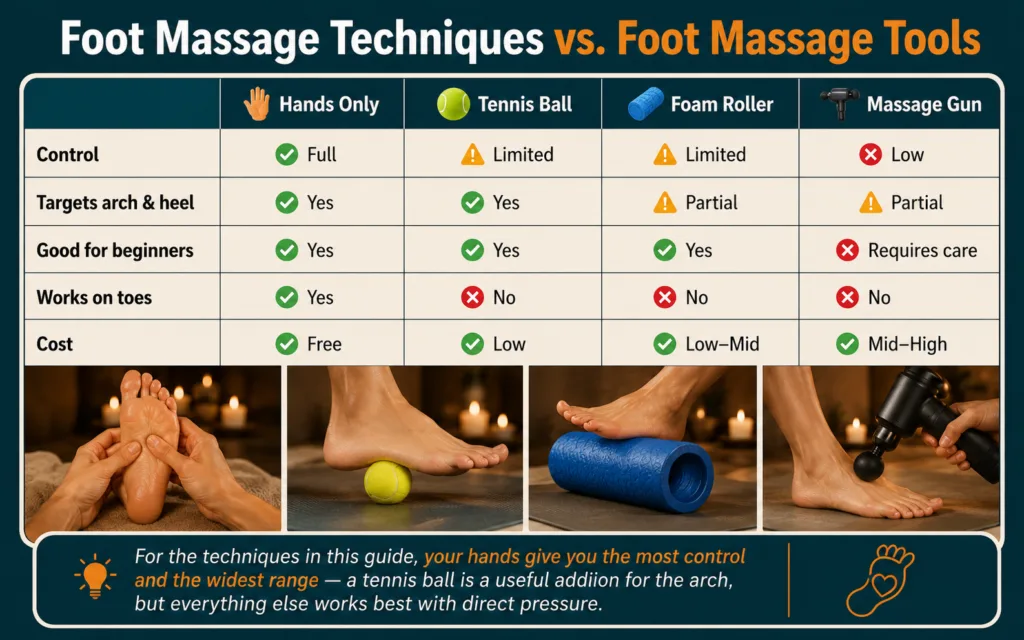
| Hands Only | Tennis Ball | Foam Roller | Massage Gun | |
|---|---|---|---|---|
| Control | ✅ Full | ⚠️ Limited | ⚠️ Limited | ❌ Low |
| Targets arch & heel | ✅ Yes | ✅ Yes | ⚠️ Partial | ⚠️ Partial |
| Good for beginners | ✅ Yes | ✅ Yes | ✅ Yes | ❌ Requires care |
| Works on toes | ✅ Yes | ❌ No | ❌ No | ❌ No |
| Cost | Free | Low | Low–Mid | Mid–High |
For the techniques in this guide, your hands give you the most control and the widest range — a tennis ball is a useful addition for the arch, but everything else works best with direct pressure.
Who These Foot Massage Techniques Are Best For
These techniques work best for anyone on their feet for long hours — nurses, teachers, retail workers, parents of young children — as well as people looking for a consistent evening wind-down ritual. They are also useful for anyone who wears heels or narrow shoes regularly and wants a simple way to counteract the compression that builds up over the day. No prior experience with massage is needed, and the whole sequence takes under 15 minutes once you have run through it a couple of times.
If you have a diagnosed foot condition, persistent pain, or a recent injury, check with a healthcare provider before starting — this routine is designed for general tension and relaxation, not for managing specific medical conditions.
Frequently Asked Questions
How often should I do these foot massage techniques?
A few times a week provides consistent relaxation benefits. Daily sessions are fine if you are on your feet often — there is no meaningful risk to doing this every evening as part of a wind-down routine.
Can foot massage actually relieve pain, or is it just relaxing?
For general tiredness and tension, most people experience genuine relief. For specific conditions like plantar fasciitis, self-massage may help manage symptoms but is not a cure — if pain is persistent or worsening, a podiatrist is the better starting point.
Is it safe to massage my feet if I have diabetes?
Gentle self-massage can be appropriate for some people with diabetes, but it should be done carefully, with attention to any skin changes or areas of reduced sensation, and ideally after checking with a healthcare provider first.
Do I need to do all 7 techniques every time?
No. If you are short on time, techniques 1 (Arch Thumb Press), 4 (Circular Sole Massage), and 7 (Full Foot Wrap) cover the three highest-impact areas and work well as a shorter routine.
Should I massage both feet even if only one is sore?
Yes — both feet carry the same load throughout the day, and working both tends to make the session feel more balanced and complete. Starting with the less sore foot first can also help calibrate your pressure before moving to the more sensitive one.
These seven foot massage techniques will not fix every type of foot discomfort — but as a regular evening habit, they offer a simple, effective way to close out the day and ease the tension that builds up from hours of standing, walking, or simply being on your feet.
Final Thoughts: Give Your Feet Five Minutes Tonight
These seven foot massage techniques won’t fix every type of foot discomfort — but as a regular evening habit, they offer a simple, effective way to close out the day and ease the tension that builds up from hours of standing, walking, or simply being on your feet. Start with the arch, finish with the wrap, and pay attention to how your body responds.
Save this guide, try it tonight, and explore more wellness tips at egella.com