

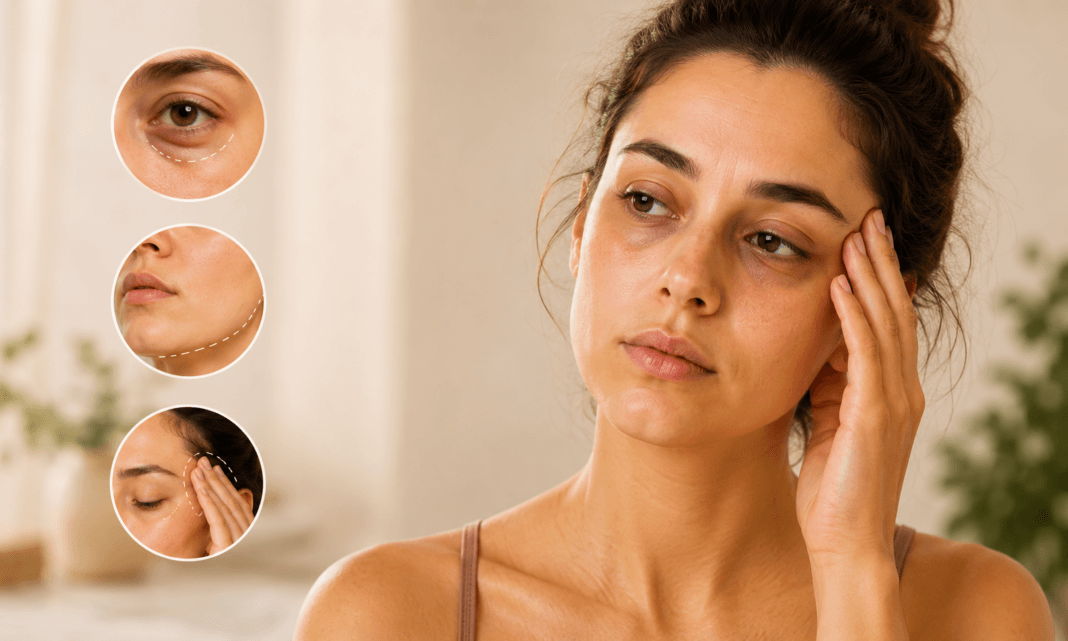

These lymphatic drainage moves have become one of the most talked-about self-care techniques in skincare — and for good reason. Gentle, simple to learn, and genuinely relaxing, they offer a low-risk morning ritual that many people find helps with puffiness, tension, and overall skin tone over time.
Quick Summary: Lymphatic drainage moves use light, sweeping pressure to encourage fluid movement toward the lymph nodes. Many people notice a reduction in morning puffiness with consistent daily practice. The technique is gentle, low-risk, and takes about 5 minutes — though scientific evidence for cosmetic benefits remains limited and largely anecdotal. Short on time? Start with just 3: Collarbone Sweep → Neck Glide → Under-Eye Sweep.
This guide walks through eight gentle moves for the face, what’s realistic to expect, and where the supporting research actually stands — including an honest look at what the evidence does and doesn’t say.
Editor’s Note: Going into this, we expected dramatic, visible results. What we found instead was a subtle, gradual difference with consistent practice — more “slightly less puffy by mid-morning” than an instant transformation. Setting that expectation upfront made the routine feel worthwhile rather than disappointing. The moves themselves are genuinely calming regardless of the cosmetic outcome, which is reason enough to keep going.
Signs You Might Benefit from Lymphatic Drainage Moves
Not everyone experiences the same degree of facial puffiness, but a few common patterns suggest lymphatic drainage moves are worth trying:
- Morning puffiness that takes hours to resolve — especially around the eyes and jawline after sleep
- A feeling of facial heaviness or congestion — skin that feels “full” rather than simply tight
- Skin that looks dull or tired even after adequate sleep, which can sometimes be linked to sluggish fluid movement
- Frequent tension in the jaw or temples — often accompanied by fluid retention in the surrounding tissue
- Increased puffiness during high-stress periods — stress affects lymphatic flow alongside everything else it disrupts in the body
What Lymphatic Drainage Actually Is
The lymphatic system removes waste and excess fluid from tissues throughout the body. When that flow slows down — due to stress, dehydration, lack of sleep, or simply sleeping in a position that allows fluid to settle in the face overnight — it can show up as visible puffiness, particularly around the eyes and jawline.
Lymphatic drainage moves are a gentle, light-pressure self-massage technique designed to encourage that fluid to move toward the lymph nodes, primarily located along the jaw, neck, and collarbones, where it can be reabsorbed by the body. This connects naturally to a broader Skin Barrier Repair approach — when skin is healthy and circulation is supported, the overall complexion tends to look more even and refreshed.
Where the Evidence Actually Stands
It’s worth being upfront about this: while manual lymphatic drainage is a well-established medical technique for treating lymphedema and post-surgical swelling, the research specifically supporting cosmetic claims — reduced facial puffiness, improved glow — is considerably more limited and often based on small studies or anecdotal reports rather than robust clinical evidence.
That doesn’t mean the technique is useless for everyday puffiness — many people report noticing a difference with consistent practice, and the gentle pressure involved carries very little risk for most healthy people. It simply means the dramatic claims often seen on social media outpace what’s currently been rigorously studied. Approaching this as a relaxing self-care habit with potential cosmetic benefits, rather than a guaranteed treatment, is the most honest framing.
8 Lymphatic Drainage Moves for the Face

1. Collarbone Sweep
Place your fingertips just above your collarbones and gently sweep outward toward your shoulders. This targets a key drainage point and is typically used to begin a facial lymphatic routine — opening the pathway before working upward.
Repetitions: 5 slow sweeps, both sides simultaneously.

2. Neck Glide
Using flat fingers, gently glide down the sides of your neck toward the collarbones. This follows the natural direction of lymphatic flow toward the larger drainage points lower in the body.
Repetitions: 5 slow glides per side.
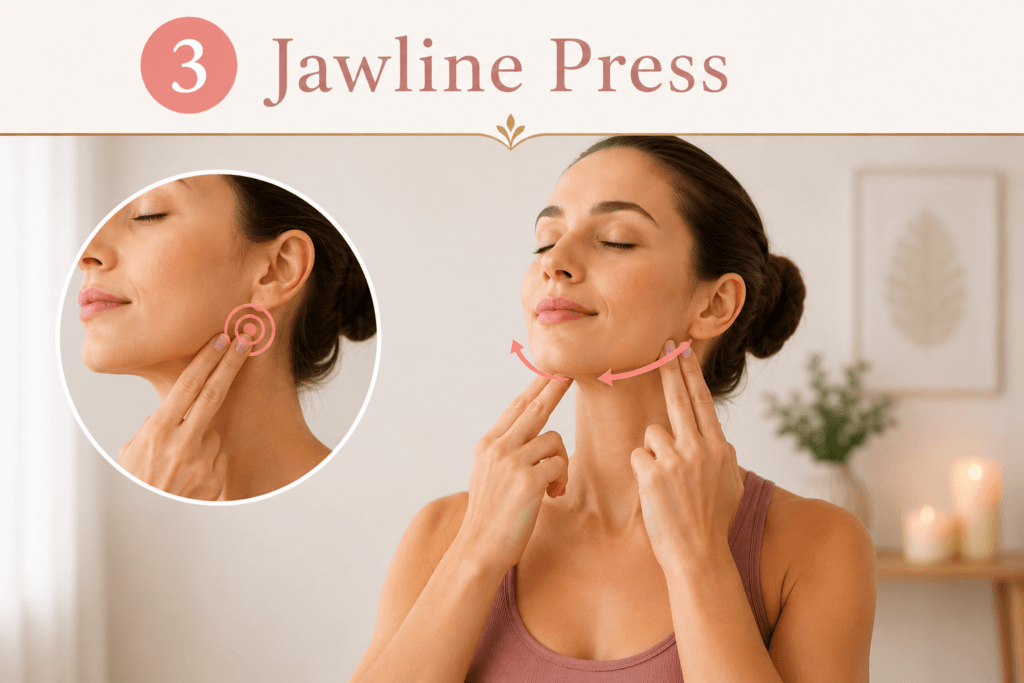
3. Jawline Press
Find the point where your jawbone meets your neck — the same spot that feels tender when a lymph node is swollen during illness. Apply gentle pressure here in small circles before moving along the jawline toward the chin.
Repetitions: Small circles for 20–30 seconds per side.

4. Cheek Circles
With the pads of your fingers on the apples of your cheeks, make slow, gentle circular motions, moving in a downward direction toward the jaw. Repeat about ten times, adjusting position slightly with each set.
Repetitions: 10 circles per cheek.
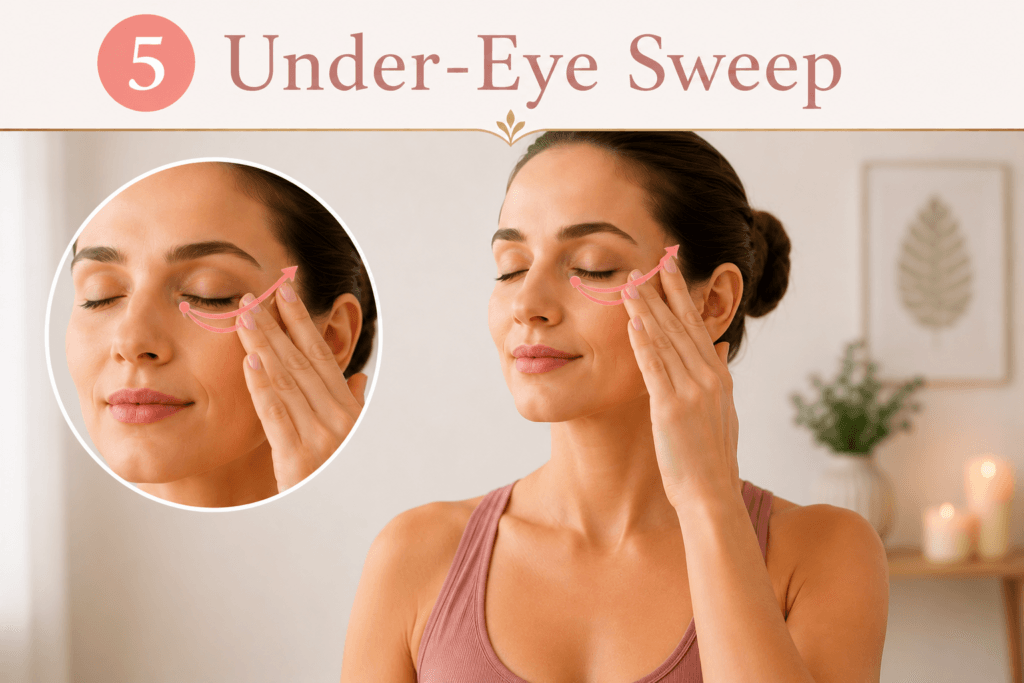
5. Under-Eye Sweep
Using your ring finger — naturally the lightest-pressure finger — gently sweep from the inner corner of the under-eye area outward and up around the orbital bone toward the temples. This is the most delicate move in the routine and benefits most from an especially light touch.
Repetitions: 5 slow sweeps per eye.

6. Forehead Circles
Using your fingers, make small gentle circles starting above the eyebrows and moving outward toward the temples. This covers the forehead, an area that accumulates tension and fluid particularly during high-stress periods.
Repetitions: 10 circles, working across the full forehead.
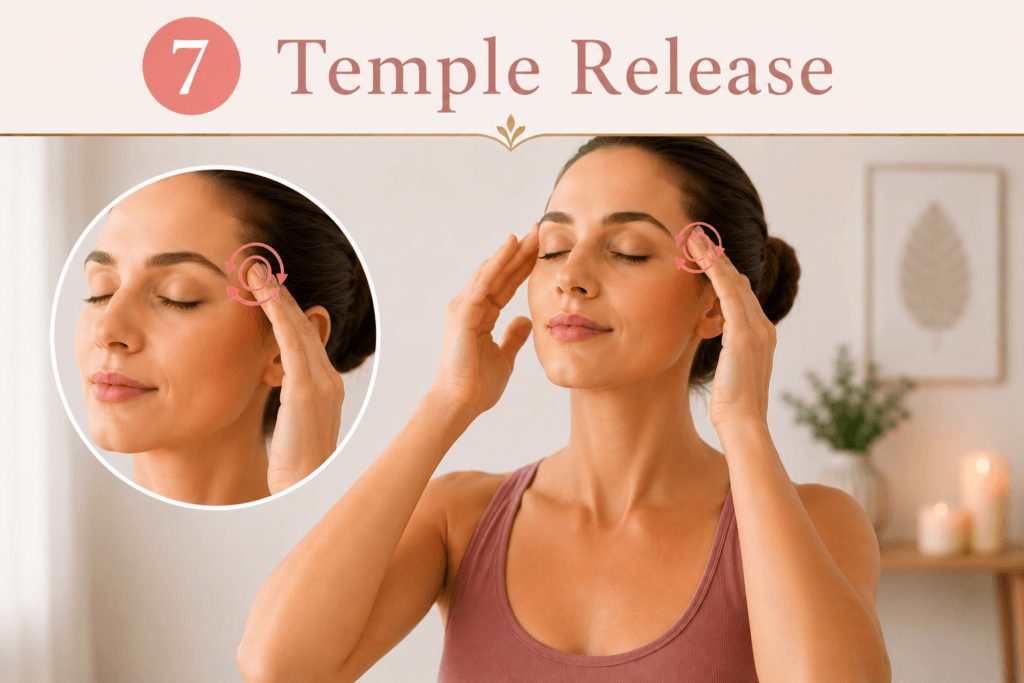
7. Temple Release
Apply light circular pressure at the temples, an area that often holds both tension and fluid buildup, especially after a poor night’s sleep or a screen-heavy day.
Repetitions: 10 slow circles per side.

8. Final Neck-to-Collarbone Flush
Finish by repeating the neck glide and collarbone sweep, guiding any fluid you’ve moved during the routine toward the drainage points where it can be reabsorbed. This closing move signals the end of the routine and helps the face settle into a more relaxed baseline.
Repetitions: 5 glides per side, followed by 5 collarbone sweeps.
Editor’s Note: A detail worth knowing: the direction of movement matters more than the pressure. These moves are meant to be genuinely light — firmer pressure doesn’t make the technique more effective and can simply irritate delicate facial skin. If you’re using a gua sha tool or jade roller alongside these moves, the same gentle-pressure principle applies. Many people find these moves work best immediately after cleansing, on slightly damp skin, before applying any serums.
Common Mistakes That Reduce Effectiveness
- Using too much pressure: This is the most common error — more pressure does not mean better results, and excess pressure can irritate skin rather than encourage fluid movement
- Moving upward rather than downward: Lymphatic fluid needs to move toward drainage points, which means most movements should flow downward toward the neck and collarbones, not upward
- Skipping the collarbone and neck: Starting directly on the face without first opening the drainage pathway at the neck and collarbones limits how effectively fluid can be moved
- Rushing the routine: Fast movements don’t give tissue time to respond — slow, deliberate pressure with a brief pause at each point produces better results than speed
- Expecting overnight results: Most people notice a difference after consistent daily practice over one to two weeks, not after a single session
Who Lymphatic Drainage Moves Are Best For
Best for: anyone dealing with occasional morning puffiness, those wanting a calming addition to their morning skincare routine, people pairing this with a broader Skin Barrier Repair or Skin Cycling routine, and anyone realistic about expecting gradual, subtle results rather than dramatic transformation.
Less ideal for: those with a diagnosed lymphedema condition — who should work with a healthcare provider for proper manual lymphatic drainage rather than a cosmetic self-massage routine — and anyone with an active skin infection or sinus infection, where it’s best to wait until that has cleared before resuming.
If you’re trying this for the first time, doing the full routine once a day for two weeks before judging whether it’s making a difference gives a more realistic sense of its effect than a single session.
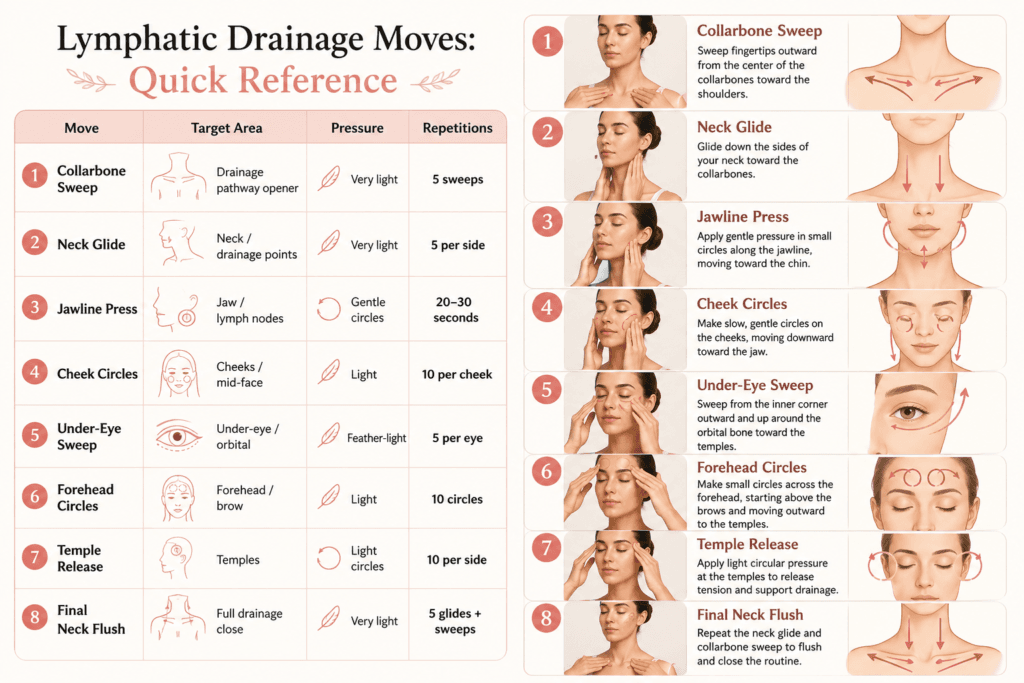
Lymphatic Drainage Moves: Quick Reference
| Move | Target Area | Pressure | Repetitions |
|---|---|---|---|
| Collarbone Sweep | Drainage pathway opener | Very light | 5 sweeps |
| Neck Glide | Neck / drainage points | Very light | 5 per side |
| Jawline Press | Jaw / lymph nodes | Gentle circles | 20–30 seconds |
| Cheek Circles | Cheeks / mid-face | Light | 10 per cheek |
| Under-Eye Sweep | Under-eye / orbital | Feather-light | 5 per eye |
| Forehead Circles | Forehead / brow | Light | 10 circles |
| Temple Release | Temples | Light circles | 10 per side |
| Final Neck Flush | Full drainage close | Very light | 5 glides + sweeps |
Frequently Asked Questions About Lymphatic Drainage Moves
Does lymphatic drainage massage actually reduce facial puffiness?
Many people report a noticeable difference with consistent practice, though the scientific evidence specifically for cosmetic benefits remains limited. It’s best understood as a gentle self-care habit rather than a clinically proven treatment.
How often should I do facial lymphatic drainage?
Once daily, often in the morning to address overnight puffiness, is the most common approach. There’s no strong evidence that doing it more frequently produces significantly better results.
Can I do lymphatic drainage if I have a cold or sinus infection?
It’s generally recommended to wait until any active infection has cleared, or to check with a healthcare provider first, since manipulating lymph nodes during an active infection isn’t typically advised.
Is a gua sha or jade roller better than using my hands?
Tools can be helpful additions but aren’t necessary — your hands give the most control over pressure, which is the most important variable in this technique. If you use a tool, apply the same light-pressure principle rather than pressing harder because it’s a tool.
How long before I notice a difference?
Most people find that consistent daily practice over one to two weeks produces a subtle but noticeable difference in morning puffiness. More dramatic results are less common and tend to be overstated in social media content.
Final Thoughts: A Gentle Habit, Realistically Framed
These lymphatic drainage moves are simple, low-risk, and worth trying if morning puffiness bothers you — just with realistic expectations. The evidence supports them as a generally safe, calming addition to a skincare routine rather than a guaranteed cosmetic fix, and that’s a perfectly reasonable place for a self-care habit to land. Start with the three-move version, add more as the routine becomes familiar, and give it two weeks before deciding whether it’s working.
Save this guide, try the morning routine tomorrow, and explore more skincare guides at egella.com
Have you tried lymphatic drainage moves before? Tell us what you noticed in the comments below.