

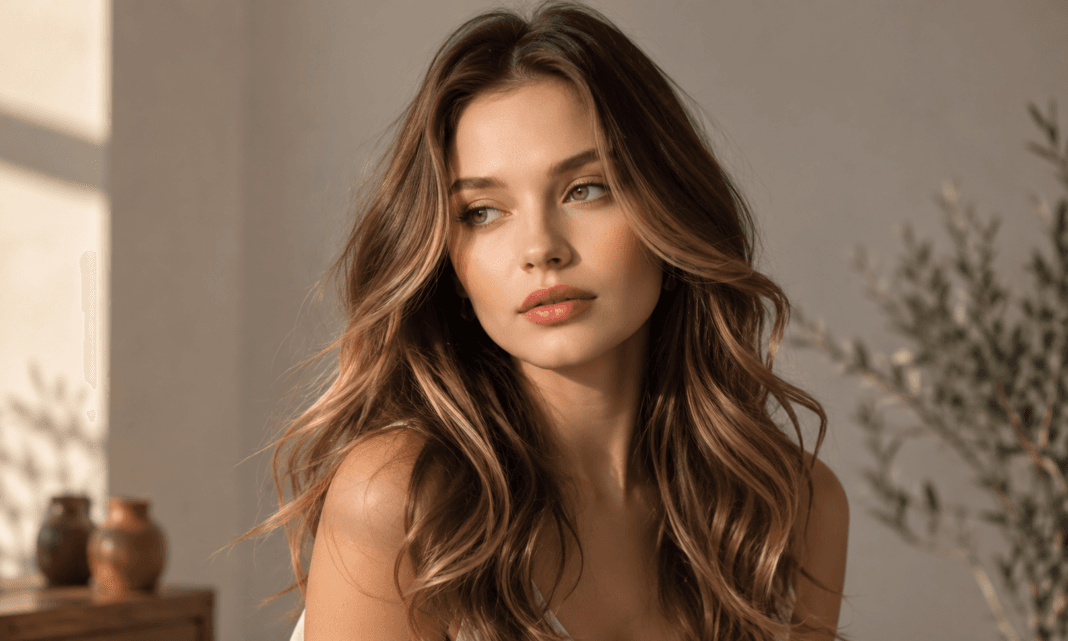

Full highlights take hours, cost a fortune, and grow out with an obvious line down the middle. Halo hair skips all of that. By placing color only where light naturally lands — the crown and the face-framing pieces — this technique delivers maximum visual impact from a fraction of the usual processing.
This guide explains exactly what defines the look, why stylists expect it to keep growing through 2026, and how to know if it’s the right color service for you.
Editor’s Note: We assumed this would look identical to a regular set of face-framing highlights, just with a fancier name. The difference became clear once we saw it from above and from the front separately — the crown placement is what makes the “halo” effect read in photos taken from a slightly elevated angle, which regular highlights don’t account for at all.
What Is Halo Hair?
Halo hair describes a placement technique where lighter pieces are concentrated specifically around the crown and the face-framing sections — not throughout the entire head. The result is a halo of brightness exactly where light naturally hits, with the hair underneath left in its natural shade.
This differs meaningfully from a full highlight service, which lightens hair throughout multiple sections regardless of where the light actually falls. Halo placement is deliberately concentrated, designed to maximize visual brightness relative to the amount of hair actually treated.
Why Halo Hair Is One of 2026’s Biggest Color Trends
The appeal starts with practicality. This placement costs roughly 30 to 40% less than a full highlight service, grows out without the harsh demarcation line that full highlights leave, and typically only needs touch-ups every twelve to sixteen weeks rather than the standard six to eight. For anyone tired of constant salon visits, that maintenance gap alone is a significant draw.
There’s also a visual-culture explanation behind the timing. Halo placement is specifically suited to how people are actually photographed now — selfies, video calls, and standard portraits all capture the top and front of the hair most prominently. Strategically placed color in exactly that zone means the highlight has outsized impact relative to how much hair is actually lightened, showing up clearly in nearly every forward-facing photo.
The technique also connects to a broader 2026 hair color movement toward high-gloss, dimensional color with real contrast, after several years dominated by flatter, single-process shades. Industry colorists describe next-generation shine and bold personalization as the defining themes of the year, and this placement-based approach delivers exactly that kind of dimension without requiring an all-over color change.
Who Halo Hair Works Best For
Round or Square Face Shapes
Lighter pieces placed underneath the crown and around the face can elongate and visually lift rounder or more angular face shapes, softening strong angles without altering the haircut itself.
Fine or Thin Hair
Strategic dimension at the crown creates the illusion of fullness and movement that flat, single-tone hair often lacks — making this placement particularly flattering for finer hair textures.
Anyone Easing Back Into Color
For those who’ve taken a break from coloring or are nervous about commitment, this approach offers real impact without the all-or-nothing feeling of a full head of highlights. It grows out gracefully, without demanding constant upkeep.
Editor’s Note: If you’re booking this for the first time, ask specifically for highlights that are “naturally placed and lifted” and “ribboned” through the ends, rather than painted in stark blocks. The wording matters — a colorist working from a vague request might place the lighter pieces too broadly, which dilutes the concentrated effect that makes this placement distinct in the first place.
How to Ask for Halo Hair at the Salon
Step 1 — Bring reference photos focused on placement, not just color. Since this technique is about where the color goes rather than which shade you choose, photos showing the crown and face-framing concentration are more useful than general highlight inspiration.
Step 2 — Discuss your natural base shade. Because the hair underneath stays untouched, your colorist needs to choose lightened tones that complement your existing color rather than clash with it.
Step 3 — Ask about gradient toning. Many colorists now blend tone gradually at the nape, mid-lengths, crown, and hairline for a softer, more natural-looking transition rather than a single flat highlight shade.
Step 4 — Confirm the maintenance schedule. One of this placement’s biggest advantages is the longer gap between touch-ups — make sure your colorist sets realistic expectations for when you’ll need to come back.
Halo Hair vs. Full Highlights vs. Peekaboo Color
| Technique | Placement | Maintenance | Cost |
|---|---|---|---|
| Halo Hair | Crown and face-framing only | 12-16 weeks | 30-40% less than full |
| Full Highlights | Throughout entire head | 6-8 weeks | Standard, higher |
| Peekaboo Color | Hidden underneath top layers | Varies, often longer | Moderate |
Frequently Asked Questions About Halo Hair
What is halo hair?
Halo hair is a hair coloring technique where lighter highlights are placed only around the crown and face-framing sections, creating a concentrated glow exactly where light naturally falls, while leaving the rest of the hair in its natural shade.
How is halo hair different from regular highlights?
Regular highlights are typically placed throughout multiple sections across the entire head. Halo placement is deliberately concentrated at the crown and face, delivering visual impact with significantly less hair actually lightened.
How often do I need to touch up halo hair?
Most colorists recommend touch-ups every twelve to sixteen weeks, considerably longer than the six-to-eight-week cycle typical of full highlights, since the grow-out is far less noticeable.
Does halo hair work on all hair colors?
Yes. The technique pairs with any base shade — colorists simply select lightened tones that complement the existing color, whether that’s a warm brunette, a cool blonde, or a rich red base.
Final Thoughts: Maximum Glow, Minimum Commitment
Halo hair reflects exactly what most people want from a color service in 2026: real visual impact without the cost, time, or maintenance of a full transformation. By concentrating lightness where the eye and the camera naturally go, this placement delivers a sun-lit, dimensional effect that works for nearly every face shape and hair type.
Save this guide, bring it to your next salon appointment, and explore more hair trends at egella.com