

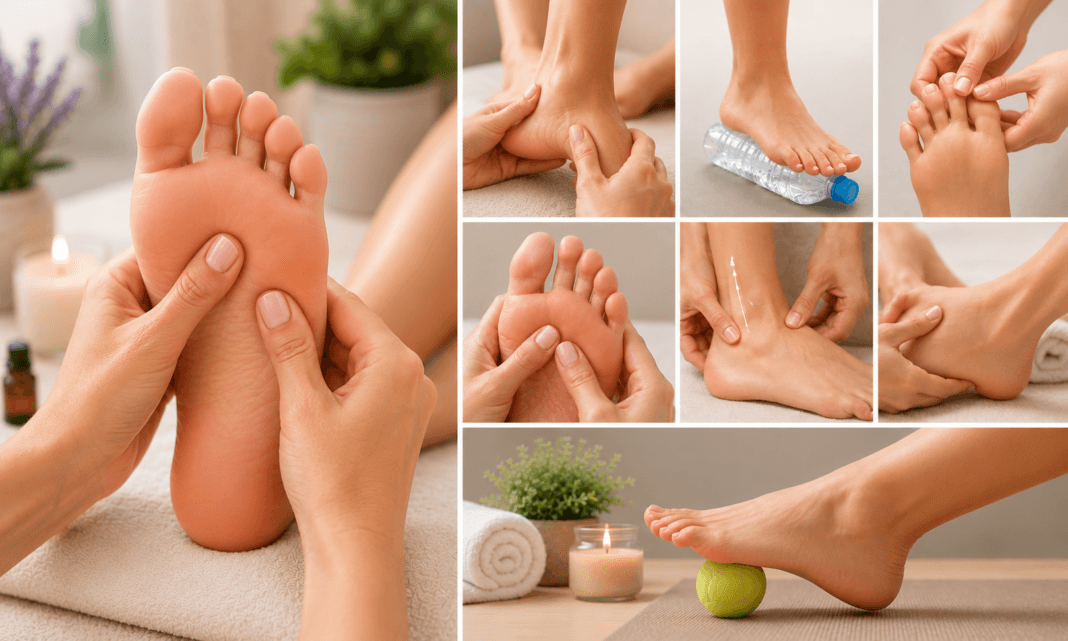

After a long day on your feet, a few minutes of focused pressure in the right spots can make a noticeable difference in how tired and tight your feet feel. These foot massage techniques are simple, require no special equipment, and can be done in the time it takes to unwind after work.
Quick Summary: These foot massage techniques use thumb pressure, kneading, and gentle stretching to ease tension in the arch, heel, and toes. They’re a relaxing self-care habit, not a medical treatment — best for everyday tiredness rather than ongoing pain.
This guide walks through seven techniques you can try tonight, plus a few situations where it’s worth checking with a professional before massaging your feet at all.
Editor’s Note: We assumed more pressure meant better results, and quickly learned that’s not the case. The arch in particular responds better to slow, sustained pressure than to firm digging — going too hard tends to make the foot tense up rather than relax, which somewhat defeats the purpose.
What These Foot Massage Techniques Can (and Can’t) Do
Self-massage can help reduce muscle tension and improve comfort after standing or walking for long periods, and many people find it genuinely relaxing as part of a wind-down routine. It’s worth being clear about what it isn’t: a substitute for medical care if you’re dealing with a diagnosed foot condition, persistent pain, or an injury. Think of these techniques as a relaxation habit, similar to stretching, rather than a treatment.
7 Foot Massage Techniques to Try Tonight
1. Thumb Walking the Arch
Rest one foot on the opposite knee. Using both thumbs, walk them slowly from the heel to the ball of the foot along the arch, applying steady pressure. This is one of the most commonly recommended starting points for foot self-massage, since the arch tends to hold a lot of everyday tension.
2. Heel Kneading
Using your palm or knuckles, make slow circular motions over the heel pad. This area absorbs significant impact throughout the day, and gentle kneading here can help the whole foot feel less tight.
3. The Frozen Bottle Roll
Freeze a water bottle and, while seated, roll the bottom of your foot over it for several minutes. The combination of pressure and cold can feel particularly soothing after a day of standing.
4. Toe Pulls and Twists
Gently pull each toe outward, then twist it slightly from side to side. This can help release tension that builds up in the smaller toe muscles, which often get overlooked.
5. Ball-of-Foot Circles
Place both thumbs on the ball of the foot and make firm circular motions. This area carries a lot of pressure, especially for anyone who wears heels regularly or stands for extended periods.
6. Achilles and Ankle Release
Gently grasp the Achilles tendon between your thumb and index finger, applying light pressure while gliding upward toward the calf. Follow with a few slow ankle rotations in each direction to ease tension in the surrounding area.
7. The Tennis Ball Roll
Place a tennis ball under your foot and slowly roll it around until you find a tender spot. Hold light pressure there for a few minutes rather than continuing to roll, which allows the tension to ease more fully than constant movement.
Editor’s Note:A question we hear often is how long a self-massage session should take. There’s no strict rule, but five to ten minutes per foot tends to be enough to notice a difference without it becoming tedious — consistency several times a week matters more than any single long session.
When to Skip Self-Massage and See a Professional Instead
- Active infection or open wounds: Avoid massaging directly over or near these areas
- Suspected stress fracture: Skip massage and pressure on the area entirely
- Recent or acute injury: Within the first 48 hours, rest and ice are generally recommended over massage
- Diabetes or neuropathy: Use gentle pressure only, check your feet before and after, and check with a healthcare provider first if you’re unsure
- History of blood clots: Massage of the lower legs is generally discouraged without medical guidance
- Pregnancy: It’s worth checking with a healthcare provider before massaging the lower legs specifically
Who These Foot Massage Techniques Are Best For
Best for: anyone on their feet for long periods during the day, those looking for a relaxing evening wind-down habit, people without diagnosed foot conditions or recent injuries, and anyone pairing this with a broader self-care routine like Skin Cycling or an evening wellness ritual.
Less ideal for: those with diabetic neuropathy without medical guidance, recent foot injuries or surgery, or persistent pain that hasn’t been evaluated by a professional — in these cases, a podiatrist or physical therapist is the safer starting point.
If you’re new to self-massage, starting with just one or two techniques — like thumb walking the arch and heel kneading — is enough to notice whether it helps before trying the full routine.
Frequently Asked Questions About Foot Massage Techniques
How often should I massage my feet?
There’s no universal rule, but doing it a few times a week tends to provide consistent relaxation benefits, while daily sessions are fine if you’re on your feet often and find it helpful.
Can foot massage actually relieve pain, or is it just relaxing?
For tension and general tiredness, many people experience genuine relief. For specific conditions like plantar fasciitis, massage may help manage symptoms, but it isn’t a cure and shouldn’t replace a proper diagnosis if pain persists or worsens.
Is it safe to massage my own feet if I have diabetes?
Gentle self-massage can be appropriate for some people with diabetes, but it should be done carefully, with attention to any skin changes, and ideally after checking with a healthcare provider first given the risk of reduced sensation.
What tools can help with foot massage at home?
A tennis ball, a frozen water bottle, or a dedicated foot roller can all add helpful pressure variation, though your hands alone are enough to do every technique in this guide.
Final Thoughts: A Small Habit Worth Keeping
These foot massage techniques won’t fix every type of foot discomfort, but as a regular self-care habit, they offer a simple, accessible way to ease everyday tension. Pay attention to how your body responds, skip the techniques if something feels wrong rather than pushing through, and see a professional if pain persists beyond what a few minutes of self-massage can ease.
Save this guide, try it tonight, and explore more wellness tips at egella.com