

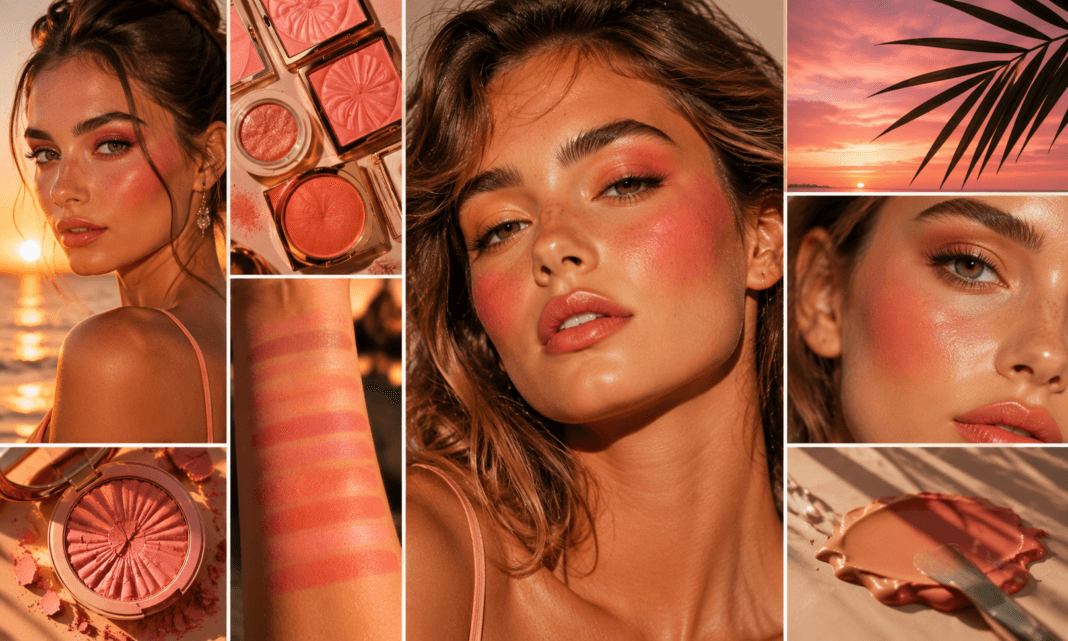

There’s a specific kind of light that hits right before the sun dips below the horizon — warm, golden, a little forgiving — and for one summer, beauty artists have figured out how to bottle it. Sunset blush is the technique behind this, a gradient cheek look that blends coral, pink, and amber into something that looks less like makeup and more like a glow you were simply born with.
This guide breaks down what the look actually involves, why it’s dominating Pinterest this summer, and exactly how to recreate it without an artist standing over your shoulder.
Editor’s Note: Our first attempt used three separate blush shades applied in distinct stripes, and the transitions were obvious rather than seamless. What actually worked was using only two shades and blending with a damp sponge rather than a brush — the dampness is what melts the colors into each other instead of leaving visible lines.
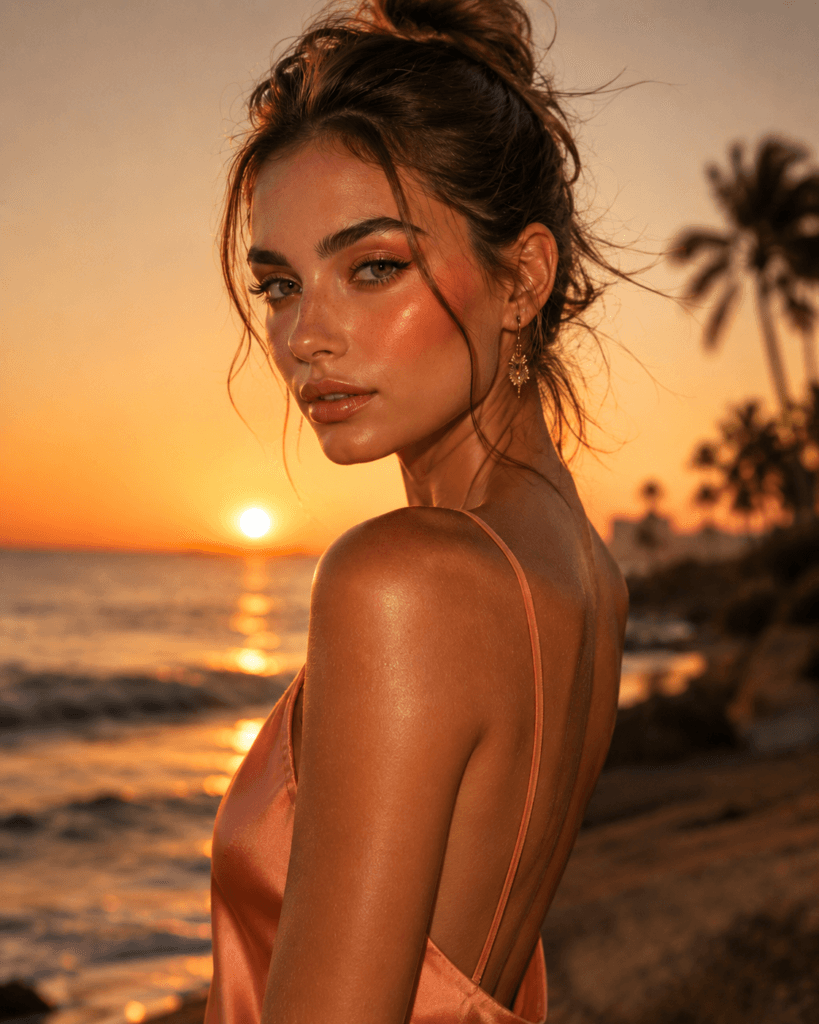
What Is the Sunset Blush Trend?
The technique creates an ombré effect on the cheeks by seamlessly blending distinct shades — typically a warm coral, a vivid pink, and a glowing orange — then topping it with a liquid gold highlighter. The result mimics the gradient of an actual sunset sky, with color shifting gently from one tone into the next rather than sitting as one flat shade.
Crucially, this is a technique-driven trend rather than a single product. Celebrity makeup artists describe it as a “warm, blended sunset finish” — terracottas, warm corals, and peachy ambers combined to create what’s often called the “I just came back from somewhere beautiful” look. It’s the kind of cheek color that doesn’t announce itself as makeup at all.
Why This Look Is Everywhere on Pinterest This Summer
The 2026 summer beauty landscape has shifted noticeably from the bare, minimal approach of recent years. Where summer 2025 leaned almost entirely toward clean, minimal skin, this season is described by makeup artists as “still fresh but more expressive” — sheer textures are being layered rather than stripped back, and bold cheek color is staying put rather than fading into the background.
Part of the appeal is technical: this gradient finish delivers genuine impact while requiring the rest of the face to stay understated. Pairing the cheek look with a minimal, glowing complexion and a simple gloss keeps the overall effect wearable rather than overwhelming — restraint everywhere else lets one feature do the talking. Because the formula typically combines liquid and cream products, the finish is also hyper-hydrating, which matters enormously when humidity and heat are working against most makeup.
This sits alongside a broader 2026 shift toward layering, which is visible across multiple categories — much like the layering principle behind Scent Stacking, makeup artists note that combining multiple cheek tones in one look directly mirrors fragrance layering, giving “more bandwidth” to colors that might feel too bold worn alone.
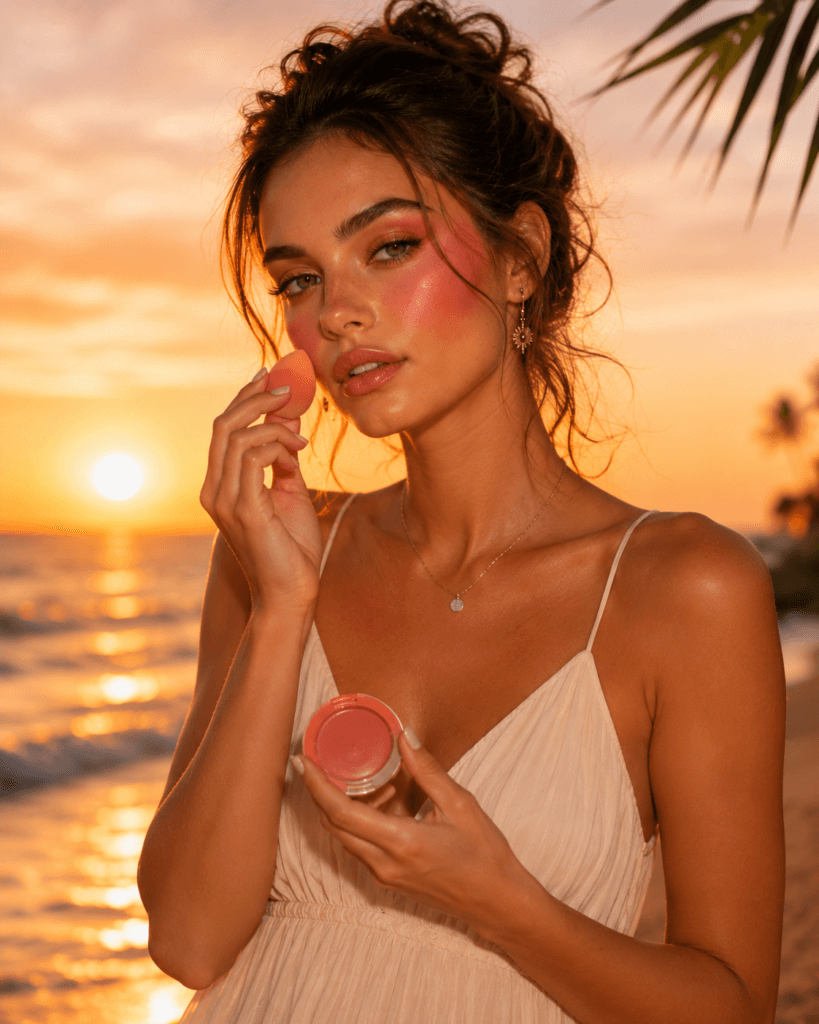
How to Get the Sunset Blush Look — Step by Step
Step 1 — Prep with hydrated, glowing skin. A lightweight moisturizer or skin tint underneath is essential. The gradient effect reads best against luminous, dewy skin rather than a fully matte base.
Step 2 — Choose two complementary cream blushes. A warm coral and a soft pink work best for most skin tones; deeper skin tones can swap in a warm amber and a berry-toned pink for similar contrast.
Step 3 — Apply the lighter shade first, higher on the cheek. Dab the lighter tone onto the upper cheekbone, closer to the temple.
Step 4 — Apply the deeper shade lower and closer to the apple of the cheek. This creates the gradient — lighter near the temple, deeper and warmer toward the center of the cheek.
Step 5 — Blend with a damp sponge, not a brush. Press and roll the sponge across both colors until the line between them disappears. A brush tends to create harder edges; a damp sponge melts the transition.
Step 6 — Finish with a liquid gold highlighter. Apply on the very top of the cheekbone, layered over the blended blush, to catch light and complete the golden-hour effect.
Editor’s Note: A common question is whether this technique works on deeper skin tones. It absolutely does — the key is adjusting the undertones rather than skipping the gradient. Warm amber and deep berry create the same visual transition on richer skin that coral and pink create on fairer skin; the principle of light-to-dark placement stays the same regardless of depth.
Who Sunset Blush Is Best For
Best for: warmer skin tones and those who tan easily in summer, anyone comfortable with a more expressive, color-forward cheek, special summer occasions like festivals or vacation photos, and people who already enjoy cream or liquid blush formulas.
Less ideal for: anyone wanting a fully matte, structured finish, very cool-toned complexions where warm coral and orange may need careful undertone adjustment, and those who prefer a single, simple blush shade over a multi-step blending process.
If your usual routine involves one quick swipe of blush, this look requires a bit more patience — but the blending step is genuinely the only technical skill involved, and it gets faster with practice.
Sunset Blush vs. Other Summer 2026 Cheek Trends
| Trend | Technique | Finish | Best For |
|---|---|---|---|
| Sunset Blush | Multi-shade gradient | Warm, glowing, dimensional | Statement summer looks |
| Blush Draping | 1980s-style sculpting revival | Structured, sun-kissed | Editorial, defined cheeks |
| Feathered Blush | Finger-blended, imperfect edges | Soft, blurred | Effortless everyday wear |
| Golden Hour Blush | Single warm-toned wash | Subtle, all-over glow | Minimal summer routines |
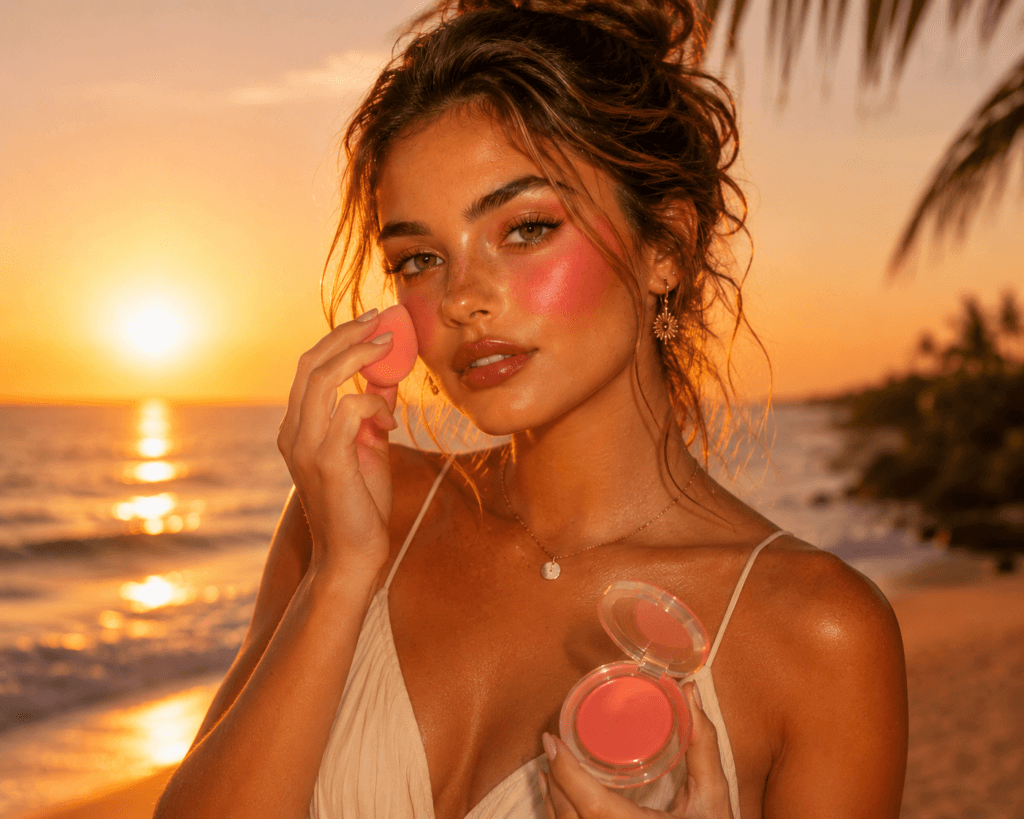
Frequently Asked Questions About Sunset Blush
What is sunset blush?
Sunset blush is a gradient cheek makeup technique that blends warm coral, pink, and amber tones, finished with a liquid gold highlighter, to mimic the colors of a golden-hour sky.
Do I need three different blush shades to do this look?
Two shades are usually enough — a lighter and a deeper tone blended together. Some versions use three for a more dramatic gradient, but two creates a clean, wearable transition for most people.
How do I keep this look from sliding off in summer heat?
Cream and liquid formulas tend to grip better in humidity than powder blush. Setting lightly with a translucent powder only over the highest points of the cheek can help extend wear without dulling the gradient.
Is sunset blush appropriate for everyday wear, or just special occasions?
A more subtle version — using sheerer layers and skipping the heaviest gold highlighter — translates easily into daily wear. The full, dramatic gradient is better suited to occasions where a bolder look feels appropriate.
Final Thoughts: Bringing Golden Hour to Your Face
Sunset blush captures something that’s hard to fake any other way — the specific warmth of late-afternoon light, translated onto skin. In a summer defined by expressive, layered beauty rather than bare minimalism, this technique offers a way to look sun-kissed and intentional at once, without sacrificing the breathable, lightweight feel the season demands.
Save this guide, try the two-shade blend this weekend, and explore more summer beauty trends at egella.com