

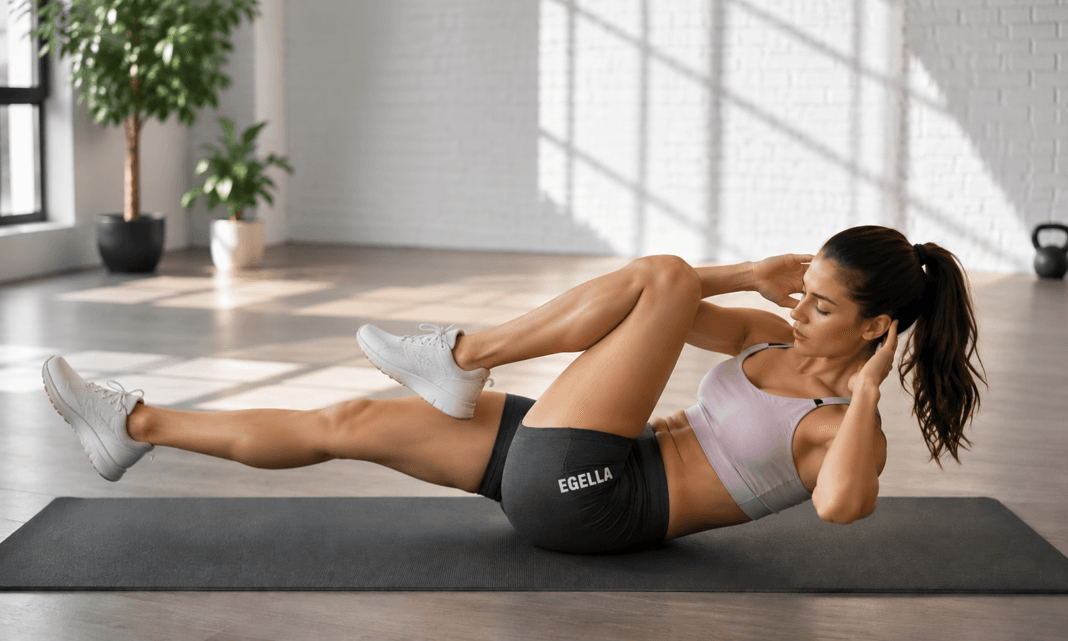

This ab workout was designed with one specific person in mind: someone who wants to build a consistent core habit, has no gym equipment, and needs a routine short enough to actually fit into a real day. Ten minutes, fourteen movements, no equipment, and a structure that progresses logically from the easier central abs through to the harder rotational and isometric work.
Quick Summary: A 14-exercise beginner ab workout, each movement performed for 30 seconds, totaling approximately 10 minutes. The routine targets the central abs, obliques, and lower core in sequence — no equipment needed, all floor-based. Short on time? Start with just 5 moves: Crunch Middle, Heel Touches, Russian Twist, Plank, and Bicycle Crunch for a 2.5-minute core circuit.
This guide covers all 14 movements with form cues, common mistakes, and how to build this into a sustainable daily habit rather than a one-time effort.
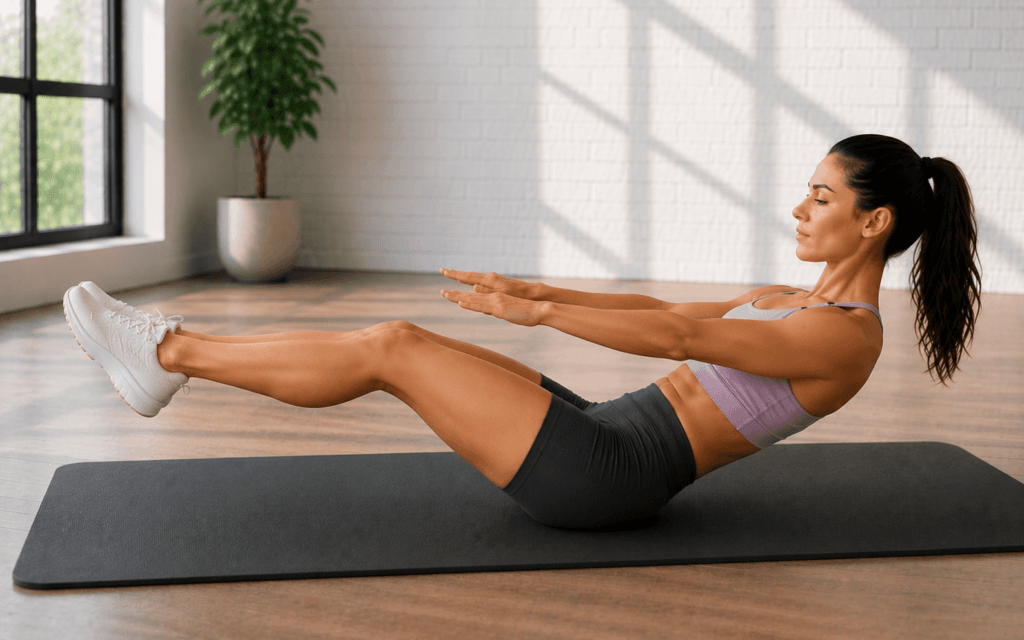
Editor’s Note: The movement that surprised us most in this routine was the Lean Back Hold — it looks deceptively simple but produces immediate deep core engagement when held correctly. The key is the angle: leaning back just far enough that the core has to work to maintain position, without going so far that the lower back takes over. Finding that edge on the first attempt takes a few tries, but once you feel it, the exercise becomes significantly more effective.
What This Ab Workout Actually Targets
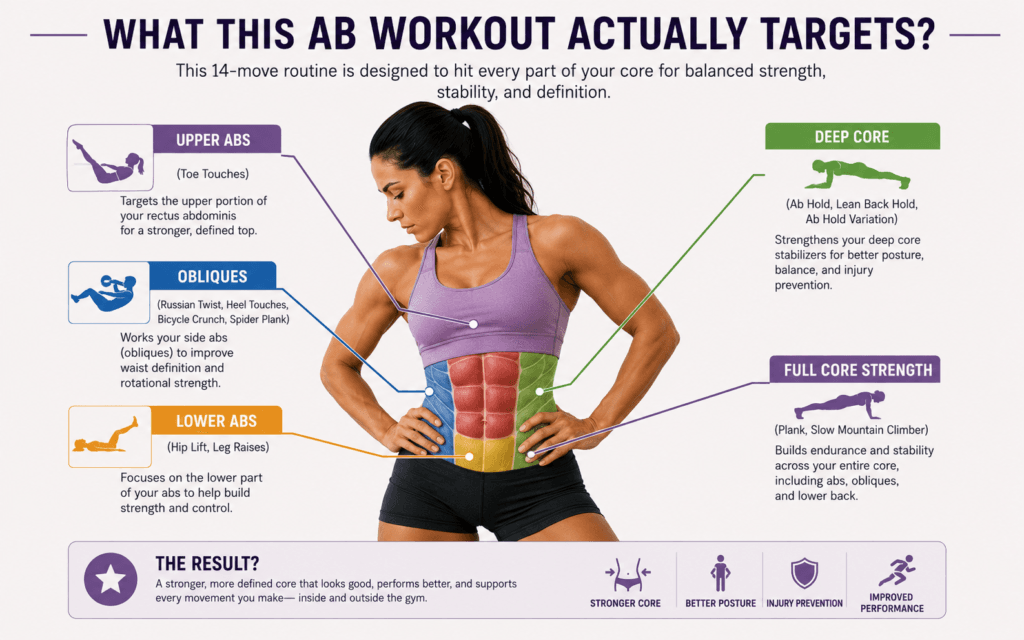
A well-designed beginner ab workout doesn’t just target the visible “six-pack” muscles — it addresses the full core, including the obliques on the sides and the deeper stabilizing muscles that support posture, lower back health, and everyday movement. This routine covers all three zones in sequence, moving from simpler central ab work through to more demanding rotational and isometric exercises as the routine progresses.
It’s worth noting what core work does and doesn’t do: strengthening the abdominal muscles improves posture, reduces lower back strain, and builds functional stability. It doesn’t selectively reduce fat in the abdominal area — that’s not how the body works, regardless of what many fitness videos suggest. The benefit of consistent core work is a stronger, more stable midsection, which is genuinely valuable for almost everyone.
Signs You’re Ready for This Routine
- You can hold a basic plank for at least 20 seconds without significant lower back pain
- You have no active lower back injury or diagnosed core condition
- You’re looking for a starting point rather than an advanced progression
- You want a routine you can do daily without needing recovery days
The 14-Exercise Beginner Ab Workout — Step by Step
Each exercise is performed for 30 seconds. Rest 10 seconds between moves if needed.
1. Crunch Middle
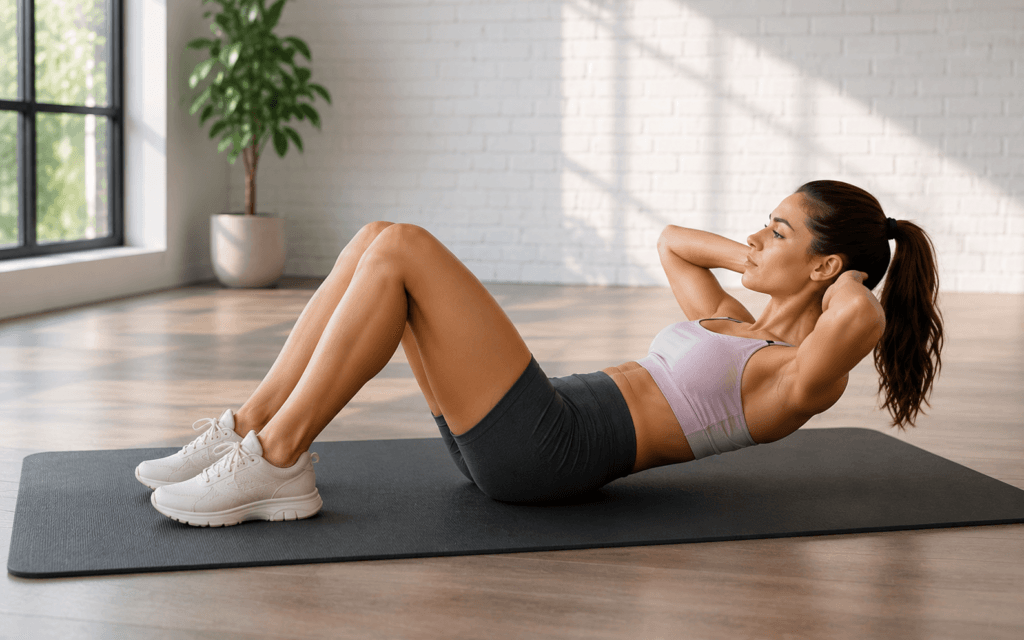
Lie on your back with knees bent, feet flat on the floor, hands behind your head. Lift your upper torso toward your knees by contracting the central abs — not pulling on your neck. Lower slowly. This targets the rectus abdominis directly and sets the foundation for all crunching variations that follow.
Duration: 30 seconds. Common mistake: Pulling the neck forward rather than lifting from the chest.
2. Crunch Right
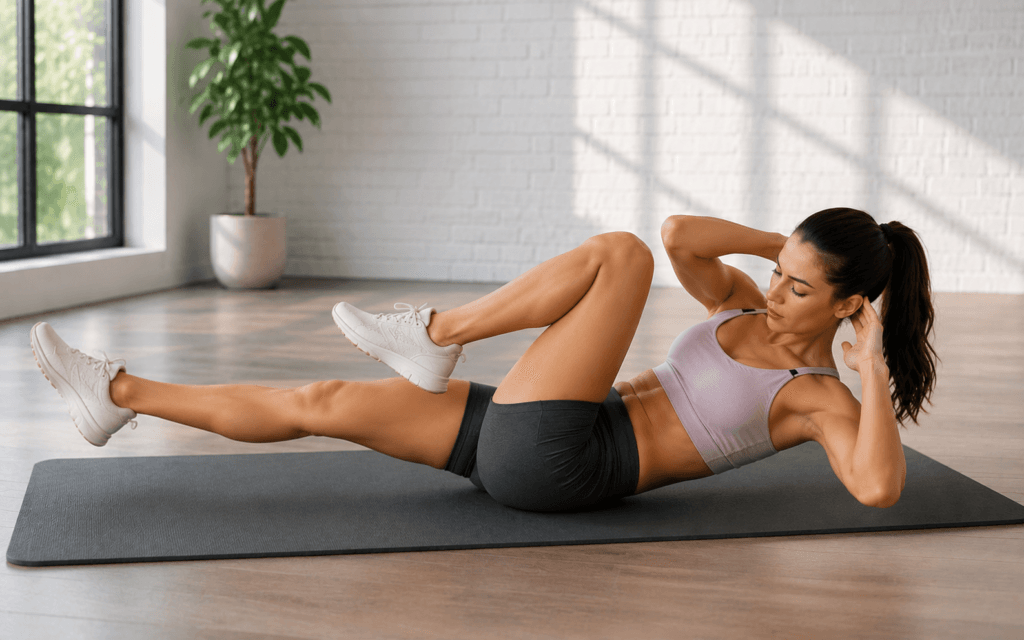
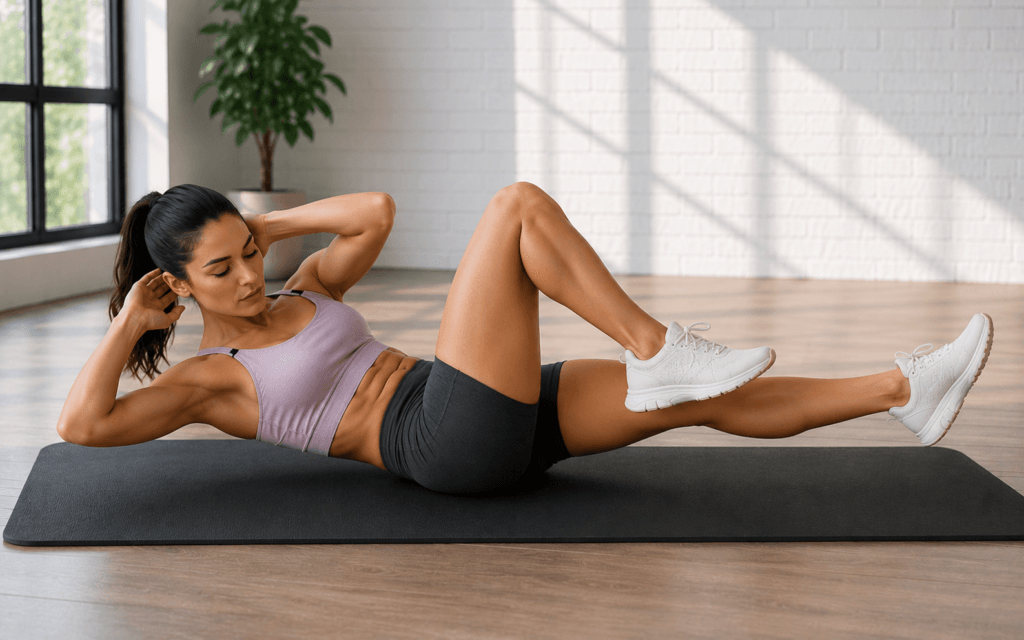
From the same starting position, crunch and rotate your torso slightly toward the right side as you lift, bringing your left shoulder toward your right knee. This targets the right obliques.
Duration: 30 seconds. Common mistake: Rotating the hips rather than the torso.
3. Crunch Left
Repeat the same movement toward the left side, bringing your right shoulder toward your left knee to target the left obliques.
Duration: 30 seconds.
4. Heel Touches
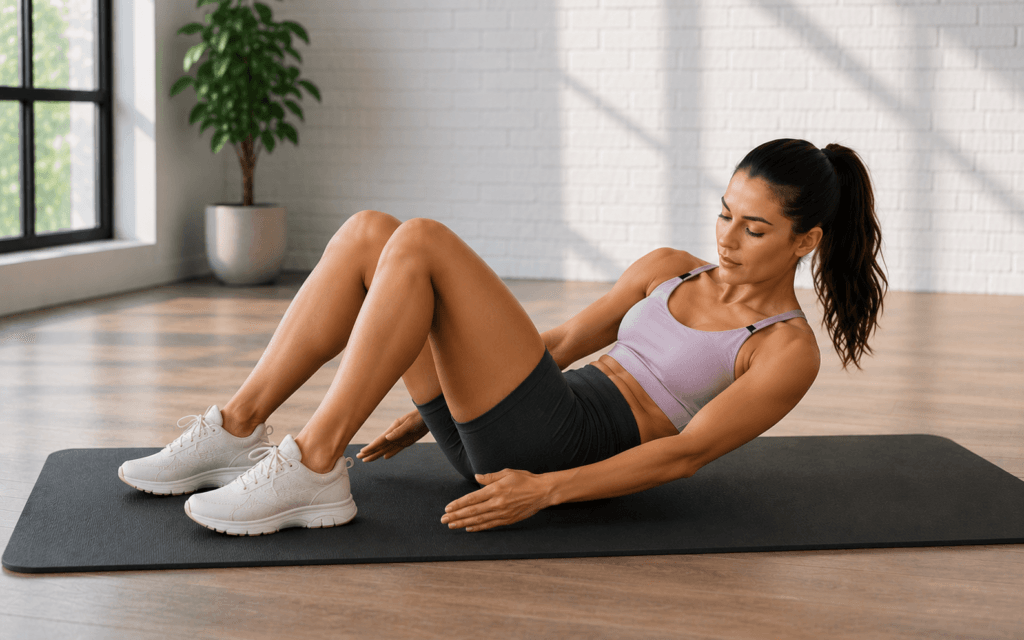
Lie on your back with knees bent, shoulders slightly raised off the floor. Reach side to side, alternately touching your heels with your hands. Keep your shoulders elevated throughout rather than lowering between reps.
Duration: 30 seconds. Common mistake: Lowering the shoulders between reps, which reduces the oblique engagement.
5. Ab Hold
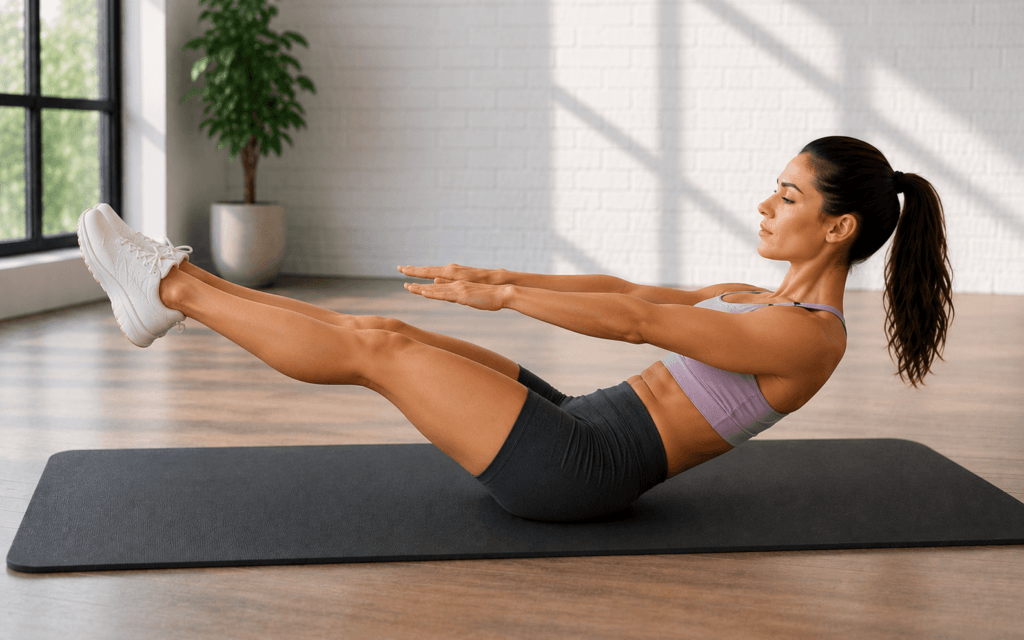
Lie flat, then simultaneously lift your head and shoulders off the floor and extend your straight legs to about 45 degrees. Hold this position, keeping the lower back pressed into the mat. This is an isometric hold targeting the full core under sustained tension.
Duration: 30 seconds. Common mistake: Allowing the lower back to arch away from the mat — if this happens, raise the legs higher until the back stays down.
6. Russian Twist
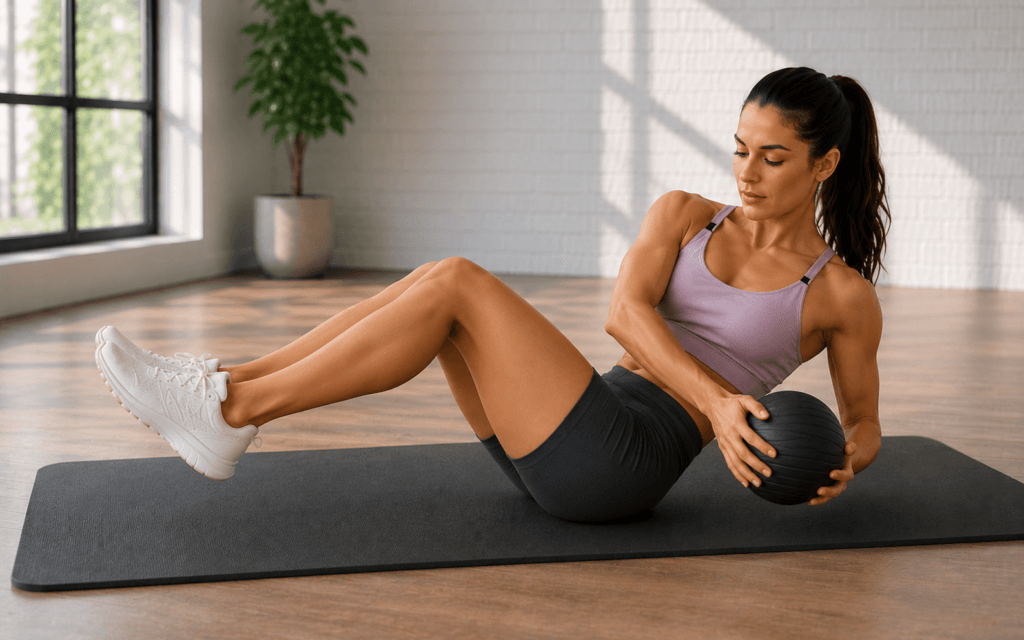
Sit on the mat with knees bent, feet either flat or slightly raised. Lean back slightly until you feel your core engage, then rotate your torso from side to side. Keep the movement controlled — the rotation should come from the torso, not the arms swinging.
Duration: 30 seconds. Common mistake: Rounding the back excessively during the lean — maintain a tall spine throughout.
7. Lean Back Hold
Sit with knees bent, feet flat. Extend both arms forward at shoulder height. Lean your torso backward to the point where your core activates to hold the position — approximately 45 degrees from the floor — and hold. This is a static challenge for the deep core stabilizers.
Duration: 30 seconds. Common mistake: Leaning back too far so the lower back takes over, or not far enough for the core to engage.
8. Slow Mountain Climber
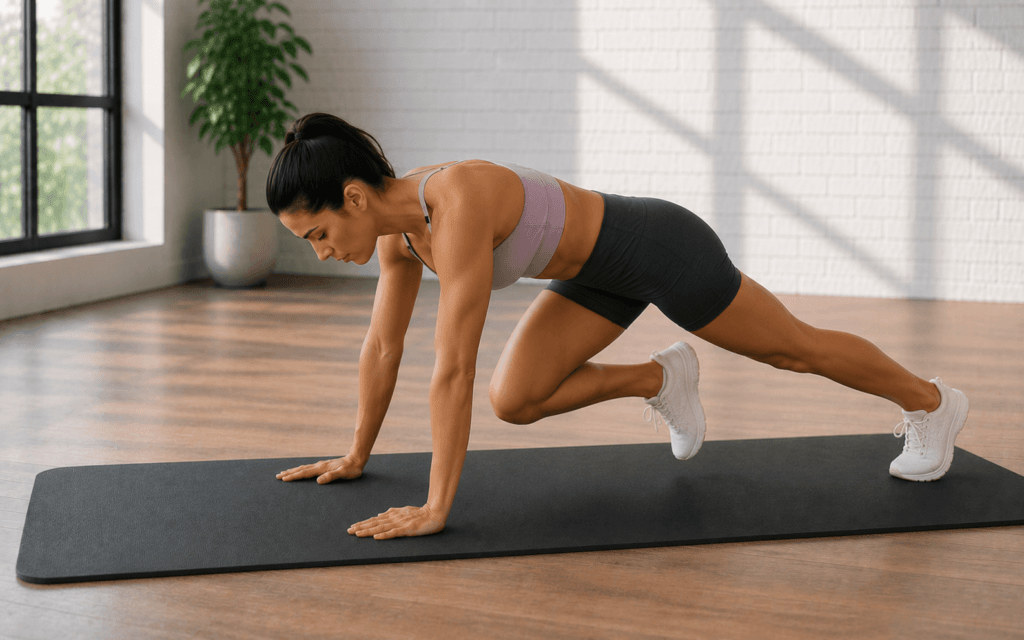
Start in a full push-up/high plank position, hands under shoulders, body in a straight line. Bring one knee toward your chest slowly and with control, return it, then switch sides. The slow tempo is essential — this is a core stability exercise, not a cardio drill.
Duration: 30 seconds. Common mistake: Allowing the hips to rise or dip as the knee comes forward.
9. Plank
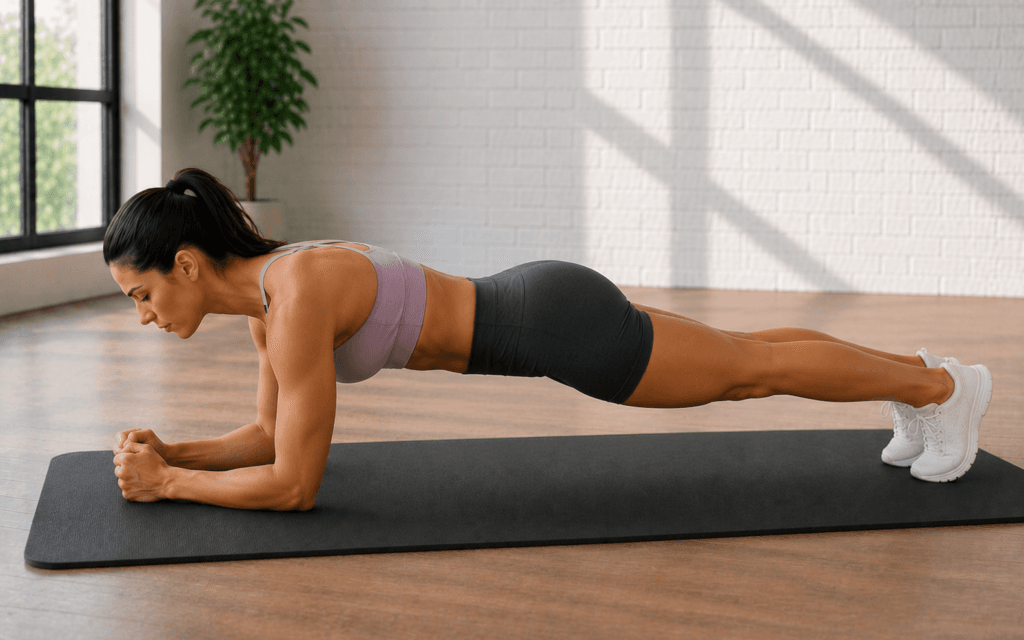
Forearm plank: elbows directly under shoulders, body in a straight line from head to heels, core and glutes engaged. Hold without letting the hips sag or rise. If 30 seconds is too challenging, drop to your knees while maintaining the straight back position.
Duration: 30 seconds. Common mistake: Holding the breath — breathe steadily throughout.
10. Toe Touches
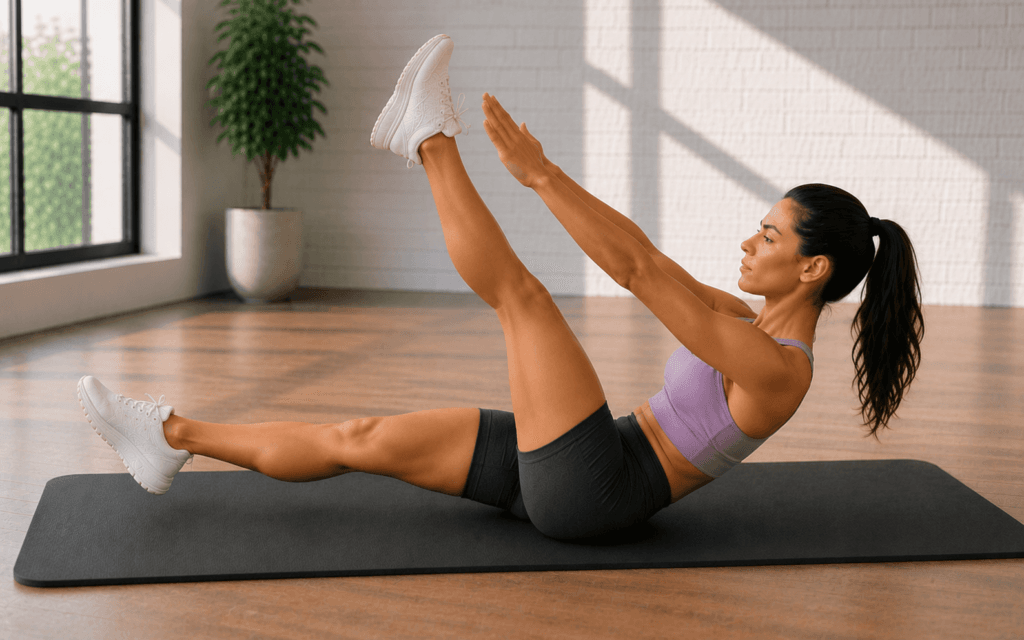
Lie on your back and raise both legs straight toward the ceiling. Reach your hands up from the mat, lifting your shoulders to try to touch your toes. Lower with control. This targets the upper abs and hip flexors together.
Duration: 30 seconds. Common mistake: Using momentum rather than a controlled lift from the abs.
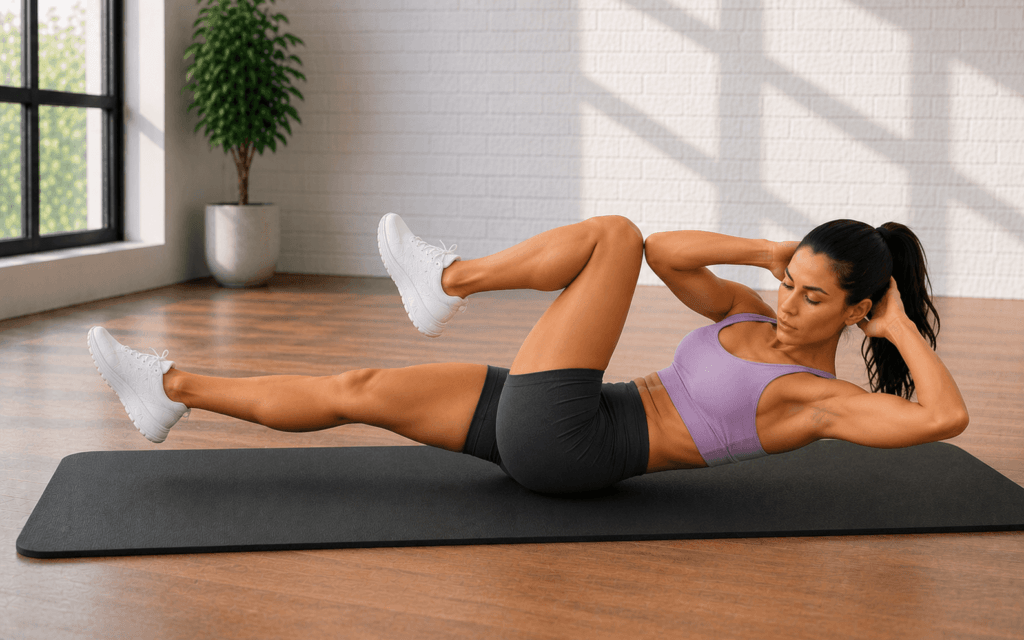
11. Bicycle Crunch
Lie on your back, hands behind your head, legs raised. Bring one knee toward your chest while rotating the opposite elbow to meet it, simultaneously extending the other leg. Alternate sides in a pedaling motion. This is one of the most effective exercises for the obliques when performed slowly and with full rotation.
Duration: 30 seconds. Common mistake: Moving too fast and losing the rotational component — slow down to feel the obliques working.
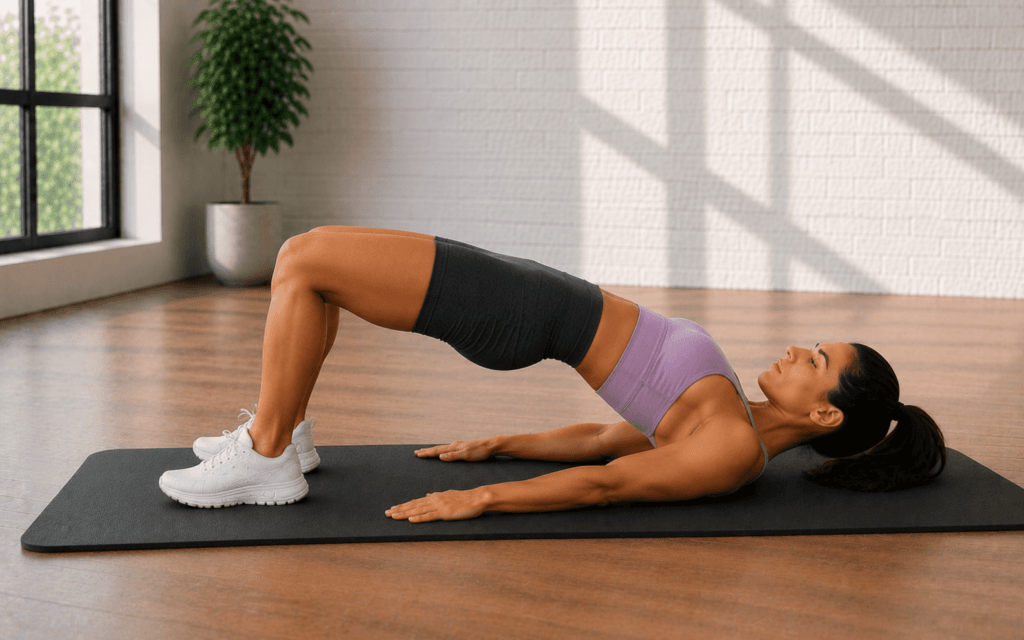
12. Hip Lift
Lie flat on your back with legs extended straight toward the ceiling. Press your hands into the floor beside you and use your lower abs to lift your hips straight up off the mat, then lower with control. Avoid swinging the legs — the movement should come from the lower abdominal muscles.
Duration: 30 seconds. Common mistake: Using momentum to swing the hips rather than lifting from the abs.
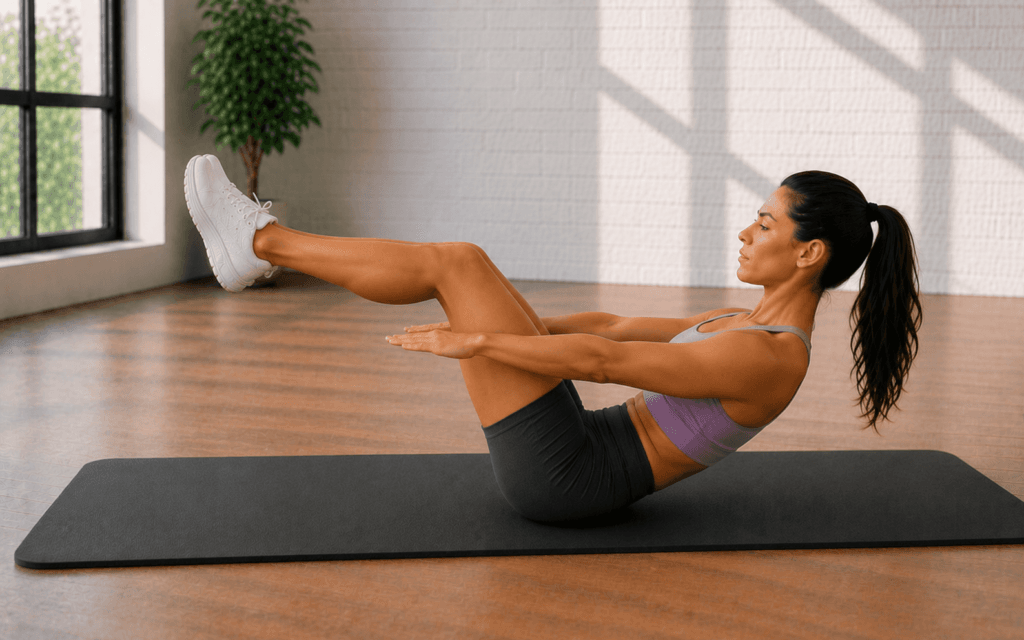
13. Ab Hold (Variation)
Return to the static Ab Hold position from exercise 5 — head and shoulders raised, legs extended at 45 degrees, lower back pressed into the mat. This second appearance of the hold comes after the more demanding exercises, making it a genuine test of remaining core endurance.
Duration: 30 seconds.
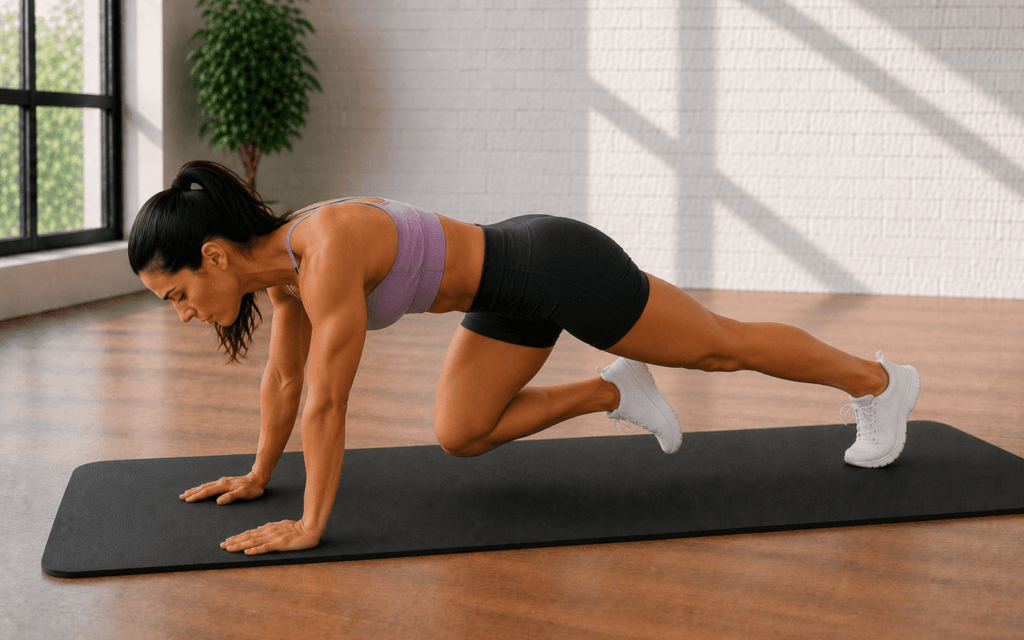
14. Spider Plank
Start in a high plank position. Bring one knee forward and out to the side toward the corresponding elbow — unlike a standard mountain climber, the knee travels laterally rather than straight forward. Alternate sides. This targets the obliques from a plank position and adds rotational challenge to the final exercise.
Duration: 30 seconds. Common mistake: Allowing the hips to rotate significantly — keep them as level as possible while the knee travels outward.
Editor’s Note: If you find the full 14-exercise sequence too demanding initially, starting with just the first seven exercises and building up to the full routine over two weeks is a perfectly reasonable approach. The second half of the routine — from Slow Mountain Climber onward — is meaningfully more demanding than the first half, and there’s no benefit to pushing through poor form to complete it.
Common Mistakes That Reduce Effectiveness
- Pulling on the neck during crunches: The hands behind the head are there for support, not to pull — the lift should come from the abdominal muscles contracting, not the neck bending forward
- Allowing the lower back to arch during holds: In Ab Hold and Plank, a lower back that arches away from the mat or sags toward the floor means the core isn’t maintaining the position — adjust leg height or drop to knees until form improves
- Moving too fast through rotational exercises: Bicycle Crunch and Russian Twist are more effective at a slower tempo with full rotation than performed quickly with minimal twist
- Skipping the isometric holds: Ab Hold and Lean Back Hold are the exercises people most often shorten or skip — they’re also among the most effective for deep core engagement
Who This Ab Workout Is Best For
Best for: complete beginners building a first core routine, anyone returning to exercise after a break, those wanting a daily no-equipment habit that pairs naturally with a broader wellness routine like Posture Correction Exercises or Shoulder Stretches for Desk Work, and people with 10 minutes rather than an hour.
Less ideal for: anyone with an active lower back injury or diagnosed core condition — in these cases, a physiotherapist should guide the appropriate starting point. Also less suitable for those already training at an intermediate or advanced level, where this routine won’t provide sufficient challenge for continued progression.
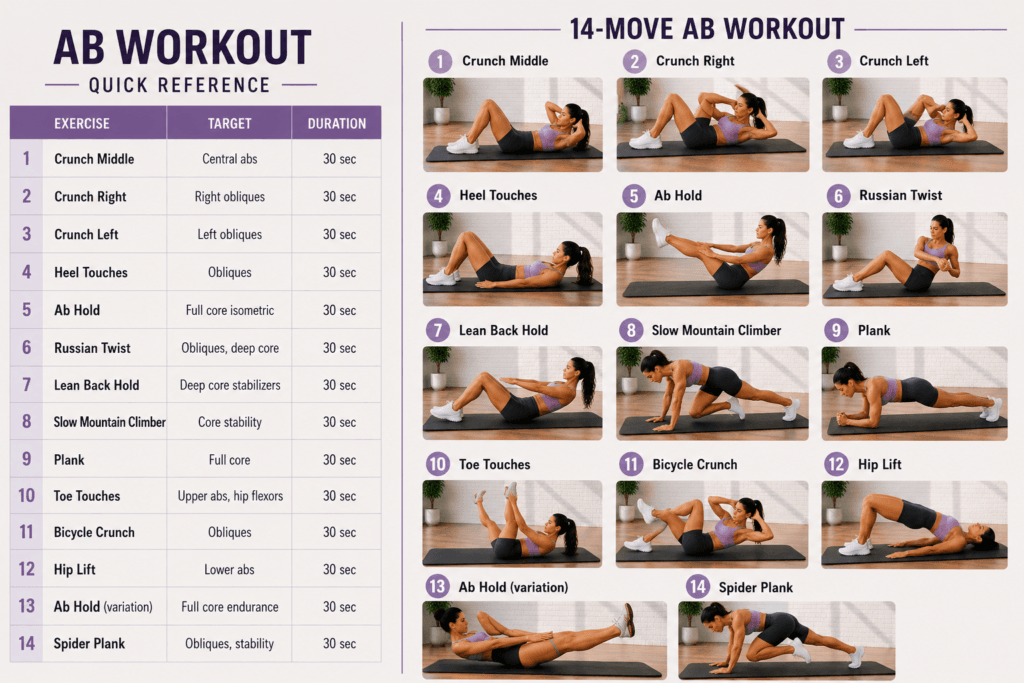
Ab Workout Quick Reference
| Exercise | Target | Duration |
|---|---|---|
| Crunch Middle | Central abs | 30 sec |
| Crunch Right | Right obliques | 30 sec |
| Crunch Left | Left obliques | 30 sec |
| Heel Touches | Obliques | 30 sec |
| Ab Hold | Full core isometric | 30 sec |
| Russian Twist | Obliques, deep core | 30 sec |
| Lean Back Hold | Deep core stabilizers | 30 sec |
| Slow Mountain Climber | Core stability | 30 sec |
| Plank | Full core | 30 sec |
| Toe Touches | Upper abs, hip flexors | 30 sec |
| Bicycle Crunch | Obliques | 30 sec |
| Hip Lift | Lower abs | 30 sec |
| Ab Hold (variation) | Full core endurance | 30 sec |
| Spider Plank | Obliques, stability | 30 sec |
Frequently Asked Questions About This Ab Workout
Can I do this ab workout every day?
Yes — this routine uses bodyweight movements at beginner intensity that don’t require recovery days. Daily consistency is actually one of the fastest ways to build core strength and make the habit stick.
How long before I see results from this ab workout?
Most people notice improved core endurance — the ability to hold positions longer and with better form — within two to three weeks of daily practice. Changes in how the midsection looks take longer and depend heavily on overall lifestyle factors beyond exercise alone.
Is this routine safe if I have lower back pain?
Mild, occasional lower back discomfort is common and often improves with consistent core strengthening. Significant or persistent lower back pain, or any sharp pain during these exercises, is a reason to stop and check with a healthcare provider before continuing.
What should I do when this routine becomes too easy?
Increase the duration of each exercise from 30 to 45 seconds, reduce rest between exercises, or add a second round of the full sequence. When two full rounds feel manageable, it’s likely time to progress to an intermediate routine.
Final Thoughts: Ten Minutes Is Enough to Start
The most effective ab workout is the one you actually do consistently — and ten minutes of floor-based core work, done daily, produces real improvements in strength, stability, and posture over time. Start with the five-exercise version if the full routine feels like too much, add exercises as your endurance builds, and give it at least three weeks before judging whether it’s working.
Save this routine, try it tonight, and explore more wellness guides at egella.com
Which exercise do you find hardest? Tell us in the comments below.