



Learning how to dress for your body is genuinely useful advice — but the framework most fashion guides use to deliver it has a serious problem. The apple, pear, hourglass, and rectangle system that has dominated body-type dressing for decades was built on a flawed premise, and following it tends to produce more self-consciousness, not less.
Quick Summary: Body type categories are imprecise, static, and built around minimizing “flaws” rather than dressing well. A more useful framework starts with proportion, prioritizes fit above everything else, and adds a third variable most fashion advice ignores entirely: how clothes feel to wear, not just how they look.
This guide breaks down why the standard body type framework falls short, what to use instead, and the practical variables that actually determine whether an outfit works.
Editor’s Note: We spent years following body type rules and found them mostly frustrating — the advice contradicted itself constantly, and the framework always started from the assumption that something needed correcting. Switching to proportion-based thinking changed the experience entirely. It asks a different question: not “what should I hide?” but “what relationship between these garments looks intentional?”
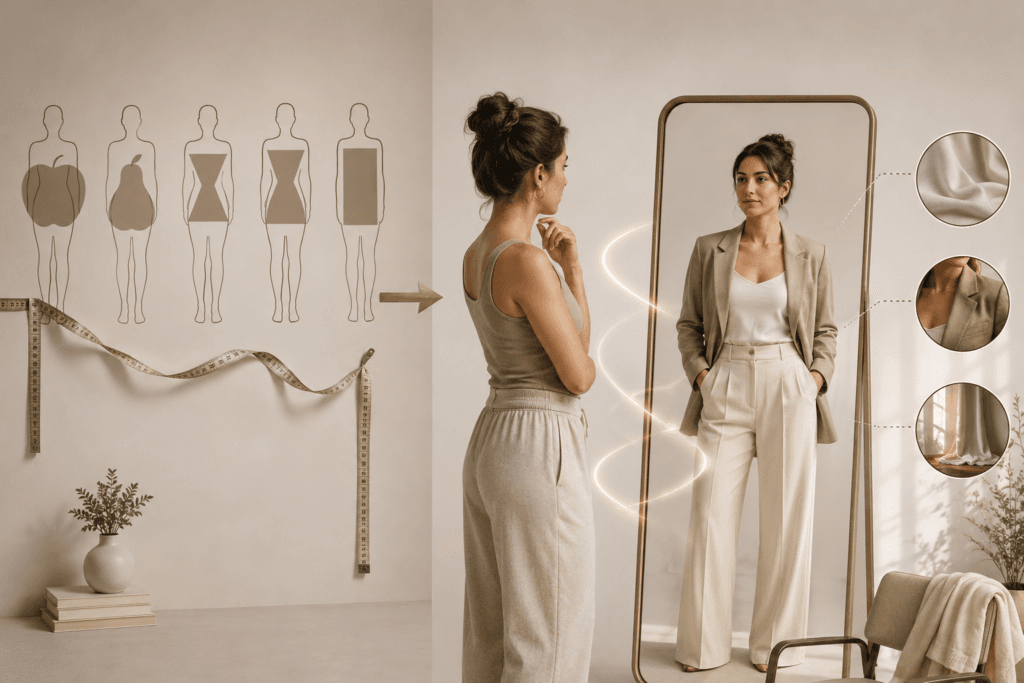
The Problem with Body Type Categories
The apple, pear, hourglass, and rectangle classifications were designed with a specific goal: to help people minimize the parts of their body they might feel insecure about and emphasize the parts considered most conventionally desirable. This is not a neutral framework.
It encodes a particular set of aesthetic values — that an hourglass silhouette is the aspirational standard, and that all other body shapes are problems to be optically corrected — and it treats the human body as a geometry problem rather than a living, dynamic presence in the world. The practical problems compound the philosophical ones. Body type categories are both imprecise and static, and most people’s bodies don’t fit cleanly into one. The advice generated for each type is riddled with contradictions — what works for a “pear” with a short torso is not the same as what works for a “pear” with a long torso and wide shoulders. And the framework says nothing at all about the actual texture of fabric on your skin, the proportions of individual garments, or the way clothes make you feel — which are the variables that determine whether you’ll actually wear something and feel good in it.
A Better Framework: Start with Proportion
Rather than starting from a body type category and working forward, the better approach to how to dress for your body starts from the specific proportions of the garments you’re considering and works backward. Every outfit creates a visual story through the relationships between hemlines, necklines, waistlines, and silhouette. Understanding these relationships gives you a generative tool rather than a prescriptive checklist.
Proportion Principles That Work Across Body Types
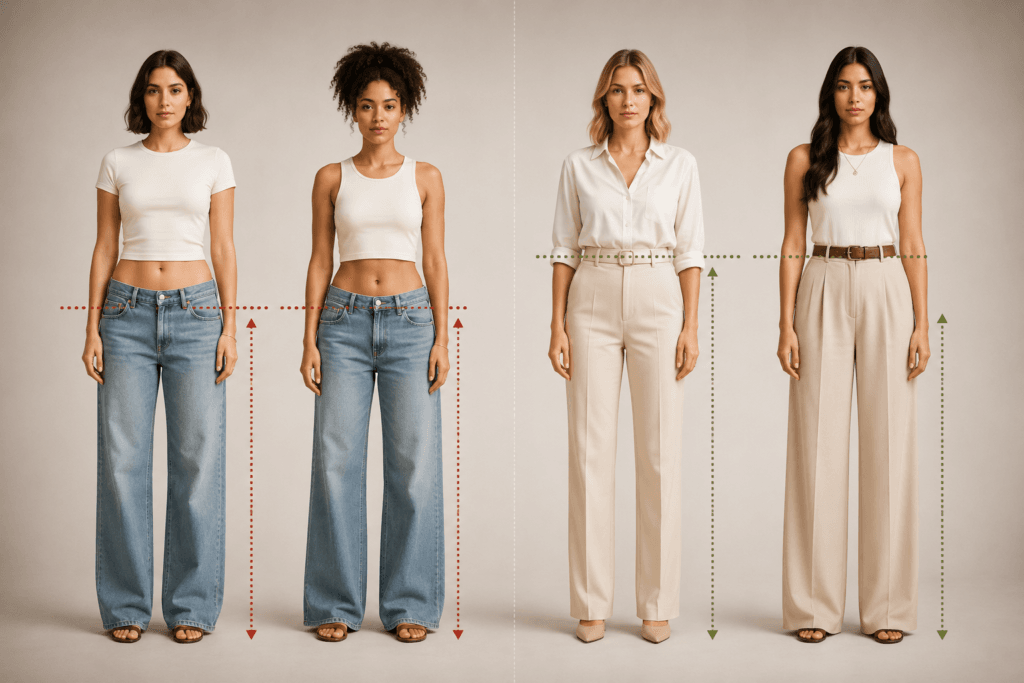
High-waisted bottoms lengthen the appearance of the leg regardless of body type — this is proportional geometry, not a rule specific to one figure. The visual effect works because of where the eye is drawn, not because of the shape of the person wearing them.
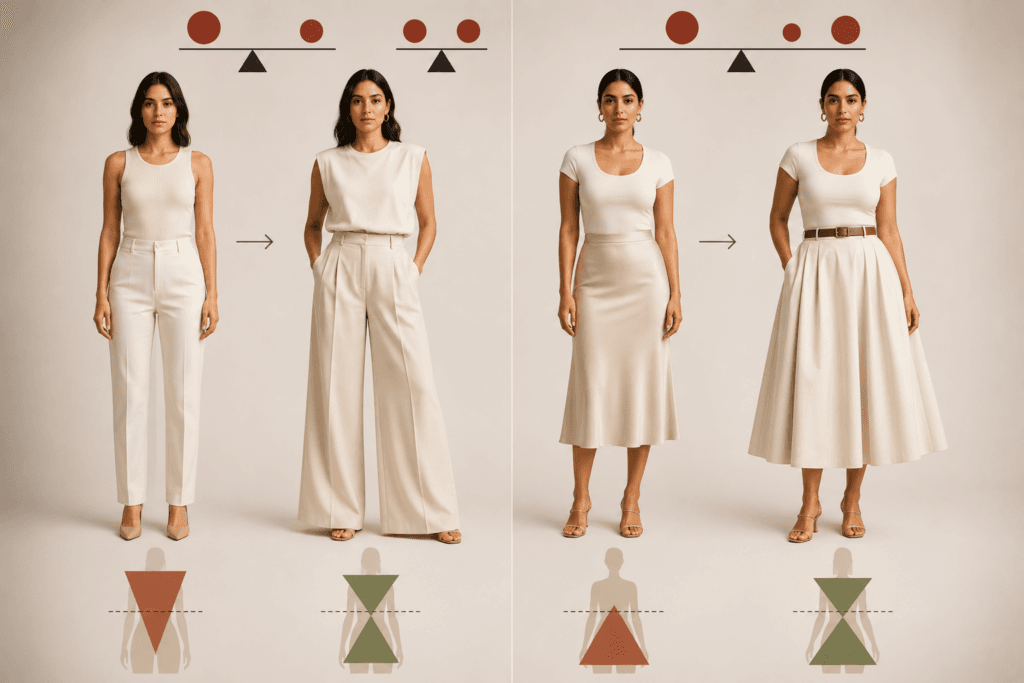
Wide-leg trousers balance a broader upper body in the same way as a full skirt balances a broader lower body — because visual weight distribution follows consistent principles that apply to the garment’s relationship with the body, not to a prescribed body category.
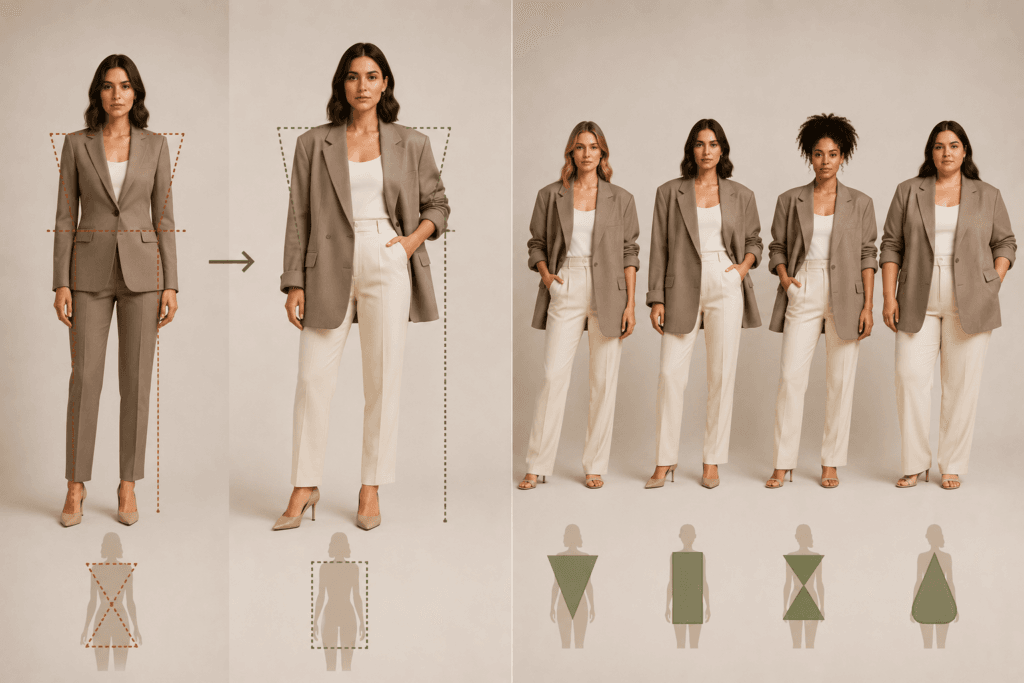
An oversized blazer over a fitted trouser creates a deliberately asymmetrical proportion that works on many different frames precisely because it’s creating its own internal visual logic rather than trying to approximate an hourglass. The outfit has internal coherence; it doesn’t need the body underneath to conform to a particular shape.
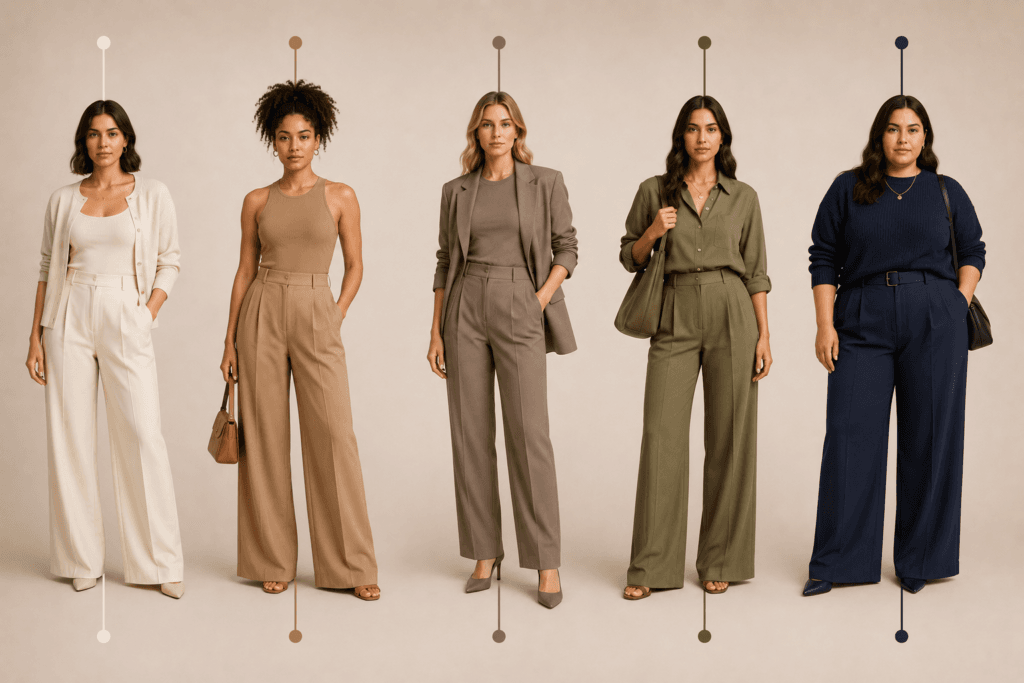
Monochromatic dressing — wearing one color or tonal family head to toe — creates a continuous vertical line that reads as elongating and streamlined on most frames, without requiring any knowledge of body type at all.
Editor’s Note: The proportion framework takes a little more thought upfront than checking a body type checklist, but it gets faster with practice. The question we now ask before any outfit decision: does this combination create a relationship between top and bottom that looks deliberate? If the answer is yes, the “body type” becomes largely irrelevant.
The Fit Variable — More Important Than Any Rule
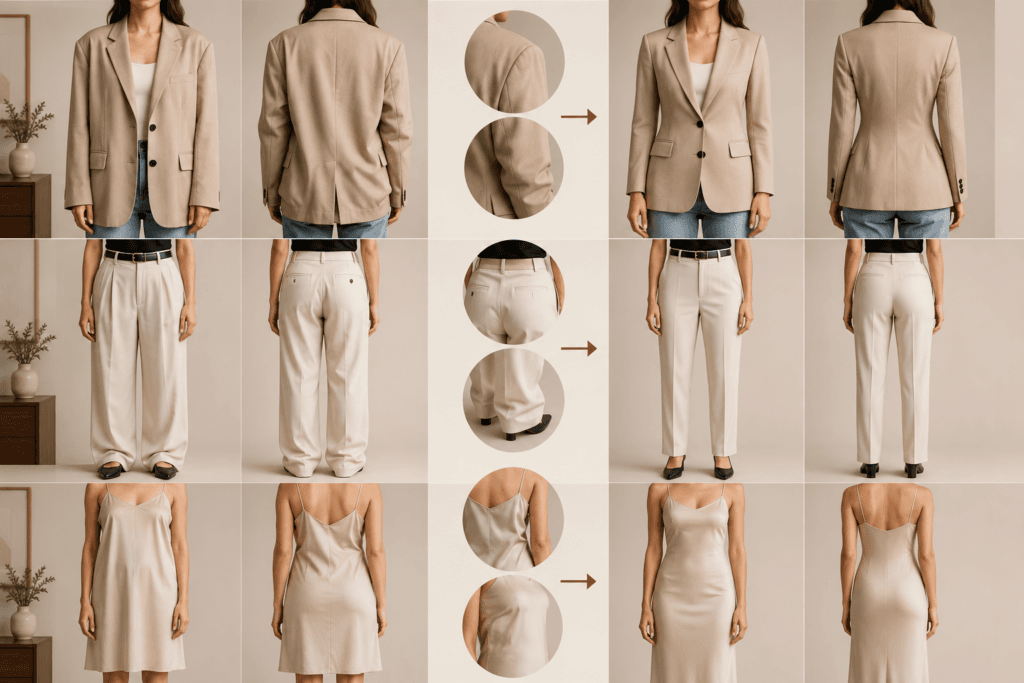
More than any other single factor, fit determines whether clothing looks good. A perfectly proportioned outfit in the wrong size — too tight across the shoulders, gaping at the waist, pooling at the hem — will always look worse than a simpler outfit that fits precisely.
This sounds obvious but has enormous practical implications for anyone figuring out how to dress for your body in a way that actually works: buying clothes in your actual size rather than an aspirational one, getting basic alterations on pieces that are close but not quite right, and understanding which brands’ sizing runs closest to your measurements all matter far more than following body type rules.
Tailoring is one of the most underutilized tools in accessible fashion. Taking in the waist of a blazer, shortening a trouser hem, or nipping the sides of a dress costs relatively little at most alterations shops and transforms an average garment into one that appears expensive and intentional. This connects directly to what makes a Quiet Luxury Wardrobe look genuinely polished rather than simply expensive — the fit advantage cannot be replicated by any amount of styling or trend adherence.
The Variable Most Fashion Advice Ignores: How Clothes Feel
The framework that most fashion advice omits entirely is the somatic one: when thinking about how to dress for your body, how do clothes feel on your body, and how does that feeling affect how you carry yourself?
Clothing that is physically uncomfortable — too tight, too restrictive, requiring constant adjustment — affects posture, confidence, and presence in ways that are immediately visible to other people regardless of how good the outfit looks in a mirror. Clothing that feels good to be in, that moves with you rather than against you, that doesn’t require conscious management throughout the day, produces a quality of ease that reads as style in a way that no amount of trend adherence can manufacture.
Dressing well, at its best, is about choosing things that help you forget you’re wearing anything at all.
A Practical Checklist — Three Questions Before You Buy
- Does it fit now, as-is? Not after alterations you intend to get but haven’t scheduled, not in a size smaller you’re planning for. Does it fit today, as you are?
- Does the proportion make sense? Does the relationship between top and bottom create a visual logic that looks intentional, regardless of body type rules?
- Is it comfortable enough to forget about? Can you wear it through a full day without adjusting, pulling, or being distracted by it?
If the answer to all three is yes, it works — regardless of what any body type guide says about it.
Who This Approach Is Best For
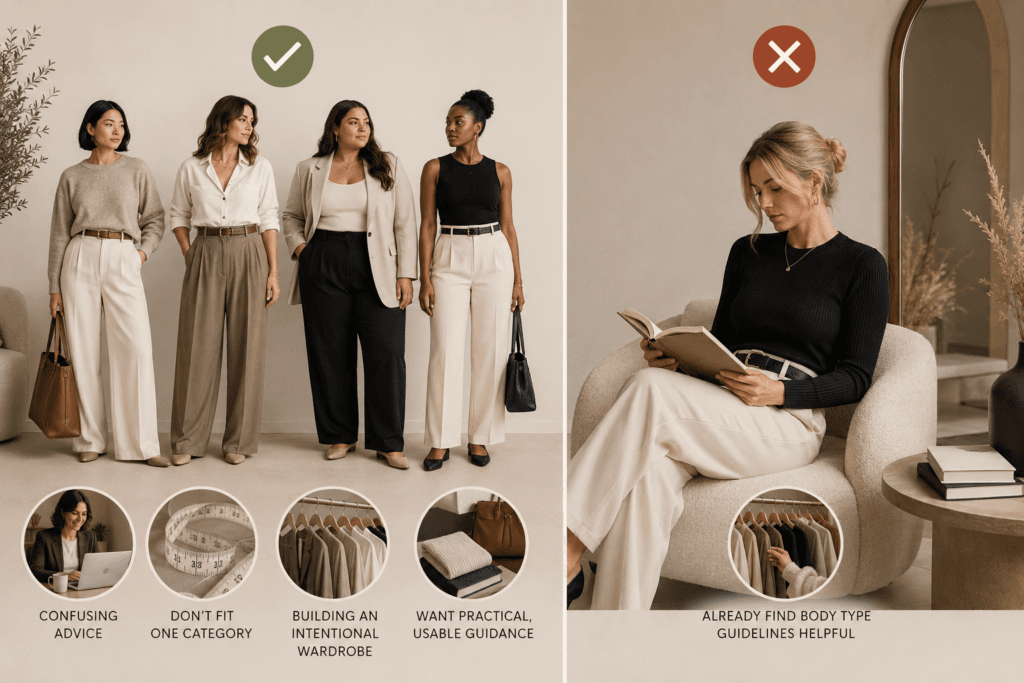
Best for: anyone who has found body type advice confusing or contradictory, people whose bodies don’t fit neatly into one category, those building a more intentional wardrobe like a Quiet Luxury Wardrobe or [[Capsule Wardrobe]] where fit and proportion matter more than trend, and anyone who wants a framework they can actually use rather than a checklist to check off.
Less ideal for: those who genuinely find body type guidelines helpful as a starting point — if the framework works for you, there’s no reason to abandon it. This is an alternative, not a mandate.
Frequently Asked Questions About How to Dress for Your Body
Should I ignore body type advice entirely?
Not necessarily — some of it overlaps with proportion principles and is genuinely useful. The shift is in the starting point: instead of beginning with “what category am I?” start with “what proportions do these garments create?” The latter is more flexible and more generative.
Is tailoring really worth the cost for non-designer pieces?
Usually yes. A simple hem shortening or waist adjustment on an otherwise good piece typically costs less than most people expect and produces a disproportionate improvement in how the garment looks and feels. The investment in fit often returns more value than buying an additional piece.
What’s the fastest way to improve how my outfits look without buying anything new?
Focus on fit first — identify pieces in your existing wardrobe that are close but not quite right, and price out basic alterations. A well-fitting version of something simple almost always looks better than a trend-forward piece in the wrong size.
How do I know if a proportion combination is working?
Ask whether the relationship between the top and bottom half of the outfit looks intentional — whether the volumes, lengths, and silhouettes create a coherent visual story. If you can’t immediately explain why the combination works, it probably doesn’t yet.
Final Thoughts: A Framework You Can Actually Use
Learning how to dress for your body works better when it starts from proportion and fit rather than from a category that reduces a living body to a geometric shape. The variables that actually determine whether an outfit works — fit, proportion, and how it feels to wear — are learnable, transferable, and don’t require you to categorize yourself as a problem to be solved first.
Save this guide, try the three-question checklist on your next purchase, and explore more fashion guides at egella.com
What’s one style “rule” you’ve broken that turned out to work perfectly for you? Tell us in the comments.