

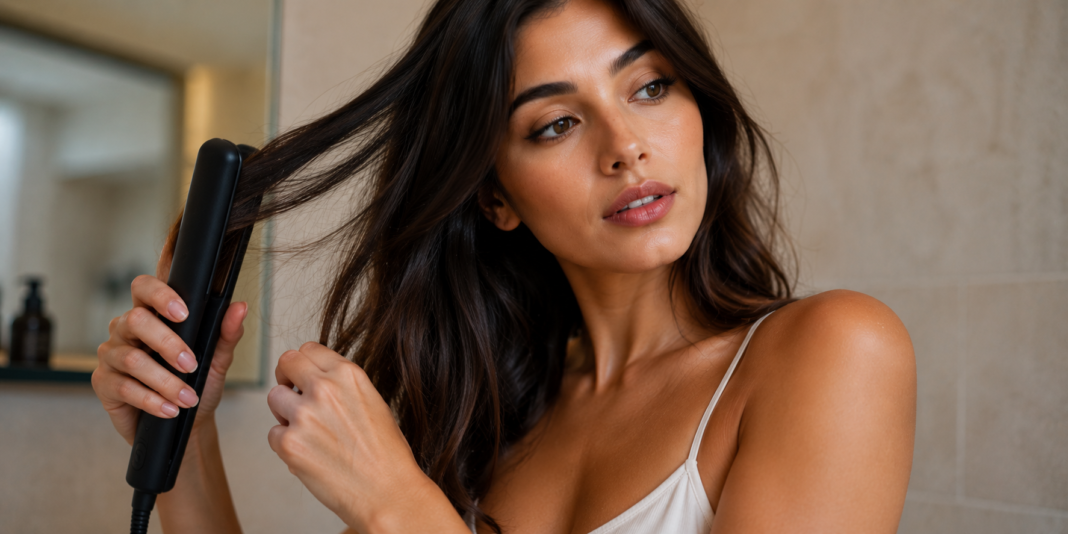

Heat damage is one of the most preventable forms of hair damage, and yet it is also one of the most common. The solution isn’t to stop using heat tools — it’s to use them correctly. Here is what that actually looks like in practice.
How Heat Damages Hair
Hair is primarily composed of keratin — a protein organized into a complex helical structure that gives individual strands their strength, elasticity, and ability to return to their natural shape. Water molecules are bound within this structure and play a structural role in maintaining its integrity. When heat is applied to hair, several things happen simultaneously. The water within the hair shaft superheats and, above certain temperatures, effectively boils and evaporates, disrupting the protein structure from within. The hydrogen bonds that maintain the keratin’s helical organization break at high temperatures and reform as the hair cools — which is the mechanism by which heat styling works. When this process is repeated frequently, without adequate protection, and at temperatures higher than necessary, the cumulative disruption to the protein structure produces visible and tactile changes: brittleness, split ends, frizz, reduced elasticity, and eventually breakage.
The temperature at which damage becomes significant is lower than most people assume, and it is meaningfully different for different hair types. Fine hair begins to sustain structural damage at around 180 degrees Celsius. Coarser, thicker hair can tolerate higher temperatures more safely, but rarely requires them for effective styling.
Heat Protectant: Not Optional
A heat protectant product applied before any heated styling tool is the single most impactful intervention available for reducing heat damage, and it is consistently the step that people skip or apply incorrectly. Heat protectants work through a combination of mechanisms: film-forming polymers coat the hair shaft and provide a physical buffer against direct heat contact; conditioning agents improve hair’s natural elasticity and resistance; and some formulas contain proteins that help fill gaps in a damaged cuticle before additional heat exposure. The product needs to be applied to damp or dry hair before heat, distributed evenly from root to tip, and given thirty seconds to set before the tool makes contact.
The type of heat protectant matters. Silicone-based formulas provide excellent thermal protection but can contribute to buildup over time, particularly on fine hair. Lighter polymer-based or water-soluble formulas are better for daily use on fine or low-porosity hair. High-protein formulas are most beneficial for previously damaged hair. The temperature rating on the packaging is relevant: not all heat protectants are formulated to protect against the highest temperatures on professional-grade tools.
Temperature Settings
The most common heat styling mistake is using the maximum temperature setting as the default. Maximum heat is appropriate for very thick, coarse, or resistant hair in specific styling contexts — it is not a baseline. Fine hair should be styled at 150 to 170 degrees Celsius maximum. Medium-density hair can go to 180 to 200 degrees for most styles. Only truly thick, coarse, or resistant hair warrants temperatures above 200 degrees, and even then, only when lower temperatures have been genuinely tested and found insufficient. Using a lower temperature with an extra pass produces less cumulative damage than using maximum heat with a single pass, because the intensity of the heat event is more damaging than the duration, up to a point.
The Tools Themselves
Not all heat tools are equal in their damage potential. Ceramic and tourmaline plates distribute heat more evenly than metal plates, reducing the hot spots that cause localized burning and uneven damage. Titanium plates heat up quickly and maintain consistent temperature but run hotter than ceramic for the same setting, which means temperature management is more important. Ionic technology in both straighteners and dryers reduces static and smooths the cuticle as a secondary effect. For hair dryers specifically, a diffuser attachment for curly hair, a concentrator nozzle for directional drying, and a cool shot setting used to set the style at the end all reduce damage compared to high-heat, close-range drying.
Recovery Between Sessions
If you heat style regularly, the intervals between sessions matter as much as the sessions themselves. Deep conditioning treatments once a week — properly formulated ones with ceramides, proteins, and moisturizing actives rather than generic conditioning rinses — replenish what heat depletes. Protein treatments specifically help restore structural integrity to heat-damaged hair, though frequency should be calibrated to your hair’s response: fine or low-porosity hair can over-proteinize and become stiff with too-frequent use. Trimming split ends regularly prevents the damage from traveling further up the shaft, which is the mechanism by which split ends become significant breakage over time.