

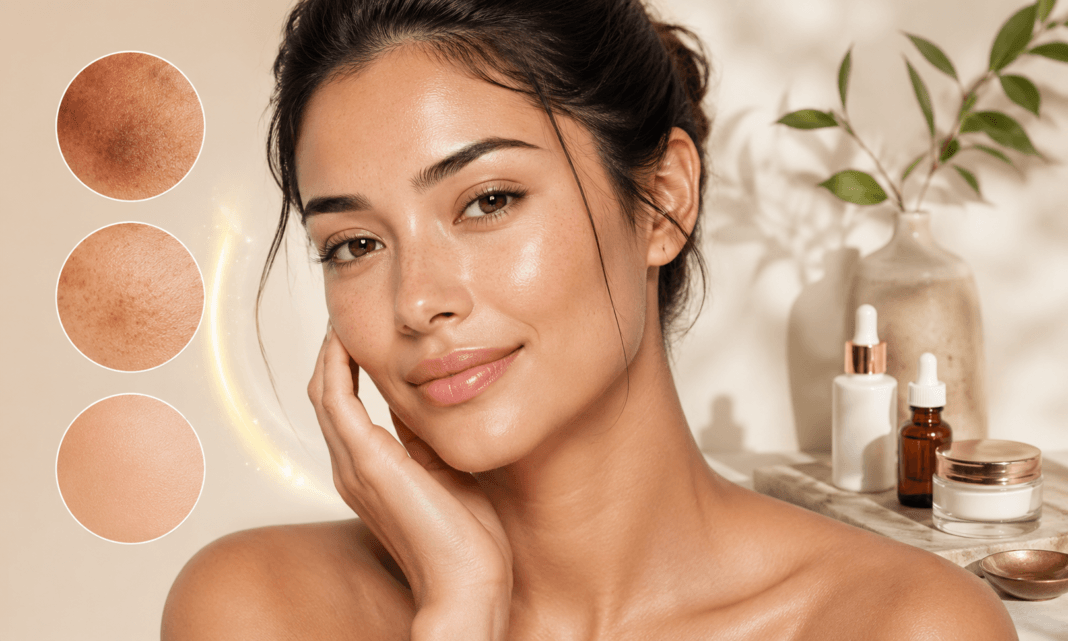

Dark spots are one of the most common reasons people seek out a dermatologist, and for good reason — they’re stubborn, slow to fade, and tempting to rush with whatever promises the fastest results. Getting to a genuinely even skin tone is possible, but it requires patience, the right ingredients, and avoiding a few popular shortcuts that can actually make things worse.
Quick Summary: Fading hyperpigmentation safely means combining daily sunscreen with proven ingredients like vitamin C, niacinamide, or retinoids, while avoiding harsh DIY treatments. Results take months, not days — and that timeline is normal, not a sign something isn’t working.
This guide covers what actually causes dark spots, the ingredients with real evidence behind them, the home remedies worth avoiding, and when it’s time to see a dermatologist instead.
Editor’s Note: The hardest part of this process, in our experience, wasn’t finding the right products — it was accepting the timeline. We wanted to see a difference in two weeks; the honest answer is closer to two to three months of consistent use before most people notice real change. Knowing that going in made it much easier to stay consistent instead of giving up and switching products too early.
What Causes an Uneven Skin Tone
Hyperpigmentation happens when certain areas of skin produce more melanin than the skin around them, creating visible dark spots or patches. The most common triggers are sun exposure, hormonal changes, and post-inflammatory marks left behind after acne, cuts, or other skin injuries heal.
Understanding which type you’re dealing with matters, since it affects how it responds to treatment. Sun-related spots often respond well to consistent sunscreen use and brightening ingredients, while hormonal pigmentation, sometimes called melasma, can be more stubborn and may benefit from dermatologist guidance from the start.
The Ingredients With Real Evidence Behind Them
1. Sunscreen (Non-Negotiable)
This is the single most important step in fading dark spots and preventing new ones, full stop. UV exposure both creates new pigmentation and darkens existing spots, undoing progress from every other product in a routine. Daily broad-spectrum SPF, reapplied every two hours when outdoors, is the foundation everything else depends on — a principle covered in more depth in our guide to SPF Reapplication.
2. Vitamin C
A well-studied antioxidant that brightens skin and helps interrupt the pigment-production process. Most people tolerate it well as a morning step, layered under sunscreen.
3. Niacinamide
Helps regulate melanin production and reduce inflammation, making it a gentler option for sensitive skin that might not tolerate stronger actives as easily.
4. Retinoids
Increase cell turnover, which helps fade existing dark spots while reducing the likelihood of new ones forming. Over-the-counter retinol is a reasonable starting point; prescription-strength tretinoin offers faster results but requires a dermatologist and a more careful introduction to avoid irritation, similar to the gradual approach described in our Skin Cycling guide.
5. Alpha Hydroxy Acids (AHAs)
Gentle chemical exfoliants that help remove pigmented surface cells more quickly than skin would shed them naturally, gradually revealing more evenly toned skin underneath.
6. Hydroquinone (Use With Caution)
Often described as the most effective topical option for reducing melanin production, hydroquinone is also the ingredient that requires the most care. It’s generally recommended for use under medical supervision, at appropriate concentrations, and not as an indefinite daily habit — long-term, unsupervised use carries its own risks.
Editor’s Note: A question we get often is whether combining several of these ingredients at once speeds things up. It usually backfires — layering vitamin C, retinoids, and AHAs together is a common way to trigger irritation, which can actually worsen post-inflammatory hyperpigmentation rather than fade it. Introducing one new active at a time, similar to the [[Skin Cycling]] approach, tends to work better than combining everything immediately.
Home Remedies Worth Avoiding
Not every popular “natural” fix for dark spots is actually safe, and a few are worth specifically avoiding:
- Lemon juice applied directly to skin: Its acidity can cause irritation, increased sun sensitivity, and in some cases, chemical burns — particularly risky given that sun exposure is already a major trigger for the pigmentation it’s meant to treat
- Household bleach or unregulated “bleaching” products: Never appropriate for skin use and can cause serious chemical injury
- Aggressive at-home physical exfoliation: Scrubbing dark spots harder doesn’t fade them faster — it risks creating new post-inflammatory marks from the irritation itself
- Unregulated imported skin-lightening creams: Some contain unlisted or unsafe levels of active ingredients; products from a known, regulated source are a safer choice
A Realistic Routine for Fading Dark Spots
Morning: Gentle cleanser, a vitamin C or niacinamide serum, moisturizer, and broad-spectrum SPF 30 or higher — applied generously and reapplied throughout the day if you’re outdoors.
Evening: Gentle cleanser, followed by your chosen treatment ingredient — retinol, an AHA, or a dermatologist-recommended option — introduced gradually rather than all at once, then a barrier-supportive moisturizer.
Ongoing: Avoid picking at acne or irritated skin, since this is one of the most common and avoidable causes of new post-inflammatory hyperpigmentation.
Who This Approach Is Best For
Best for: sun-related dark spots and mild post-inflammatory marks, anyone willing to commit to a consistent routine over several months, people building a broader Skin Barrier Repair-focused routine, and those wanting evidence-based options over unverified home remedies.
Less ideal for: melasma or hormonally driven pigmentation, which often responds better to dermatologist-guided treatment from the start, and anyone wanting overnight results — patience is genuinely part of what makes this approach work.
If your dark spots are recent and related to a specific breakout or sun exposure, a consistent routine with sunscreen and one brightening ingredient is often enough to see gradual improvement without needing prescription-strength options.
When to See a Dermatologist Instead
Most dark spots can be safely addressed with a consistent at-home routine, but a few signs suggest it’s time for professional evaluation: spots that change in color, size, or texture, pigmentation that appears suddenly without an obvious cause, or marks that haven’t responded to consistent treatment after several months. A dermatologist can also identify the specific type of pigmentation involved and recommend treatments like chemical peels, laser therapy, or prescription-strength options that aren’t available over the counter.
Frequently Asked Questions About Fading Dark Spots
How long does it take to fade hyperpigmentation?
Most people need several months of consistent treatment before seeing meaningful change, since skin naturally renews on its own gradual timeline. Spots that have been there for years often take longer to fade than recent ones.
What’s the single most important step for fading dark spots?
Daily sunscreen. Without consistent sun protection, UV exposure continues to darken existing spots and trigger new ones, which can undo progress from every other product in a routine.
Is hydroquinone safe to use at home?
Lower-concentration formulations are available over the counter in some regions, but hydroquinone generally works best and most safely under dermatologist guidance, particularly for extended use.
Can natural remedies like lemon juice actually fade dark spots?
Despite popular claims, direct application of lemon juice is more likely to irritate skin and increase sun sensitivity than to safely fade pigmentation, making it a remedy worth skipping in favor of tested ingredients.
Final Thoughts: Consistency Over Quick Fixes
Achieving a genuinely even skin tone rarely happens through a single dramatic product or a fast home remedy — it happens through daily sunscreen, one or two well-chosen active ingredients, and the patience to stick with a routine for months rather than days. The shortcuts that promise faster results are usually the ones most likely to cause new irritation or pigmentation in the process.
Save this guide, start with sunscreen today, and explore more skincare guides at egella.com