

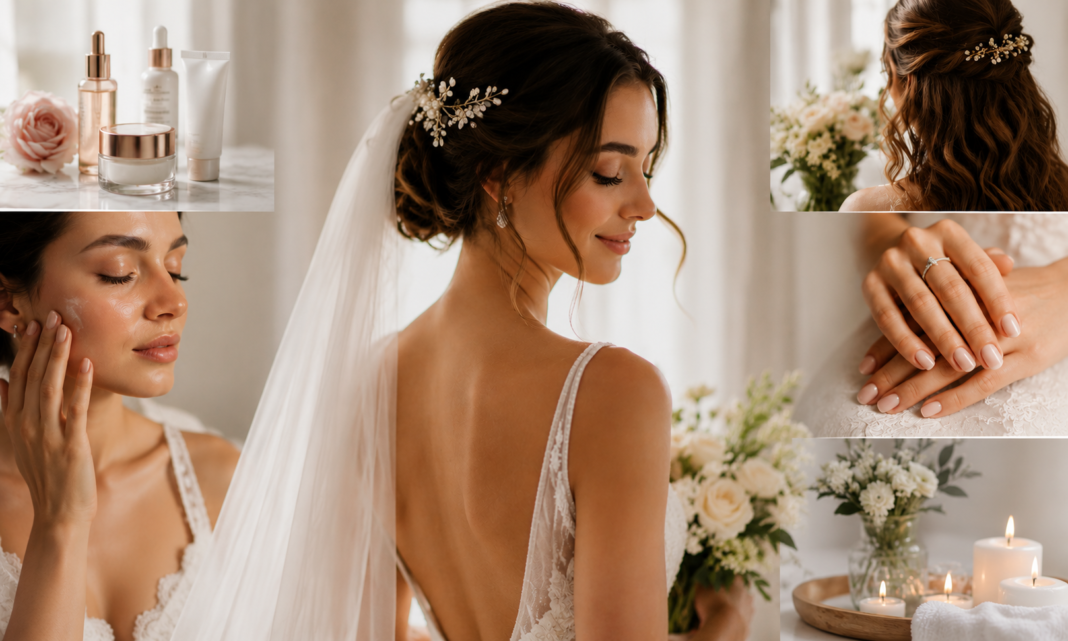
Part of the Egella Skin Intelligence Series — evidence-based beauty planning for your biggest day.
Medical Disclaimer: This article is for educational purposes only and does not constitute medical or dermatological advice. Always patch test new products and consult a board-certified dermatologist before starting any new treatment, especially in the months before a major event.
Most brides start panicking about their skin three weeks before the wedding — which is exactly when it’s too late to do anything meaningful about it. A real bridal beauty timeline starts at 12 months, not 3 weeks, and the difference between those two approaches is the difference between calm, predictable results and last-minute damage control that never quite works.
Quick Summary: The ideal bridal beauty timeline spans 12 months and covers skin, hair, and nails in stages — foundational changes early, maintenance in the middle, and zero new products in the final two weeks. Skin needs the longest runway because cell turnover takes 4–6 weeks and any reactive treatment needs time to settle. Hair and nail goals need less lead time but still benefit from early planning. Most important rule: nothing new in the final 2 weeks — not a product, not a treatment, not a facial you haven’t had before.
This guide covers the complete 12-month timeline broken down by month, the specific skin treatments worth the lead time they require, the hair and nail planning that prevents day-of surprises, and the final two-week rules that protect everything you’ve built.
Editor’s Note — Harper Collins: The single biggest mistake I see in bridal beauty planning is treating skin like a problem to fix in the final month, rather than a project to build over the full engagement. A facial three weeks before the wedding can backfire — extraction marks, post-treatment redness, an unexpected reaction — because there’s no buffer left to recover. The brides whose skin looks calmest on the day are almost always the ones who started early and stopped experimenting early too.
Why a 12-Month Bridal Beauty Timeline Works
Skin cell turnover takes roughly 28 days in your twenties and slows to 6 weeks or more as you age — which means any treatment aimed at genuine skin change (not just temporary glow) needs multiple cycles to show results. A 12-month window allows for foundational work (addressing texture, pigmentation, or acne scarring), a middle period of consistent maintenance, and a final stretch focused purely on protecting what’s already working. Compressing all three phases into six weeks is why so many “bridal glow” routines end in panic rather than confidence.
| Timeframe | Phase Goal |
|---|---|
| 12–9 months out | Foundation — address underlying skin concerns with time to recover from any reaction |
| 8–4 months out | Maintenance — consistent routine, hair colour decisions, nail health building |
| 3–1 months out | Refinement — trial runs, final treatment rounds, no new actives |
| Final 2 weeks | Protection — zero new products, zero new treatments, sleep and stress management only |
12 Months Out — The Foundation Phase
Skin: This is the window for anything requiring real recovery time — professional treatments for acne scarring, pigmentation, or texture concerns. If you’re considering laser treatments, chemical peels stronger than a light exfoliation, or microneedling, 12 months out is the latest you should realistically start, since most of these require multiple sessions spaced weeks apart. Book a consultation with a dermatologist now even if treatment doesn’t begin immediately — the assessment alone clarifies what’s worth pursuing in the months ahead. For ongoing barrier health throughout the entire timeline, our skin barrier repair guide covers the foundational approach that supports every treatment that follows.
Hair: If you’re considering a significant colour change — going considerably lighter, removing previous colour, or correcting damage — 12 months gives hair colourists room to work gradually rather than forcing a dramatic single-session change that stresses the hair shaft.
Nails: Start addressing any chronic nail concerns now. If your nails peel, split, or break easily, this is the time to build the daily habits that produce visible change by the wedding. Our peeling nails guide covers the 12 most common causes and a 30-day recovery plan — run that plan now, well before nail length and strength actually matter for the day.
9 Months Out — Build the Skincare Foundation
Skin: If you haven’t already, this is the latest point to establish a consistent skincare routine built around evidence-supported actives — a vitamin C serum for morning antioxidant protection, a gentle retinoid for evening cell turnover, and daily SPF without exception. Our niacinamide vs vitamin C guide covers how to layer these two ingredients correctly for visible results well before the final countdown begins.
Hair: Schedule a consultation with your wedding hairstylist now, even if the wedding is still far away. This is also the point to start any hair health rebuilding — if your hair has been through colour treatments, heat damage, or styling stress, our hair porosity guide explains how to identify what your hair actually needs and build a routine around it rather than guessing.
6 Months Out — Maintenance and Trial Runs
Skin: By now your skincare routine should be settled and producing visible results. This is a good checkpoint to assess: is texture improving, is tone evening out, are breakouts less frequent? If results are slower than expected, this is still early enough to adjust the routine and see change before the final stretch.
Hair: Book your first hair trial. Bring reference photos, your dress silhouette (or a description of it), and be honest about how your hair actually behaves day to day — not how you wish it behaved. A trial this early gives you time to book a second one if the first doesn’t translate well, without the pressure of a looming date.
Nails: If you’re considering nail enhancements for the wedding — a specific shape change, gel extensions, or a particular finish — start testing now rather than for the first time the week before. Our jelly nail polish guide and polka dot nails guide cover finishes that photograph particularly well for bridal hands without requiring dramatic length changes.
3 Months Out — Refinement Phase Begins
Editor’s Note — Harper Collins: Three months out is the absolute latest point to introduce anything genuinely new to your skin — a new active ingredient, a new facial treatment, a new product line. After this point, the risk of a reaction outweighs any potential benefit, because there’s no longer enough buffer to recover and reset before the day. If you’re tempted to try something new in month two because a friend recommended it, this is the moment to say no.
Skin: Last call for any professional treatments with downtime — chemical peels, microneedling sessions, or anything requiring recovery days. Book your final round now so skin has fully settled by the time you reach the one-month mark. This is also when most brides benefit from locking in their skincare routine completely — no more experimenting, just consistency.
Hair: If your hair trial didn’t go as planned, this is the window to book a second one and make adjustments. Avoid any major colour change after this point — colour correction or significant lightening needs more lead time than three months allows for a confident result.
Nails: Confirm your wedding-day nail appointment and finalise the shape, length, and finish you’re going with based on what’s tested well over the past few months.
1 Month Out — Final Preparations
Skin: Maintain your existing routine exactly as is. This is not the time to add a new serum, try a new sunscreen, or book a facial you haven’t had before. If you want a final professional facial, choose one you’ve had previously with a known, reliable outcome — not an experiment.
Hair: Schedule your final hair trial if needed, and book a trim if your length or condition needs it — but avoid major cuts or colour changes this close to the date.
Nails: Get a maintenance manicure now to keep nail health consistent, but save the final wedding-specific manicure for closer to the day itself.
2 Weeks Out — The Protection Window
This is the period where the rule is simple: nothing new. No new skincare products, no new facial treatments, no new hair colour, no unfamiliar nail salon. Everything you do in these two weeks should be something your skin, hair, and nails have already proven they tolerate well.
- Skin: Maintain routine exactly, prioritise sleep, manage stress where possible — our chronic stress guide covers exactly why stress shows up on skin during high-pressure periods like this one, and the recovery habits that actually help
- Hair: No colour, no chemical treatments, no new styling tools
- Nails: A maintenance manicure with your trusted technician, nothing experimental
1 Week Out — Settling In
Final trim if genuinely needed (nothing dramatic), confirm all wedding-day appointment times, and resist any last-minute “quick fix” temptations. If a friend or relative suggests trying a new product or treatment this week, the answer is no — even well-intentioned advice this close to the day introduces unnecessary risk.
The Egella Take
💍 Best for: brides who want a calm, predictable lead-up rather than last-minute scrambling, anyone with skin, hair, or nail concerns that need genuine time to address
🏆 The rule: nothing new in the final two weeks — every product, treatment, and appointment in that window should be something already proven to work for you
⚠️ The honest truth: a 12-month bridal beauty timeline isn’t about doing more — it’s about spacing out what you’d do anyway so nothing is rushed and nothing is risky close to the date.
The brides who feel most at ease on their wedding day aren’t the ones who tried the most treatments — they’re the ones who gave their skin, hair, and nails enough time to actually respond, and protected that progress in the final stretch rather than risking it on something new.
Frequently Asked Questions About Bridal Beauty Timelines
What if my wedding is less than 12 months away?
Start wherever you are on the timeline and compress the earlier phases rather than skipping the final two weeks of protection — that window matters regardless of how much lead time you had overall.
Should I get Botox or fillers before my wedding?
If considering these, book your first treatment at least 4–6 months out to assess how your skin responds and allow time for adjustments. Never try an injectable for the first time within a month of the wedding.
When should I start my skincare routine for my wedding?
Ideally 9–12 months before, since meaningful skin changes from active ingredients take several months to become visible. See our niacinamide vs vitamin C guide for how to build an effective routine.
How many hair trials should I have?
Most brides benefit from at least two — one around 6 months out to establish direction, and a second closer to the date to confirm and adjust based on dress, veil, and venue lighting.
What’s the biggest bridal beauty mistake?
Trying something new in the final month — a new facial, a new product, a new hair treatment. The risk of an unexpected reaction is never worth it that close to the date.
12-Month Bridal Beauty Timeline Quick Reference
| Timeframe | Skin | Hair | Nails |
|---|---|---|---|
| 12 months | Dermatologist consultation, book major treatments | Consider major colour change | Start addressing chronic concerns |
| 9 months | Establish full routine — actives + SPF | Hairstylist consultation | Build daily strength habits |
| 6 months | Assess progress, adjust if needed | First hair trial | Test enhancement options |
| 3 months | Final treatments with downtime | Second trial if needed | Confirm wedding-day appointment |
| 1 month | Maintain only — no new products | Final trial, trim if needed | Maintenance manicure |
| 2 weeks | Protection mode — nothing new | No colour, no new tools | Trusted technician only |
| 1 week | Sleep and stress management | No dramatic changes | No experiments |
Sources & References
- American Academy of Dermatology (AAD) — Skin Cell Turnover and Treatment Timelines
- American Academy of Dermatology Association — Pre-Event Skincare Guidance
- Journal of Cosmetic Dermatology — Retinoid Adaptation and Recovery Periods
- International Journal of Trichology — Hair Colour Treatment Recovery Timelines
- American Society for Dermatologic Surgery — Injectable Treatment Planning Guidelines
This guide was researched and written by the Egella editorial team using dermatology best practices and bridal beauty planning principles. Last updated: June 2026.
Save this timeline and explore more wedding beauty guides at egella.com
Where are you on your bridal beauty timeline right now? Tell us in the comments.