

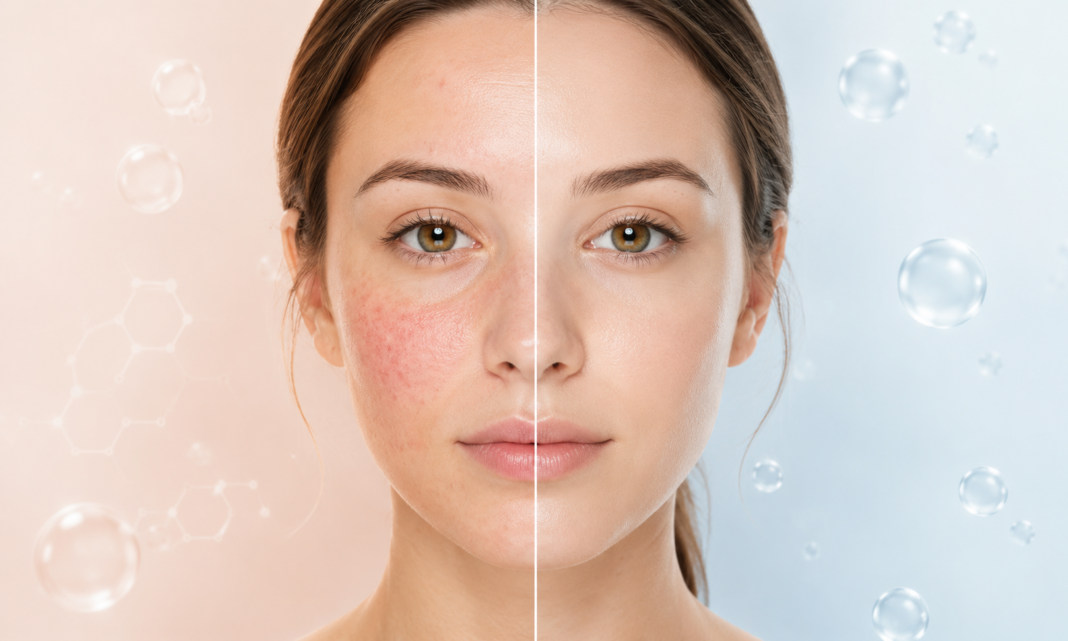
Part of the Egella Skin Intelligence Series — understanding what the research actually supports, and why.
Medical Disclaimer: This article is for educational purposes only and does not constitute medical advice, diagnosis, or treatment. Always consult a board-certified dermatologist or qualified healthcare professional regarding persistent skin concerns, allergic reactions, chronic skin conditions, or before starting new treatments. Never disregard professional medical advice because of something you have read here.
The most common reason a skincare routine stops working isn’t the products — it’s the skin barrier those products are trying to work through. Skin barrier repair is the step most routines skip entirely, and it’s the reason expensive serums sting, retinoids cause more irritation than results, and skin that should be improving keeps getting worse. The fix is almost never another active ingredient. It’s almost always the opposite.
Quick Summary: A damaged skin barrier repairs itself when you stop disrupting it — not when you add more products. Ceramides, glycerin, petrolatum, and daily SPF are the ingredients with the strongest evidence behind them. Mild damage improves in 1–2 weeks; severe cases take 6–8 weeks of consistent, simplified care. Most important single step: stop all exfoliants until your skin stops stinging. Everything else follows from that.
Editor’s Note — Harper Collins: The readers I hear from most often aren’t suffering from a lack of active ingredients. They’re suffering from too many of them. The skin barrier conversation is almost always a subtraction conversation, not an addition one. If your moisturiser stings, your retinol is peeling your face, and you’ve tried six serums in the past month — this is the guide you actually need. Read the “Common Mistakes” section first if you’re in a hurry. That’s where most of the damage is happening.
What Is the Skin Barrier?
Think of your skin as a brick wall. The skin cells are the bricks. Natural lipids — ceramides, cholesterol, and fatty acids — act as the mortar holding those bricks together. Together, they form the outermost layer of skin known as the stratum corneum: a remarkably sophisticated barrier that protects your body every hour of every day.
Its primary job is to keep water inside your skin while preventing bacteria, allergens, pollution, irritants, and environmental stressors from entering. When this layer functions properly, skin feels comfortable, looks healthy, and is more resilient against irritation. When it’s compromised, tiny gaps begin to appear between skin cells. Water escapes more easily — a process dermatologists call transepidermal water loss (TEWL) — while irritants penetrate more deeply. The result is skin that becomes increasingly reactive, dry, sensitive, and unpredictable.
Dermatologist Insight: A weakened skin barrier isn’t a disease itself — it’s a sign that the skin’s natural defence system has been disrupted, making many other skin concerns more difficult to manage.
Why the Skin Barrier Matters More Than Most Skincare Advice Suggests
Your skin barrier does far more than prevent dryness. It plays a central role in hydration, inflammation, wound healing, and the balance of your skin microbiome. This is one reason dermatologists recommend repairing the barrier before aggressively treating concerns like acne, hyperpigmentation, or premature aging — healthy skin responds better to treatment than irritated skin.
A healthy barrier helps:
- Reduce moisture loss through the skin surface
- Protect against pollution, allergens, and environmental stressors
- Decrease redness and inflammation
- Support a healthy skin microbiome
- Improve tolerance to active ingredients like retinoids and acids
- Maintain smoother texture and more even tone
Signs Your Skin Barrier May Be Damaged
Barrier damage doesn’t always appear dramatically overnight. For many people, symptoms develop gradually until products that once felt gentle suddenly begin causing irritation. Common signs include:
- Skin that feels tight after cleansing
- Moisturiser that suddenly stings or burns on application
- Persistent redness that wasn’t there before
- Flaking or peeling without deliberate exfoliation
- Unexpected breakouts in new areas
- Burning after applying skincare products
- Skin that feels dry yet looks oily
- Increased sensitivity to fragrance or previously tolerated ingredients
- Rough, uneven texture
- Difficulty tolerating retinoids or exfoliating acids that previously caused no issues
Experiencing several of these together — particularly the stinging moisturiser and tight-after-cleansing combination — is one of the most reliable indicators that the barrier has been compromised.
Editor’s Note — Harper Collins: If your moisturiser suddenly burns when you apply it, resist the urge to switch to a stronger treatment or try a different serum. In almost every case, stinging is a signal that your barrier needs recovery — not more active ingredients. This is the single most misread signal in skincare.
What Causes Skin Barrier Damage?
Contrary to popular belief, the skin barrier rarely becomes damaged because of a single mistake. It’s usually the result of repeated stress over time — most often from a routine that contains more than the skin can tolerate.
Over-Exfoliation
Chemical exfoliants — glycolic acid, lactic acid, salicylic acid — and physical scrubs can all be beneficial when used appropriately. However, frequent exfoliation gradually removes protective lipids, leaving skin increasingly vulnerable. Using an exfoliant more than 2–3 times per week is a common tipping point.
Using Too Many Active Ingredients
Layering retinol, vitamin C, exfoliating acids, benzoyl peroxide, and prescription treatments into the same routine may seem efficient, but it frequently produces the opposite of its intended effect. More active ingredients don’t mean better results — they increase the risk of sustained inflammation that prevents the barrier from recovering.
Harsh Cleansers
Highly foaming cleansers and traditional soap bars remove more than dirt and excess oil. They strip away essential lipids that maintain barrier integrity — the tight, squeaky-clean feeling after cleansing is often a sign that the cleanser has taken too much.
Environmental Stress
Cold weather, low humidity, indoor heating, excessive sun exposure, pollution, and strong winds all increase transepidermal water loss. Skin under environmental stress loses its natural moisture faster than it can replenish it.
Hot Water
Long hot showers may feel relaxing, but repeated exposure to high temperatures dissolves the skin’s natural lipid layer faster than lukewarm water.
Overusing Retinoids
Retinoids are among the most researched skincare ingredients available. But introducing them too quickly, using concentrations that are too strong, or applying them too frequently leads to sustained irritation before the skin can adapt — particularly if the barrier was already compromised when retinoid use began.
How to Repair a Damaged Skin Barrier
Your skin is remarkably resilient. Given the right environment, it can rebuild its protective barrier naturally. The challenge isn’t finding a miracle product — it’s removing the stress that’s preventing healing. Dermatologists consistently recommend a “less is more” approach during barrier recovery: rather than adding treatments, the goal is reducing irritation while supporting the skin’s natural repair process.
Think of it as a sprained ankle. You wouldn’t continue running on it and expect it to recover. The same patience applies to skin.
Step 1 — Pause Strong Active Ingredients
If your skin is burning, stinging, or peeling, temporarily stop using:
- Retinol, retinal, tretinoin (unless your dermatologist advises otherwise)
- Glycolic acid, lactic acid, salicylic acid
- Benzoyl peroxide
- Strong vitamin C (L-ascorbic acid)
- Exfoliating toners
This doesn’t mean permanently abandoning these ingredients. It gives the skin the opportunity to restore its protective function before they’re reintroduced.
Dermatologist Tip: One of the biggest mistakes in barrier recovery is trying to treat irritated skin with even more actives. Recovery almost always begins by simplifying — not expanding — the routine.
Step 2 — Switch to a Gentle Cleanser
Cleansing should remove dirt, sunscreen, and excess oil without leaving skin feeling tight or dry. Look for fragrance-free, non-stripping formulas that preserve the skin’s natural lipid layer. A cleanser that leaves skin comfortable rather than “clean” is the right choice during recovery.
| Look For | Avoid |
|---|---|
| Cream or gel cleansers | Harsh soap bars |
| Low-pH formulas | Highly foaming cleansers |
| Fragrance-free | Strong essential oils |
| Hydrating ingredients | High alcohol content |
Step 3 — Moisturise More Strategically
During barrier recovery, moisturiser isn’t simply about comfort. Its primary role is replacing missing lipids, reducing water loss, and creating the environment the skin needs to repair itself. Barrier-focused moisturisers combine humectants (which attract water), emollients (which soften), and occlusive ingredients (which seal moisture in) — all three categories working together.
Apply moisturiser while skin is still slightly damp after cleansing — this improves absorption and efficacy, particularly for humectant ingredients.
The Best Ingredients for Skin Barrier Repair
Not every skincare ingredient contributes equally to barrier recovery. These are the ones with the strongest evidence behind them:
Ceramides
Ceramides are naturally occurring lipids that make up a significant portion of the skin barrier. When the barrier becomes damaged, ceramide levels decline — making replacement particularly valuable. Dermatologist-recommended moisturisers typically include multiple ceramide types to better mimic the skin’s natural composition. This connects directly to the same evidence base discussed in our guide on niacinamide vs vitamin C — both ceramides and niacinamide support barrier function through complementary mechanisms.
Glycerin
One of the most extensively researched humectants in skincare, with decades of clinical evidence. Glycerin attracts water into the outer layers of skin, improving hydration while supporting barrier recovery. Unlike many trending ingredients, its efficacy is not in question.
Cholesterol
A natural component of healthy skin. When combined with ceramides and fatty acids, cholesterol helps rebuild the lipid matrix that keeps the barrier resilient. It is most effective when used alongside the other two components of the skin’s natural lipid system.
Fatty Acids
Fatty acids reinforce the skin’s protective structure and improve flexibility — particularly helpful for dry or compromised skin that has lost its natural suppleness.
Petrolatum
Despite persistent misconceptions, petrolatum remains one of the most effective occlusive ingredients available. It significantly reduces transepidermal water loss and is widely considered non-comedogenic for most people. Dermatologists have recommended it for barrier support for decades — its unsexy reputation doesn’t diminish its evidence base.
Niacinamide
Supports barrier function by encouraging ceramide production while reducing redness and improving overall skin resilience. Most people tolerate concentrations between 2% and 5% well during recovery — it is also one of the few ingredients compatible with an irritated barrier when other actives have been paused. See our full guide on niacinamide vs vitamin C for more on how it works.
| Ingredient | Main Benefit | Evidence Level |
|---|---|---|
| Ceramides | Rebuilds skin lipids | Very strong |
| Glycerin | Attracts and retains hydration | Very strong |
| Petrolatum | Prevents moisture loss | Very strong |
| Cholesterol | Strengthens lipid barrier | Strong |
| Fatty Acids | Improves barrier flexibility | Strong |
| Niacinamide | Supports ceramide production | Strong |
Simple Morning Routine for Barrier Repair
- Rinse with lukewarm water or use a gentle cream cleanser
- Apply a hydrating serum containing glycerin or hyaluronic acid
- Apply a ceramide-rich moisturiser while skin is still slightly damp
- Finish with broad-spectrum SPF 30 or higher — every morning without exception
Simple Evening Routine for Barrier Repair
- Remove sunscreen and makeup with a gentle, low-pH cleanser
- Skip all exfoliants while skin is healing
- Apply a barrier-repair moisturiser generously
- If skin is extremely dry or compromised, seal everything with a thin layer of petrolatum as the final step
Editor’s Note — Harper Collins: Barrier repair is not about a 10-step routine. In almost every case I’ve researched, the healthiest skin outcomes come from consistently following three or four well-chosen steps — not from constantly introducing new products. The routine above is deliberately short. That’s not a limitation; it’s the point.
How Long Does Skin Barrier Repair Take?
The timeline depends on what caused the damage, how severe it is, and whether the skin continues to be exposed to irritating products.
| Type of Damage | Estimated Recovery |
|---|---|
| Mild dryness or seasonal irritation | 7–14 days |
| Over-exfoliation | 2–4 weeks |
| Retinoid irritation | 3–6 weeks |
| Severely compromised barrier | 6–8+ weeks |
Consistency matters more than any individual product decision. The barrier doesn’t recover in response to a new serum — it recovers when the stress causing the disruption is removed and the skin is given time.
7 Common Mistakes That Delay Skin Barrier Recovery
1. Continuing to exfoliate
Peeling is not a sign that skin needs more exfoliation. It’s often a sign the barrier needs protection. Additional acid or scrub application during this phase significantly extends recovery time.
2. Changing products every few days
Barrier recovery requires consistency. Constantly introducing new cleansers, serums, and moisturisers makes it impossible to know what’s helping — and increases the risk of additional irritation.
3. Skipping sunscreen
UV exposure increases inflammation and slows the skin’s natural repair mechanisms. Daily SPF is one of the simplest and most evidence-supported components of barrier recovery — and the one most frequently skipped.
4. Using very hot water
Hot water dissolves the skin’s natural lipid layer faster than lukewarm water. Shortening shower time and reducing water temperature are two low-effort, high-impact changes during recovery.
5. Assuming tight skin means clean skin
The tight, squeaky-clean sensation isn’t evidence of thorough cleansing — it’s evidence that the cleanser removed too much of the skin’s natural protection. A well-formulated cleanser leaves skin feeling comfortable, not stripped.
6. Layering too many active ingredients
Combining exfoliating acids, retinoids, benzoyl peroxide, and high-strength vitamin C in a single routine significantly increases inflammation risk — particularly for skin that is already compromised.
7. Expecting instant results
Barrier repair is a biological process. The barrier didn’t become damaged overnight, and it won’t recover overnight either. Evaluating products after two to four weeks rather than two to four days produces more useful information.
Skin Barrier Myths vs. Facts
| Myth | Fact |
|---|---|
| Oily skin can’t have barrier damage | Even oily skin can become dehydrated and develop a weakened barrier — oil production and barrier integrity are separate functions |
| More active ingredients mean faster results | Too many actives in a compromised routine typically delay recovery rather than accelerate it |
| Expensive skincare automatically repairs the barrier | Well-formulated ingredients matter far more than price — petrolatum is inexpensive and highly effective |
| Peeling skin needs exfoliation | Peeling skin usually needs moisture, protection, and time — not another acid |
| Petrolatum clogs pores | Pure petrolatum is widely considered non-comedogenic and is recommended by dermatologists for barrier support |
When to See a Dermatologist
Most mild cases of barrier disruption improve with a simplified skincare routine. However, professional evaluation is recommended if:
- Persistent redness lasts longer than six weeks despite a simplified routine
- Skin shows painful cracking or bleeding
- Signs of infection develop (increased warmth, swelling, discharge)
- Severe itching is present and doesn’t improve
- A rapidly spreading rash appears
- Burning continues despite stopping all active ingredients
- Eczema flare-ups become frequent or severe
Some conditions — including eczema, allergic contact dermatitis, rosacea, and psoriasis — can resemble barrier damage but require different treatment strategies. A dermatologist can distinguish between compromised barrier function and an underlying skin condition that needs specific treatment.
The Honest Evidence Assessment
Despite countless viral skincare trends promising overnight barrier repair, scientific evidence is considerably more measured. No ingredient rebuilds a compromised skin barrier instantly. Recovery depends on reducing inflammation, minimising water loss, and allowing the skin’s natural renewal process to restore its protective lipid matrix over time.
Among currently available skincare ingredients, ceramides, glycerin, petrolatum, cholesterol, and fatty acids have the strongest and most consistent evidence supporting barrier repair. Newer ingredients — including growth factors, peptides, and PDRN — show encouraging early research, but are best viewed as complementary additions rather than standalone solutions. Our guide to PDRN skincare covers this in detail, including an honest assessment of what topical application can and cannot achieve.
The Egella Take
🌿 Best for: chronically irritated skin, over-exfoliators, retinoid beginners, anyone whose routine has stopped feeling comfortable
🏆 The evidence: ceramides + glycerin + petrolatum + SPF — no other combination has this level of consistent dermatological support
⚠️ The honest truth: barrier repair takes weeks, not days — and no single product speeds it up significantly. The variable that matters most is whether you stop doing the thing that caused the damage.
Healthy skin isn’t built by chasing every new active ingredient. It’s built by protecting the foundation that allows every other product to work more effectively. When the barrier is healthy, active ingredients are better tolerated, hydration improves, and skin becomes more resilient. When it’s compromised, even the most expensive routine may produce no results at all.
Sometimes the most effective skincare decision isn’t adding another product. It’s giving your skin permission to recover.
Frequently Asked Questions About Skin Barrier Repair
Can a damaged skin barrier heal on its own?
In many cases, yes. Mild barrier damage often improves naturally once irritating products are removed and the skin is supported with gentle cleansing, moisturisation, and daily sun protection. More severe damage may require 6–8 weeks of consistent simplified care.
How do I know if my skin barrier is damaged?
Common signs include tightness after cleansing, burning when applying skincare, redness, flaking, increased sensitivity, and products that suddenly sting despite being well tolerated previously. Experiencing several of these together is a reliable indicator.
Should I stop using retinol if my skin barrier is damaged?
Temporary discontinuation is generally recommended until the skin feels comfortable again. Once the barrier has recovered, retinoids can usually be reintroduced gradually at a lower concentration. If you’re using prescription retinoids, consult your dermatologist before making changes.
Can oily skin have a damaged skin barrier?
Yes. Excess oil production doesn’t indicate a healthy barrier. Oily skin can still become dehydrated, irritated, and sensitive when its protective lipid layer is compromised — often as a direct result of over-cleansing or over-exfoliation.
What ingredients repair the skin barrier fastest?
Ceramides, glycerin, petrolatum, cholesterol, and fatty acids have the strongest evidence. Rather than looking for a single fast-acting ingredient, focus on a simple, consistent routine built around this combination — and remove whatever is causing the disruption.
Does hyaluronic acid repair the skin barrier?
Hyaluronic acid primarily hydrates by attracting water. While it supports overall skin comfort, it works best when paired with barrier-repair ingredients like ceramides and an effective occlusive moisturiser that seals the hydration in.
Should I exfoliate peeling skin?
No. Peeling is usually a sign the barrier needs recovery — not more exfoliation. Additional chemical or physical exfoliation during this phase will typically extend rather than resolve the irritation.
Sources & References
- American Academy of Dermatology (AAD) — Skin Care & Dry Skin Resources
- National Institutes of Health (NIH) — Skin Barrier Function and Transepidermal Water Loss
- Cleveland Clinic — Skin Barrier: Function, Damage & Repair
- Mayo Clinic — Dry Skin and Skin Care Guidelines
- Elias PM. Skin Barrier Function. Journal of Investigative Dermatology
- Proksch E, Brandner JM, Jensen JM. The Skin: An Indispensable Barrier. Experimental Dermatology
- Draelos ZD. The Role of Ceramides in Skin Barrier Function. Cosmetic Dermatology Literature
This article was researched and written by the Egella editorial team using current dermatology guidelines, peer-reviewed scientific literature, and trusted medical organisations. Last updated: June 2026.
Save this guide and explore more skincare guides at egella.com
Has barrier damage ever derailed your skincare routine? Tell us what worked in the comments.