

This post contains affiliate links. If you purchase through our links, we may earn a small commission at no extra cost to you.
Part of the Egella Desk Recovery Series — the tools that complement our recovery guides.
A foam roller is the piece of wellness equipment most people buy, use twice, and then trip over for the next three years. The reason is usually that they bought the wrong density for their tension level. We tested seven foam rollers specifically for desk-related back and shoulder tension — and paired each one with techniques from our massage and mobility guides.
Quick Summary: For desk-related tension, you don’t need the firmest roller available — you need the one you’ll actually use consistently. A medium-density roller used daily beats a firm roller used occasionally. Our top pick: TriggerPoint GRID 1.0 — the reference standard for a reason.
| Category | Our Pick | Best For | Shop |
|---|---|---|---|
| 🏆 Best Overall | TriggerPoint GRID 1.0 | Most desk workers | View → |
| 💰 Best Budget | Amazon Basics 36-inch | Full-back rolling | View → |
| 🌿 Best for Beginners | 321 STRONG Foam Roller | New to foam rolling | View → |
| 🦴 Best for Thoracic Spine | Chirp Wheel+ | Locked-up upper back | View → |
| ⚡ Best for Deep Tension | FITINDEX Vibrating | Chronic tension | View → |
Editor’s Note — Evelyn Parker: I bought an ultra-firm foam roller two years ago because I assumed more firmness meant more effectiveness. It sat in the corner for 18 months. The TriggerPoint GRID at medium-firm density gets used daily because it’s firm enough to produce a real release but not so firm that I have to brace myself before using it. The foam roller you’ll actually use is more valuable than the one with the best specs on paper.
What to Know Before You Buy
Three variables matter most in a foam roller for desk tension: density (softer for sensitive areas, firmer for established tension), length (13 inches for targeted work, 26–36 inches for full-back), and texture (smooth for gentle rolling, grooved for trigger point work). For how to use a foam roller against the wall for upper back tension, see our upper back massage guide.
The 7 Best Foam Rollers for Desk Tension
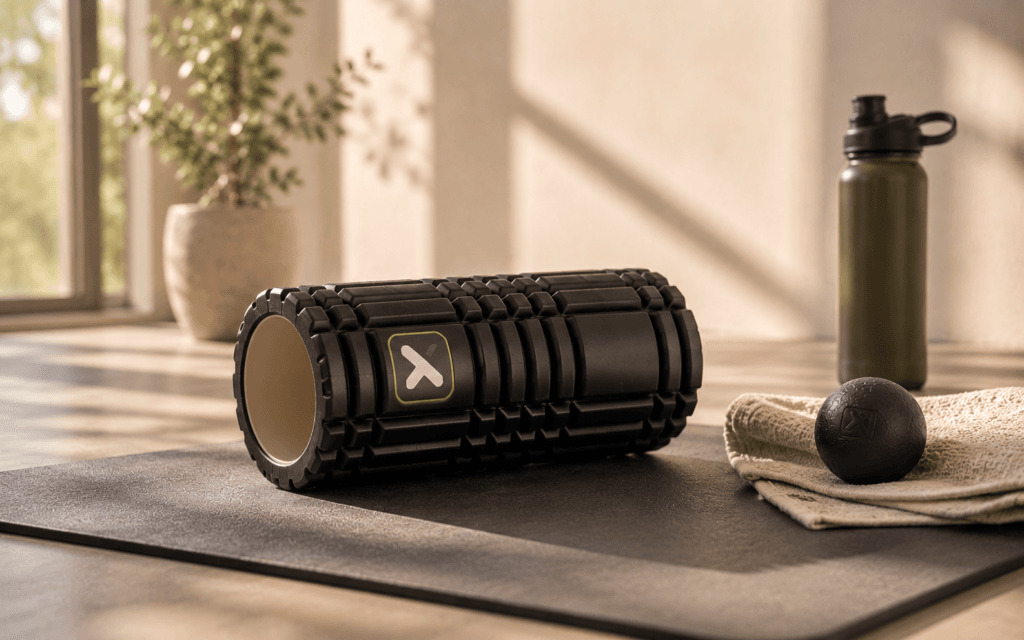
1. TriggerPoint GRID 1.0 — Best Overall
The reference standard. The hollow EVA-foam core maintains its shape after years of daily use — the grooved surface provides varying pressure that mimics hand massage, and three physical therapists named it as their default recommendation.
Best for: Most people, upper back and shoulder tension. Density: Medium-firm.
• Hollow core — never loses shape
• Grooved surface mimics massage
• Physio-recommended
• Compact 13-inch size fits a bag
• 13 inches requires repositioning for full back
• May feel too firm for absolute beginners
TriggerPoint GRID 1.0 — three physical therapists independently recommended this before we even asked.
View at Amazon →
2. 321 STRONG Foam Roller — Best for Beginners
Medium density with better spinal safety features. The included guided routine eBook is a genuine addition — particularly for people who want to use a foam roller correctly but don’t know where to start. Pairs directly with our posture correction guide.
Best for: Beginners, sensitive back tension. Density: Medium.
• Gentler than TriggerPoint for beginners
• Includes guided routine eBook
• Good spinal safety design
• Medium density — forgiving but effective
• Less durable than hollow-core options
• May not provide enough pressure for advanced users
321 STRONG — the most beginner-friendly option with the most useful supporting content.
View at Amazon →
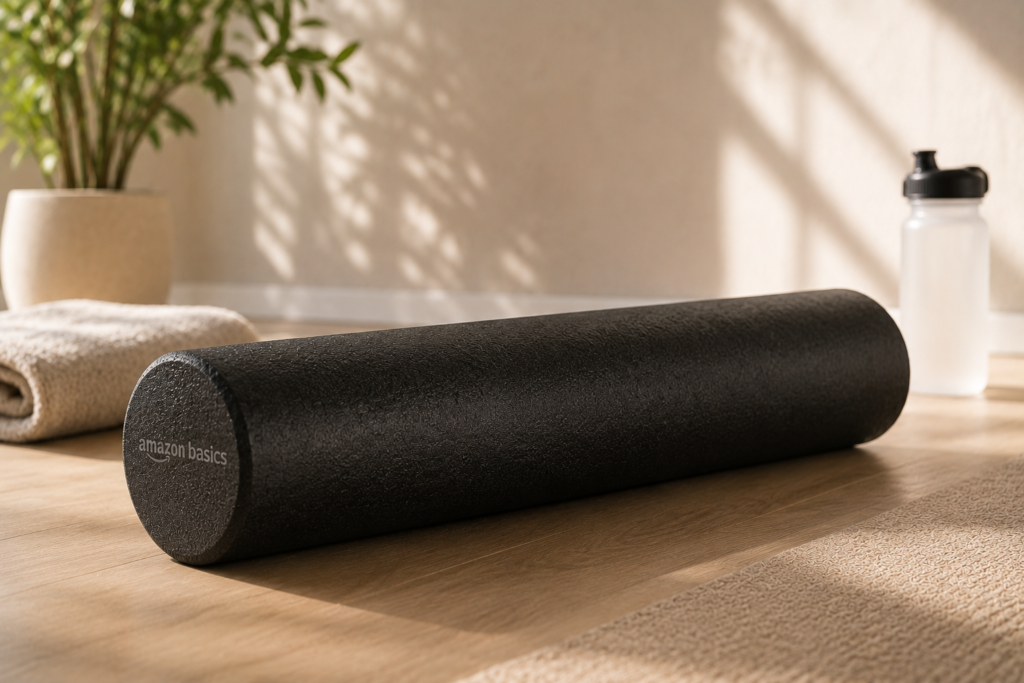
3. Amazon Basics High-Density Foam Roller (36-inch) — Best Budget
The 36-inch length covers the entire spine in a single pass without repositioning. High-density solid foam — effective for anyone who has built up foam rolling tolerance and wants full-spine coverage at a budget price.
Best for: Budget-conscious buyers, full-back rolling. Density: High/firm.
• Full-spine coverage in one pass
• Lowest price on this list
• Firm enough for real results
• Durable for the cost
• Too firm for beginners
• Solid foam will compress over time with heavy daily use
Amazon Basics 36-inch — full-back coverage at a price that removes any barrier to buying one.
View at Amazon →
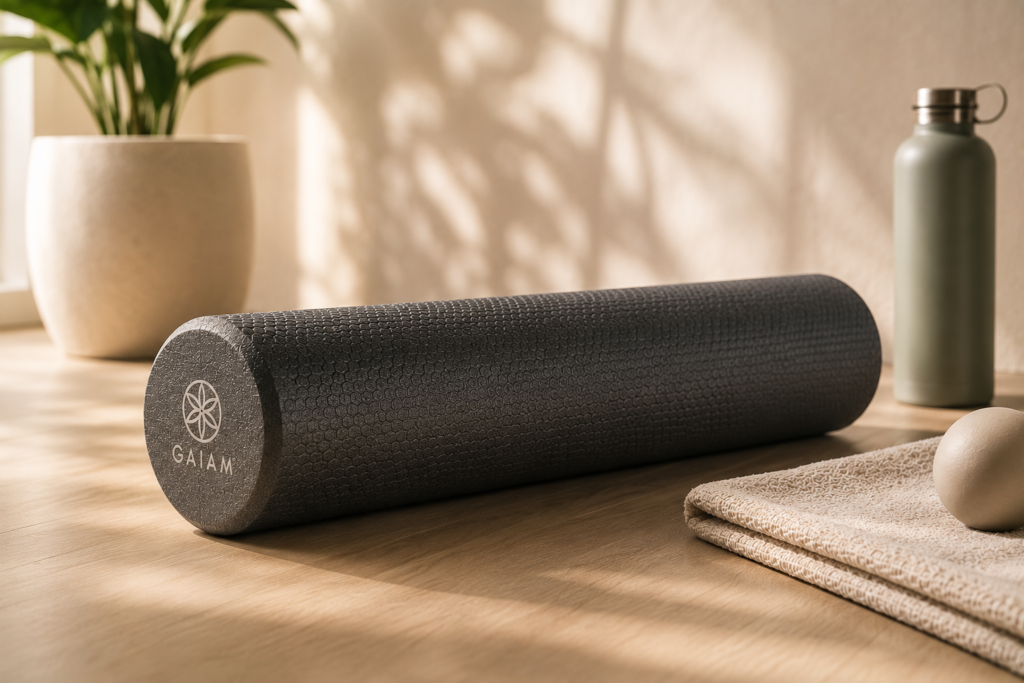
4. Gaiam Restore Muscle Therapy Foam Roller — Best for Sensitive Tension
The softest density on this list — appropriate for acute tension, first-time foam rollers, or anyone particularly sensitive to firm pressure. Not as durable as hollow-core options but the gentlest introduction available.
Best for: Acute tension, absolute beginners. Density: Soft-medium.
• Gentlest option on this list
• Affordable price
• Good for sensitive or acute tension
• Smooth surface — no pressure points
• Loses shape slightly after extended use
• Not firm enough for chronic or deep tension
Gaiam Restore — the gentlest introduction for anyone intimidated by firmer options.
View at Amazon →
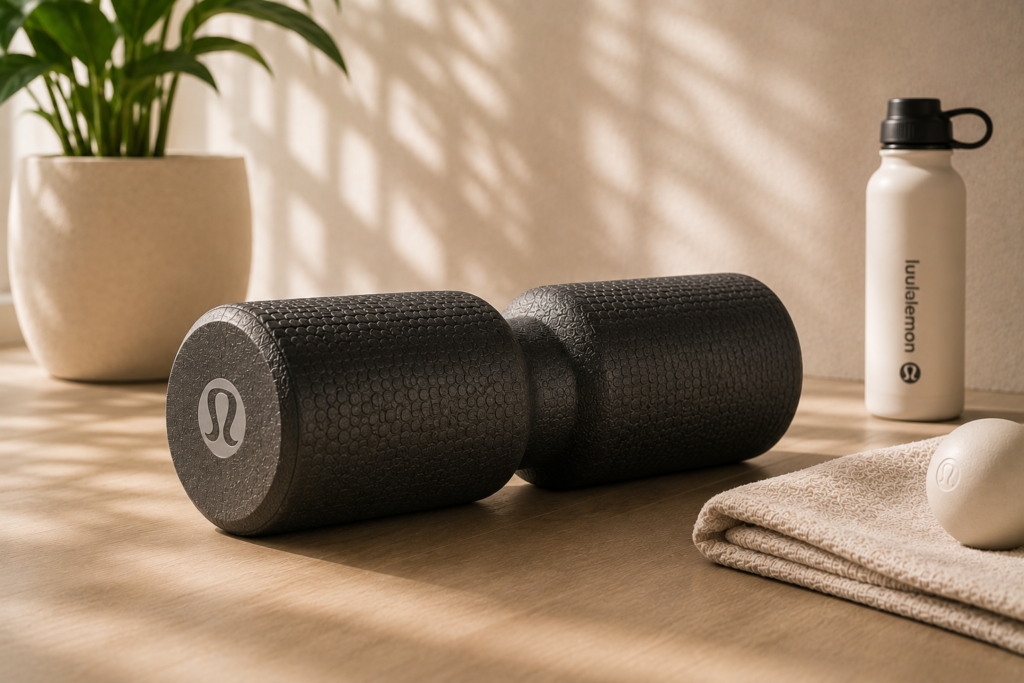
5. Lululemon Double Roller — Best Two-in-One
The inner roller is firm for deep tissue work; the outer roller has a ridged surface for a massage-like effect. The inner roller specifically performs well between the shoulder blades when used against the wall — following the technique in our shoulder massage guide.
Best for: Those wanting one tool for multiple approaches. Density: Firm inner / medium outer.
• Two rollers in one tool
• Inner core great for shoulder blades
• Ridged exterior for massage effect
• Multiple color options
• Higher price than single rollers
• 20-inch length requires repositioning for full spine
Lululemon Double Roller — two foam rollers in one, with a firm core that delivers.
View at Lululemon →
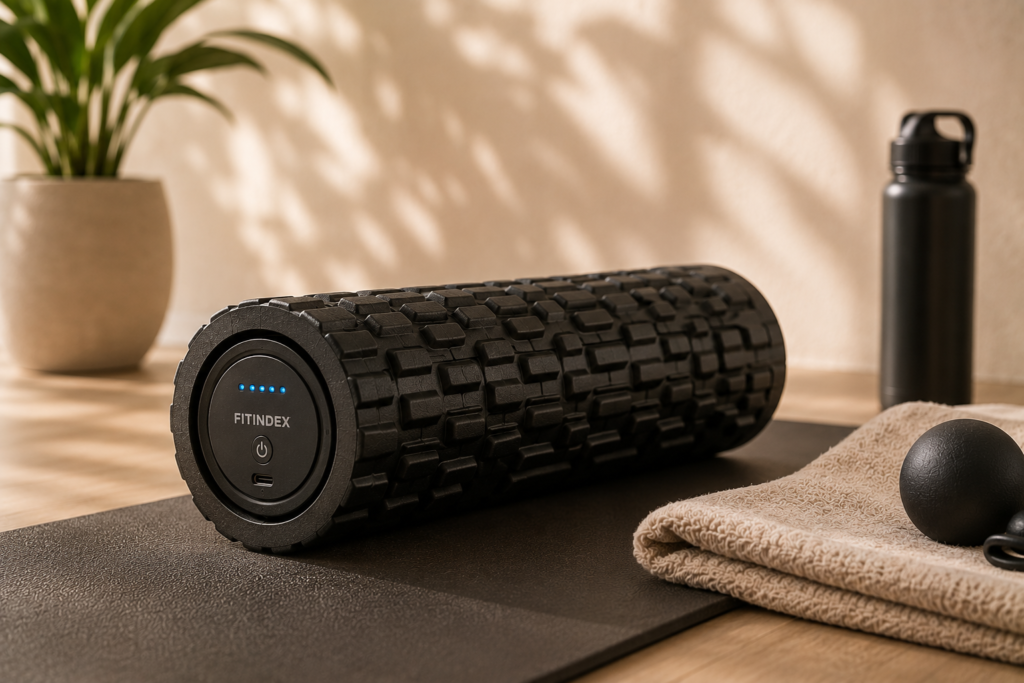
6. FITINDEX Vibrating Foam Roller — Best for Deep Tension
The vibration component accelerates muscle release in a way static pressure alone doesn’t — particularly useful for chronic tension that doesn’t respond well to standard foam rolling. Five-speed settings allow control over intensity.
Best for: Chronic tension, those wanting accelerated recovery. Density: Medium-firm with vibration.
• Vibration accelerates muscle release
• 5 intensity settings
• FSA/HSA eligible (US)
• 1,500+ reviews, 4.3-star rating
• Heavier than standard rollers
• Higher price point
• Requires charging
FITINDEX Vibrating Foam Roller — for tension that a standard roller can’t fully reach.
View at Amazon →
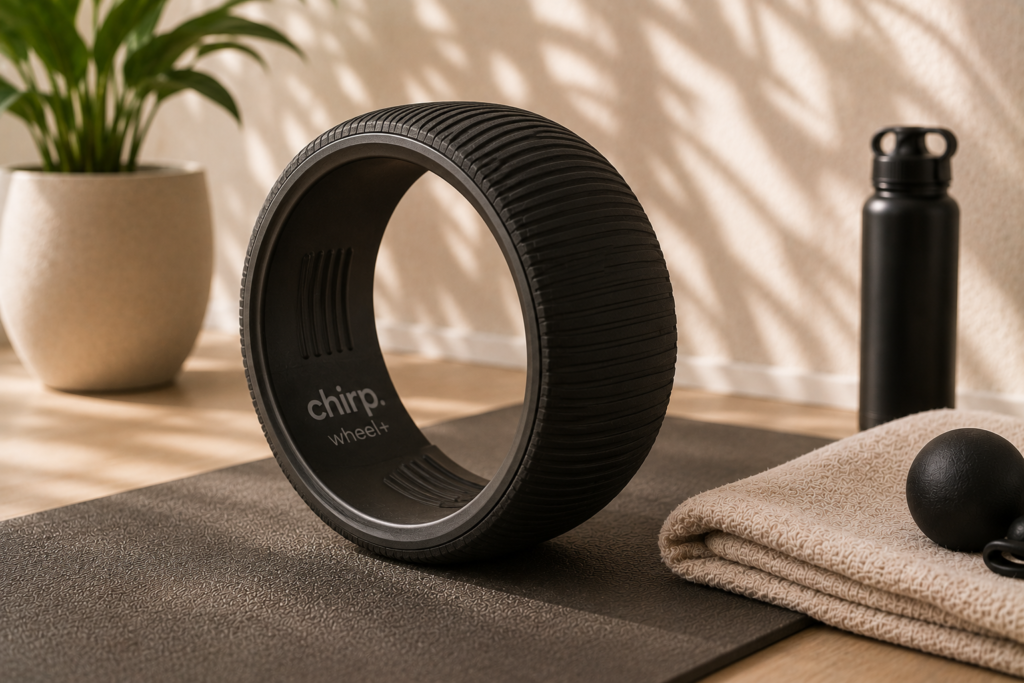
7. Chirp Wheel+ — Best for Thoracic Spine
Not a traditional foam roller — specifically designed for spinal decompression along the thoracic spine, supporting the vertebrae while releasing the muscles on either side. Works directly alongside our T-spine mobility guide.
Best for: Thoracic stiffness, “locked up” upper back. Density: Firm, spinal-safe design.
• Only tool designed around the spine itself
• Supports vertebrae while releasing muscles
• Available in 3 firmness levels
• Effective for locked thoracic spine
• Wheel format — not a traditional roller
• Less versatile for legs and other muscle groups
Chirp Wheel+ — the only tool on this list designed around the spine rather than the surrounding muscles.
View at Chirp →
Foam Roller Comparison
| Product | Best For | Density | Length |
|---|---|---|---|
| TriggerPoint GRID | Best overall | Medium-firm | 13 inch |
| 321 STRONG | Beginners | Medium | 18 inch |
| Amazon Basics 36″ | Budget full-back | Firm | 36 inch |
| Gaiam Restore | Sensitive tension | Soft-medium | 18 inch |
| Lululemon Double | Two-in-one | Firm/Medium | 20 inch |
| FITINDEX Vibrating | Deep tension | Medium-firm | 13 inch |
| Chirp Wheel+ | Thoracic spine | Firm | Wheel format |
The Egella Take
🏆 Best Overall: TriggerPoint GRID — physio-approved, durable, works for most desk workers
💰 Best Budget: Amazon Basics 36-inch — full-back coverage at the lowest price
🌿 Best for Beginners: 321 STRONG — gentler entry point with guided routines included
🦴 Best for Thoracic Spine: Chirp Wheel+ — addresses the joint, not just the surrounding muscle
⚡ Best for Deep Tension: FITINDEX Vibrating — when standard pressure isn’t enough
🛒 Quick Buying Guide
Buy TriggerPoint GRID if → you want the physio-recommended standard that holds its shape for years of daily use
Buy 321 STRONG if → you’re new to foam rolling and want a guided routine included alongside a gentler density
Buy Amazon Basics 36″ if → you want full-spine coverage at the lowest possible price without fuss
Buy Gaiam Restore if → your back tension is acute or sensitive and you need the gentlest possible entry point
Buy Lululemon Double Roller if → you want one tool that does both broad rolling and targeted trigger point work
Buy FITINDEX Vibrating if → you have chronic desk tension that standard pressure alone hasn’t been able to shift
Buy Chirp Wheel+ if → your upper back feels locked up rather than just tight — it addresses the spine, not just the surrounding muscle
Frequently Asked Questions
How often should I use a foam roller for desk tension?
Daily short sessions (5–10 minutes) produce significantly better results than occasional longer ones. Consistency matters more than duration.
Is it safe to foam roll your spine?
Rolling the muscles alongside the spine — not directly on the vertebrae — is safe for most people. Our upper back massage guide specifies exactly where to apply pressure safely.
What’s the difference between a foam roller and a massage gun?
Foam rollers use body weight for broad areas. Massage guns use percussive vibration for targeted spots. Both work — foam rollers are better for the full back, massage guns for specific knots.
Save this guide and explore more wellness guides at egella.com
Which foam roller do you use, and what density? Tell us in the comments.
