

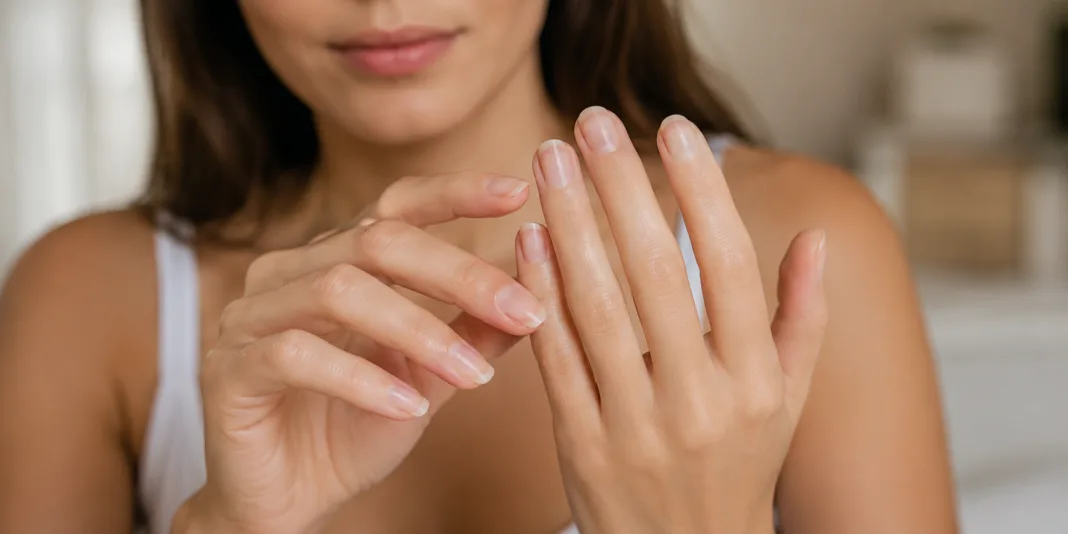
Repairing damaged nails after gel is one of the most common nail concerns — and one of the most misunderstood. If your nails are thin, peeling, or covered in white spots after a gel removal, you’re not alone. The good news: the damage isn’t permanent, and the recovery protocol is simpler than the beauty industry wants you to think.
This is the exact 8-week plan that actually works — week by week, step by step.
What Actually Causes Damaged Nails After Gel
Before fixing damaged nails after gel, it helps to understand what actually caused the damage — because most people get this wrong.
Gel polish itself doesn’t damage nails the way most people assume. The removal process does. Specifically, peeling, picking, or forcibly lifting gel polish — which almost everyone has done at least once — physically tears away the outermost layers of the nail plate along with the product. Those surface layers don’t regenerate in place. The nail has to grow entirely new ones from the matrix, which takes months.
Additional causes of damaged nails after gel include:
- Prolonged acetone soaking — strips both the nail plate and surrounding skin of the moisture and oils they need to stay resilient
- Too-frequent gel applications without adequate breaks between sets
- Over-filing during salon prep — removes healthy nail layers before the gel even goes on
Understanding the cause is the first step. Now, here’s how to fix it.
Weeks 1–2: The Detox Phase for Damaged Nails After Gel
The first two weeks of repairing damaged nails after gel require doing essentially nothing — which is genuinely harder than it sounds.
Go completely bare. No polish, no base coat, no overlays of any kind. Your nails need unobstructed air and light, and they need to be left completely alone. Resist the urge to cover the damage with color — doing so traps moisture and slows the recovery.
The one active step during this phase is cuticle oil, applied at least twice daily — morning and night without exception. Jojoba oil and vitamin E-based formulas absorb particularly well. Hydration for damaged nails after gel always starts at the cuticle, not the plate itself, because it’s at the base where new nail growth originates.
What to use: Look for cuticle oils containing jojoba, sweet almond, or vitamin E. Apply generously and massage in circular motions to stimulate circulation at the nail matrix.
Weeks 3–4: Strengthening Damaged Nails After Gel
After two weeks of detox, your nails have had the chance to begin recovering their natural moisture balance. They are now ready for gentle structural support.
Introduce a keratin or calcium-based nail hardener, applied as a base coat every three days. This gives the nail plate enough rigidity to resist the mechanical stress of daily life — typing, opening packaging, daily tasks — without cracking or peeling further.
However, avoid acetone entirely during this phase. Even non-acetone polish remover should be minimized. Every acetone exposure undoes days of hydration work. If you need to remove anything, use a gentle peel-off base coat system instead.
Key rule for weeks 3–4: Strengthen, hydrate, protect. Nothing aggressive. Nothing new.
Weeks 5–6: The Flexibility Shift — A Step Most People Miss
This phase catches many people off guard when repairing damaged nails after gel — and skipping it is why so many recovery attempts stall.
After spending two weeks hardening the nail, you stop the hardener. The reason is counterintuitive but important: over-hardened nails become brittle, and brittle nails snap rather than bend. A snapped nail creates worse structural damage than the original gel removal did.
During weeks five and six, therefore, switch from a hardening treatment to a nourishing one — formulas that contain flexible film-formers and moisturizing ingredients rather than rigidifying ones. Your nail needs strength and flexibility working together, not one at the expense of the other.
This is also the ideal window to begin a biotin supplement if you aren’t already taking one. The evidence for biotin’s effect on nail thickness and growth rate is genuinely solid — most studies use 2,500 to 5,000 micrograms daily and show measurable improvements in nail thickness within 3 to 4 months of consistent use.
Weeks 7–8: Seeing Results from Your Nail Recovery
By week eight of repairing damaged nails after gel, the nail matrix has had two full months of consistent nourishment. The damaged portion of the nail plate should now be visibly moving toward the free edge.
At this point, gently trim away any remaining visibly thinned or peeling areas and file them smooth with a fine-grit file. The new nail growing in from the base will look noticeably different — thicker, less translucent, and without the white stress marks that characterize gel damage.
Moreover, you can reintroduce nail color at this stage — specifically a breathable or water-based formula — without setting back the recovery. Avoid traditional gel for at least another 4 weeks to give the new nail growth time to fully consolidate.
The Complete 8-Week Nail Recovery Timeline
| Weeks | Phase | Key Actions |
|---|---|---|
| 1–2 | Detox | Go bare, cuticle oil twice daily, no polish |
| 3–4 | Strengthening | Keratin/calcium hardener every 3 days, no acetone |
| 5–6 | Flexibility Shift | Switch to nourishing formula, start biotin supplement |
| 7–8 | Progress | Trim damaged edges, reintroduce breathable color |
How to Remove Gel at Home Without Damaging Your Nails
Preventing damaged nails after gel in the future starts with learning the correct removal technique. Here is the safest at-home method:
Step 1: Use a 180-grit file applied lightly across each nail — just enough passes to remove the surface shine from the topcoat. This allows acetone to penetrate evenly without over-soaking time.
Step 2: Soak cotton pads thoroughly in 100% acetone, place one on each nail, and wrap each finger tightly in aluminum foil.
Step 3: Leave them for 15 to 20 minutes without checking. Patience here directly determines how much damage you avoid. Checking too early and forcing the gel off is the single most common cause of damaged nails after gel removal.
Step 4: When you remove the foil, the gel should be visibly soft and lifting at the edges. Use an orange stick to gently push it away from the nail. If any section resists, re-wrap for five more minutes. The rule is non-negotiable: if it isn’t moving, it isn’t ready.
Step 5: Finish every removal session with generous cuticle oil and a thick hand moisturizer. This step is not optional — it’s where damage prevention happens.
Frequently Asked Questions About Damaged Nails After Gel
How long does it take to repair damaged nails after gel?
Most people see significant improvement within 8 weeks of consistent care. Full recovery — meaning completely healthy new nail growth — takes 3 to 6 months depending on how fast your nails grow and how severe the original damage was.
Can I wear nail polish while repairing damaged nails after gel?
During weeks 1 and 2, go completely bare. From week 7 onward, breathable or water-based nail polish is safe to reintroduce. Avoid traditional gel for at least 4 weeks after completing the protocol.
Does biotin really help with nail recovery?
Yes — the evidence is solid. Studies consistently show that 2,500 to 5,000 micrograms of biotin daily improves nail thickness and growth rate. Results typically appear after 3 to 4 months of consistent supplementation.
What is the best cuticle oil for damaged nails after gel?
Jojoba oil and vitamin E-based formulas absorb most effectively into the nail matrix. Apply at least twice daily — morning and evening — and massage in for 30 seconds to stimulate circulation.
Final Thoughts: Your Nails Will Recover — Give Them the Time
Repairing damaged nails after gel is a process, not an overnight fix. The 8-week protocol works — but only if you follow it consistently and resist the urge to rush back into gel too soon.
Your nails are resilient. Given the right conditions — hydration, gentle strengthening, flexibility, and time — they will grow back healthier than before. Trust the process, follow the protocol, and in two months you’ll have the nails you’ve been trying to get back.
Save this guide, share it with someone whose nails need rescuing, and explore more nail care and beauty tips at egella.com