

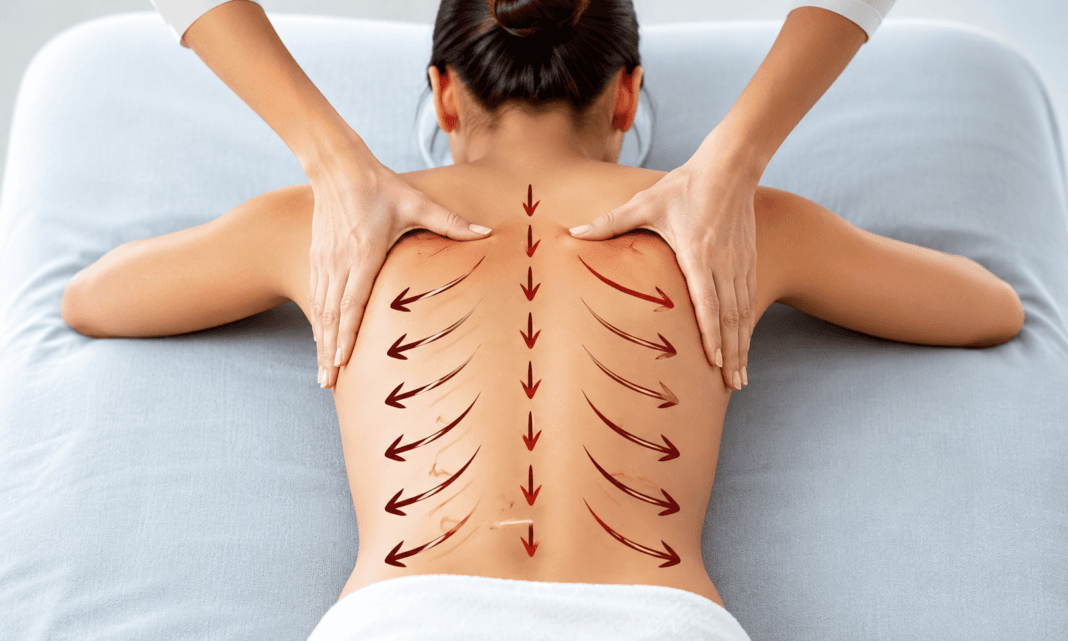

The back massage techniques most people use by default — pressing harder, rubbing faster, focusing only on where it hurts — are usually the least effective approaches. A few small adjustments in method change how much relief you actually get, and none of them require a partner or a professional appointment.
Quick Summary: These seven back massage techniques cover the lower back, mid-back, and upper back using your hands, a tennis ball, and a foam roller. The biggest mistake most people make is using too much pressure too fast — effective back massage relies on rhythm and sustained pressure rather than force.
This guide covers seven techniques that actually work, the most common mistakes that reduce their effectiveness, and when self-massage isn’t enough and a professional would serve you better.
Editor’s Note: The most counterintuitive thing we learned researching this: more pressure doesn’t mean better results. One physical therapist we came across put it clearly — if it’s painful rather than “hurts so good,” you’ve likely started an inflammatory response that makes things worse, not better. Backing off the pressure slightly and slowing down almost always produced more relief than pushing harder.
Why Most People Massage Their Back Wrong
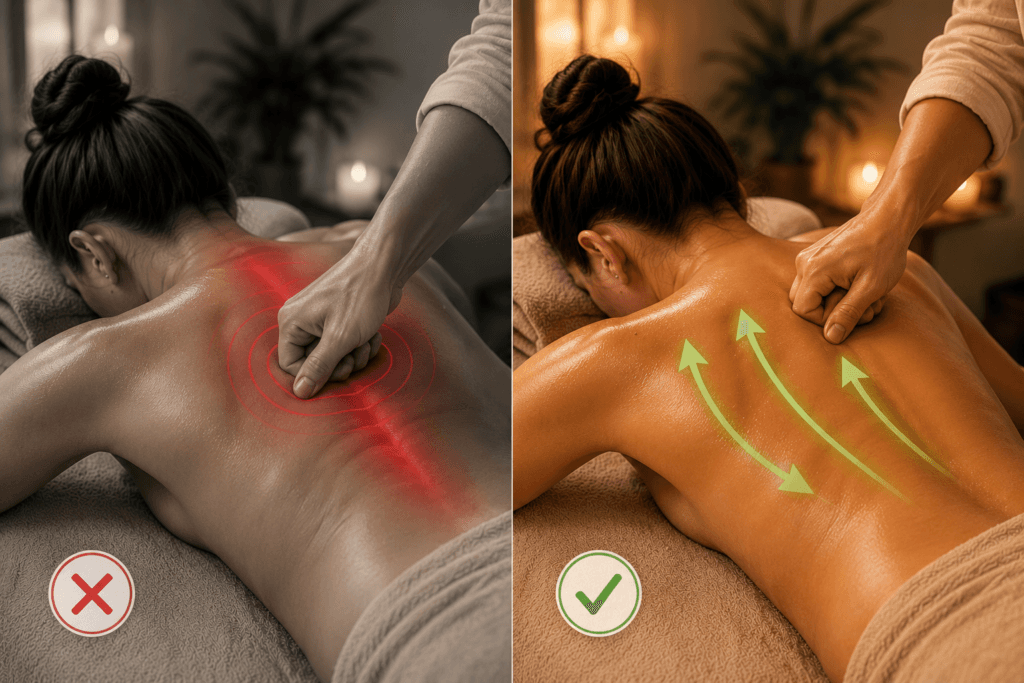
Back tension responds better to rhythm and sustained, moderate pressure than to force. The most common mistakes — pressing directly on the spine itself, moving too quickly over tight spots, or massaging the same area repeatedly without a break — tend to irritate rather than release the muscles involved.
Self-massage also has a practical limitation worth acknowledging: it can’t reach deep knots or trigger points the way a professional session can. These techniques are best understood as a maintenance and relaxation habit for everyday tension rather than a substitute for professional care when dealing with significant or persistent pain.
7 Back Massage Techniques That Actually Work

1. Tennis Ball Against the Wall (Lower and Mid-Back)
Place a tennis ball between your back and a wall at the point where you feel tension. Gently lean in — not hard — and hold for eight to ten seconds before slowly rolling to an adjacent spot. Work around the muscles beside the spine, never directly on the vertebrae themselves.
This is the most versatile and accessible self-massage technique for the back, since the wall controls your pressure and frees your hands entirely. A lacrosse ball offers firmer pressure; an old tennis ball is gentler. Start with the softer option.
How long: 60–90 seconds per area, up to three times per session.
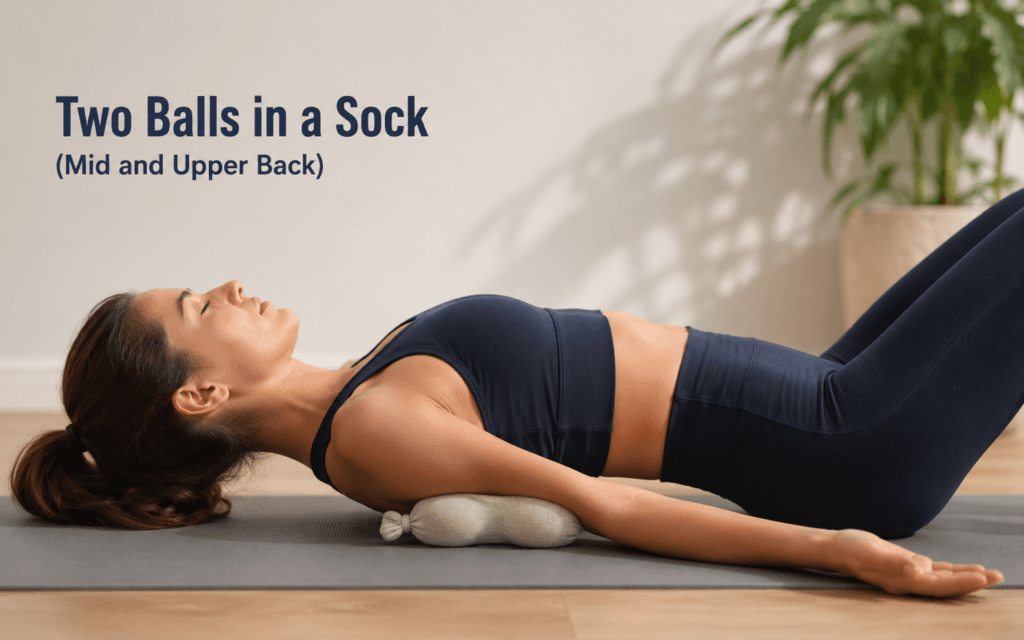
2. Two Balls in a Sock (Mid and Upper Back)
Place two tennis balls side by side in a long sock and tie it off. Lie on your back on the floor with the sock positioned so one ball sits on each side of your spine. Breathe slowly and let gravity do the work rather than pressing actively.
This technique targets the muscles running alongside the spine on both sides simultaneously — an area that’s genuinely difficult to reach any other way during self-massage.
How long: Hold each position for 20–30 seconds before moving slightly up or down the spine.

3. Sacrum Thumb Circles (Lower Back)
Sit on the floor with your legs crossed and your back straight. Place both thumbs on either side of the sacrum — the triangular bone at the very base of the spine. Make slow, small circular motions, working up and down alongside the bone rather than on it.
The sacrum and the muscles surrounding it hold significant tension from sitting, standing, and carrying weight throughout the day, and this technique targets that area directly with good control over pressure.
How long: 60 seconds, repeated two to three times.
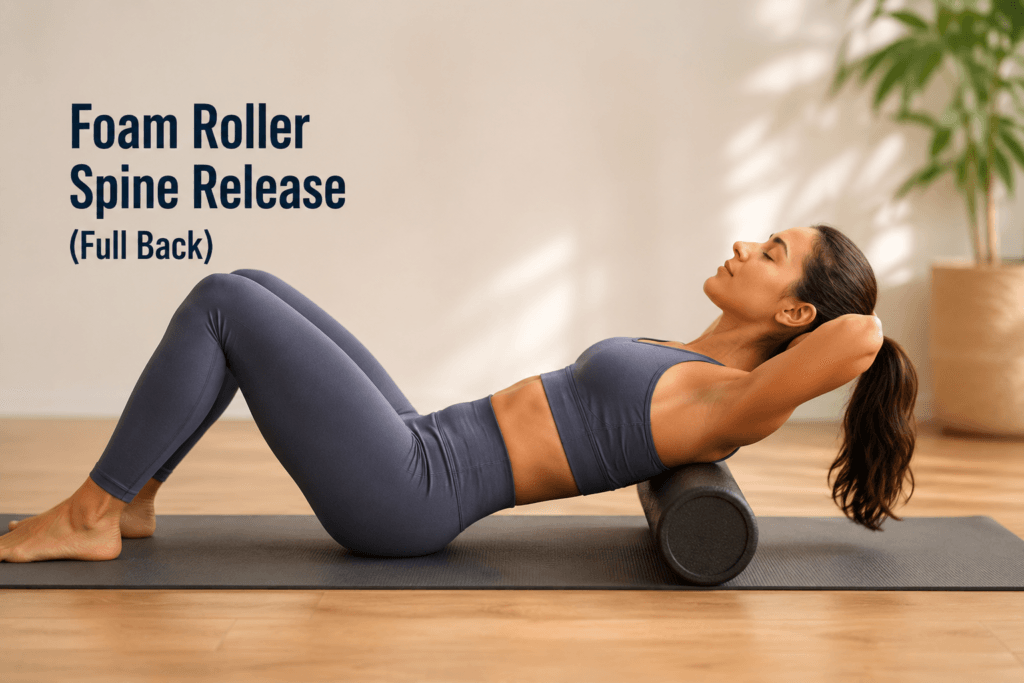
4. Foam Roller Spine Release (Full Back)
Place a foam roller horizontally on the floor and lie back so it sits just below your shoulder blades. Support your head with your hands, let your back relax over the roller, and breathe slowly for 20–30 seconds before rolling slightly downward to the next section of the back.
Move in small increments rather than rolling continuously — pausing at each position allows the muscles time to respond to the pressure rather than simply passing over it.
How long: Work down the full back in three to four positions, spending 20–30 seconds at each.
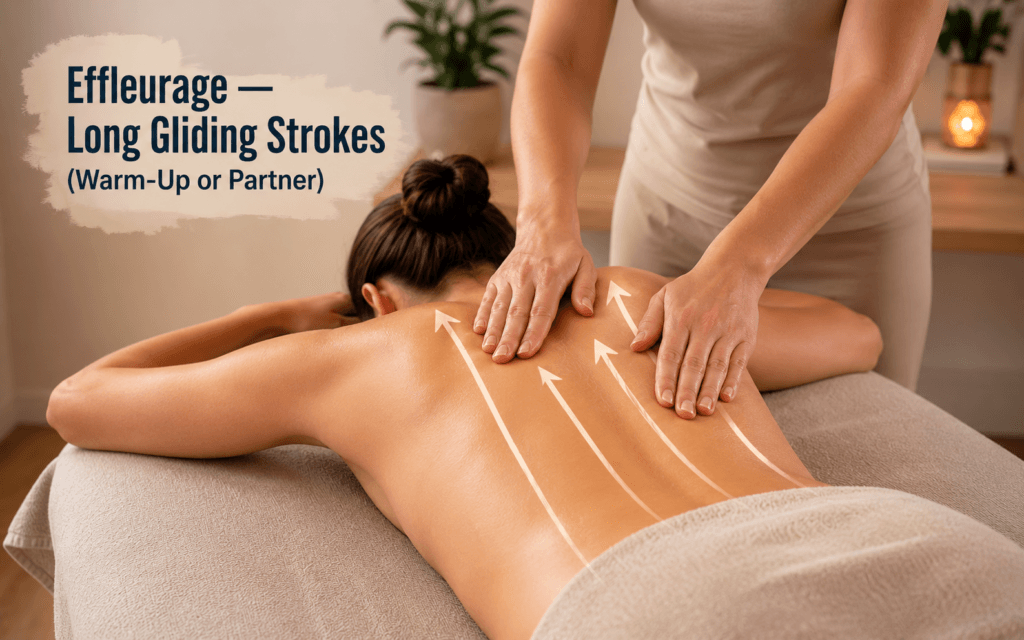
5. Effleurage — Long Gliding Strokes (Warm-Up or Partner)
If someone is massaging your back, long, smooth gliding strokes from the lower back upward along both sides of the spine — with consistent, even pressure — are the correct starting point before any deeper technique. This warms up the muscles and signals to the nervous system that it’s safe to relax.
Most people skip this entirely and go straight to kneading or pressing, which tends to make muscles tense up rather than release.
How long: Two to three minutes at the start of a massage session.
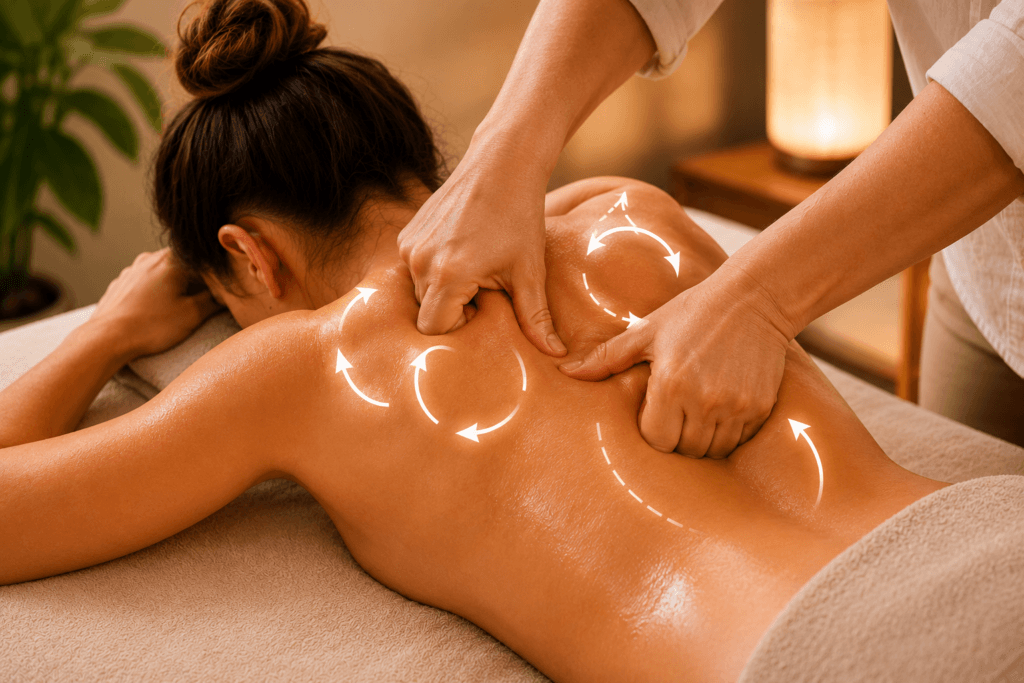
6. Petrissage — Kneading the Upper Back and Shoulders
Using palms, fingers, or knuckles, knead the muscle tissue of the upper back and shoulders in a lifting, rolling motion — similar to kneading bread dough. Focus on the muscles between the shoulder blades and across the tops of the shoulders, avoiding direct pressure on the spine itself.
This technique reaches the deeper muscle layers that gliding strokes don’t address, and it’s particularly effective for the upper back tension that builds from desk work and screen time.
How long: 60–90 seconds per side, with consistent rhythm rather than varied pressure.
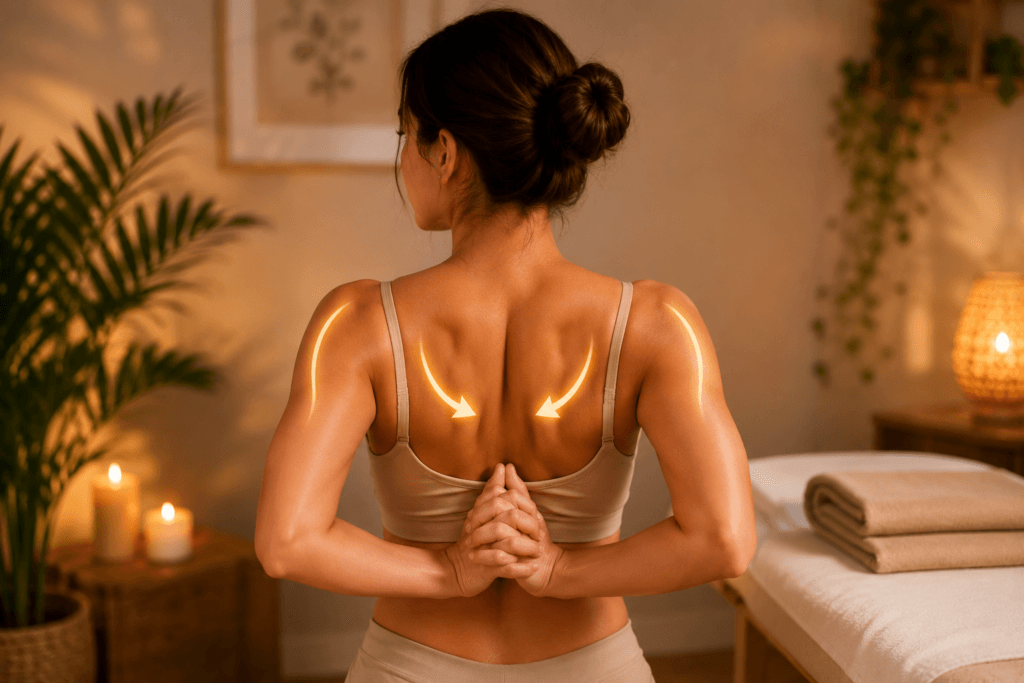
7. Shoulder Opener Finish
End a back massage session by clasping your hands behind your back and gently drawing your shoulder blades together, opening the front of the chest and releasing the muscles across the upper back. Hold for 15–20 seconds, breathe slowly, then release.
This is less a massage technique and more a closing movement — a way to signal to the muscles that the session is ending and encourage them to settle into a more relaxed baseline position.
How long: Two to three repetitions to finish.
Editor’s Note: If you only have time for one technique, the tennis ball against the wall is the one worth prioritizing — it offers the most control, works on the widest area of the back, and is genuinely accessible without any floor work. The two-balls-in-a-sock method is the strongest runner-up for mid and upper back specifically, but requires getting down to the floor and back up, which isn’t always realistic.
The Most Common Back Massage Mistakes
- Pressing directly on the spine: Pressure should always go alongside the vertebrae, on the surrounding muscles — never directly on the bones themselves
- Using too much force: Pain during massage signals inflammation, not effective release — back off the pressure if something hurts sharply
- Moving too fast: Sustained, slower pressure allows muscles to respond; fast rolling or rubbing tends to stimulate rather than release
- Skipping the warm-up: Starting with deep pressure on cold muscles tends to increase tension rather than ease it
- Massaging the same spot repeatedly: Give each area a break between passes — returning to the same point continuously can cause irritation
Who These Back Massage Techniques Are Best For
Best for: anyone dealing with everyday tension from desk work, standing, or general physical activity, those wanting a regular self-care habit between professional appointments, people pairing this with [[Shoulder Stretches for Desk Work]] or a broader wellness routine, and anyone without a diagnosed back condition or recent injury.
Less ideal for: those with diagnosed disc problems, sciatica, recent back surgery, or significant persistent pain — in these cases, a physical therapist or physician should guide the approach rather than general self-massage advice.
If your back tension is mild and related to daily posture or activity, starting with just the tennis ball wall technique and the sacrum thumb circles gives you two high-impact methods without needing to get on the floor at all.
Back Massage Techniques: Tools Comparison
| Tool | Best Area | Pressure Level | Ease of Use |
|---|---|---|---|
| Tennis Ball (wall) | Lower and mid-back | Adjustable | ✅ Very easy |
| Two Balls in Sock | Mid and upper back | Medium | ✅ Easy (floor) |
| Foam Roller | Full back | Medium-firm | ⚠️ Requires floor |
| Hands only | Upper back, shoulders | Variable | ⚠️ Limited reach |
| Problem | Technique |
|---|---|
| Upper Back Tension | Petrissage |
| Lower Back Tightness | Sacrum Circles |
| Full Back Release | Foam Roller |
| Desk Work Pain | Tennis Ball |
Frequently Asked Questions About Back Massage Techniques
Can I massage my own back effectively?
Yes, for everyday tension — especially with tools like a tennis ball or foam roller. Self-massage can’t reach deep knots the way a professional session can, but it’s a genuinely useful maintenance habit between appointments.
How often should I do back self-massage?
Daily sessions of five to ten minutes are reasonable for general tension maintenance. If you’re using firmer pressure tools like a lacrosse ball, giving the area a day of rest between sessions tends to prevent over-irritation.
Should back massage be painful?
A “hurts so good” sensation from sustained pressure on a tight muscle is normal. Sharp pain, or pain that worsens after a session, is a signal to stop and check with a healthcare provider rather than pushing through.
When should I see a professional instead of using self-massage?
Persistent pain that doesn’t improve with rest and self-care, pain radiating down the legs, numbness or tingling, or back pain following an injury all warrant professional evaluation rather than relying on self-massage alone.
Final Thoughts: Technique Matters More Than Force
The most effective back massage techniques have less to do with how hard you press and more to do with where you apply pressure, how slowly you move, and whether you give each area time to actually respond. Start with the tennis ball against the wall, keep the pressure in the “hurts so good” range rather than genuinely painful, and give your back the consistency of a few minutes several times a week rather than one long occasional session.
Save this guide, try the tennis ball technique tonight, and explore more wellness tips at egella.com