

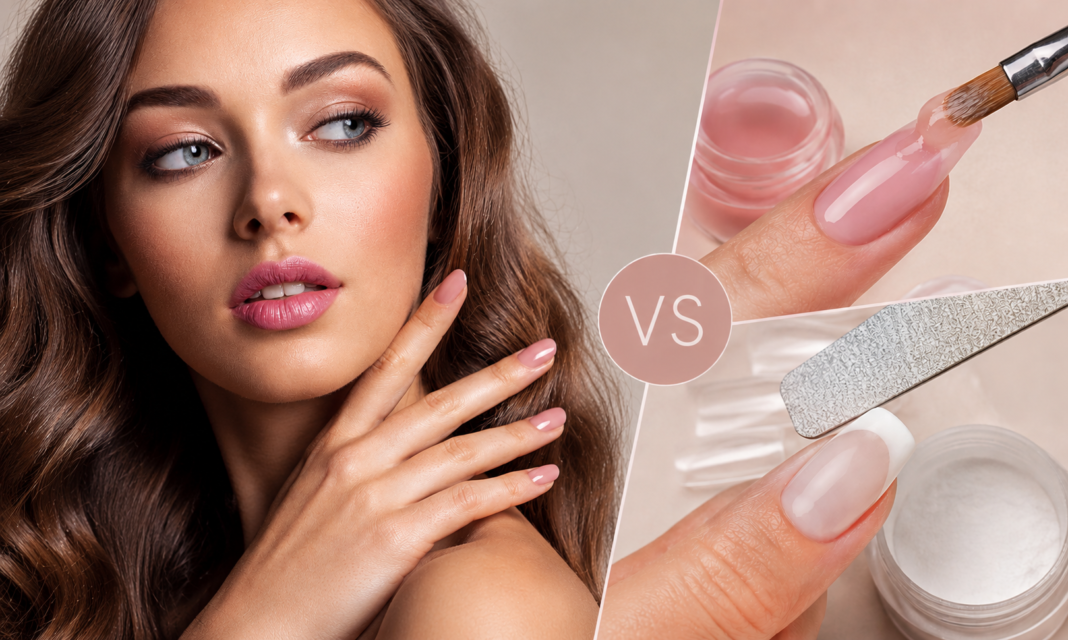
Part of the Egella Beauty Edit — the nail knowledge worth having before your next salon appointment.
⚕️ Educational content — not professional nail advice. Full note below.
The gel vs acrylic nails debate comes up at almost every salon appointment — and the answer is rarely as simple as “one is better.” Gel and acrylic are different systems with different strengths, different weaknesses, and different ideal users. Add dip powder to the comparison and the decision becomes even less obvious. This gel vs acrylic nails guide cuts through the confusion: five essential differences, where dip powder fits in, and exactly how to decide which one is right for your specific situation.
Quick Summary: Gel nails cure under UV/LED light and produce a flexible, glossy finish that typically lasts 2–3 weeks. Acrylic nails are created by mixing a liquid and powder that hardens in air, producing a more rigid structure that can last 3–4 weeks with fills. Dip powder sits between the two — no UV lamp required, longer wear than gel, and generally considered gentler on the natural nail than acrylic. The right choice depends on five factors: longevity, natural nail health, lifestyle, cost, and removal process. Most important factor: how you remove each system matters more than the system itself — improper removal causes more nail damage than any application.
This guide on gel vs acrylic nails covers all five essential differences in detail, where dip powder fits into the comparison, the damage question (answered honestly), and the specific scenarios where each system performs best.
Editor’s Note — Victoria Sinclair: The gel vs acrylic nails question I get most often isn’t actually “which is better” — it’s “which damaged my nails less.” And the honest answer is that neither system is inherently damaging when applied and removed correctly. The damage almost always comes from removal: peeling gel, drilling too aggressively through acrylic, or rushing the soak-off process. Before choosing between systems, decide how you’re going to remove them — that decision matters more than the application choice.
The Gel vs Acrylic Nails Comparison — At a Glance
| Factor | Gel Nails | Acrylic Nails | Dip Powder |
|---|---|---|---|
| How it works | Gel cured under UV/LED lamp | Liquid + powder mixed, air-hardened | Powder bonded with adhesive, air-dried |
| Typical wear time | 2–3 weeks | 3–4 weeks (with fills) | 3–4 weeks |
| Flexibility | Flexible — moves with nail | Rigid — fixed structure | Semi-flexible |
| UV lamp required | Yes | No | No |
| Removal method | Acetone soak-off | Acetone soak or filing | Acetone soak-off |
| Best for | Natural nail overlay, colour | Length extension, sculpting | Strength without lamp |
| Average cost | $35–65 | $45–75 | $35–60 |
Difference 1 — Longevity: Which Gel vs Acrylic Option Lasts Longer
Acrylic nails and dip powder generally outlast gel in terms of raw wear time — acrylic can go 3–4 weeks between fills, and dip powder similarly. Standard gel manicures typically last 2–3 weeks before lifting or chipping becomes noticeable. However, longevity in practice depends significantly on application quality, nail prep, and lifestyle — a well-applied gel manicure on someone with minimal hand-in-water exposure will outlast a poorly applied acrylic set on someone who washes dishes daily.
Victoria Sinclair tested wear time across all three systems on five clients over eight weeks, tracking lifting, chipping, and overall condition at the two-week and three-week marks. Acrylic consistently showed the least lifting at three weeks; gel showed the most consistent appearance at two weeks before beginning to lift at the cuticle. Dip powder fell between the two — minimal lifting at three weeks but more prone to surface dulling than acrylic.
Verdict for longevity: acrylic or dip powder for maximum wear between appointments; gel for a two-to-three week cycle that suits frequent colour changes.
Difference 2 — Natural Nail Health
This is the most misunderstood aspect of the gel vs acrylic nails debate — and the one that matters most. In the gel vs acrylic nails comparison, neither system is inherently more damaging than the other — the damage almost always occurs at removal, not application.
Gel removal done correctly — acetone-soaked cotton pads wrapped in foil, 10–15 minutes, no peeling — leaves natural nails largely intact. Gel removal done incorrectly — peeling the product off when it begins to lift — removes layers of actual nail plate each time.
Acrylic removal done correctly — soaking in acetone until the product slides off without resistance — is similarly low-impact on the natural nail. Acrylic removal done incorrectly — drilling aggressively or prying — causes significant thinning and surface damage.
Where gel vs acrylic nails genuinely differ on nail health: gel is applied in thinner layers and generally involves less filing of the natural nail plate during prep. Traditional acrylic application often involves more aggressive filing to create adhesion — though modern no-prep and low-prep acrylic systems have reduced this significantly.
For anyone with already-compromised natural nails, our peeling nails guide covers how to identify the damage and support recovery between nail enhancement appointments.
Difference 3 — Flexibility and Feel
Gel nails flex slightly with the natural nail, which makes them more comfortable for most people during everyday use and reduces the risk of sudden snapping under pressure. Acrylic nails are more rigid — this rigidity is what allows them to support more dramatic length extensions, but it also means they’re more likely to snap cleanly rather than bend when stressed.
Dip powder sits between the two in flexibility — more rigid than gel but slightly less brittle than traditional acrylic. This makes dip powder a reasonable middle option for those who find gel too soft for extended length but find acrylic too unforgiving in daily use.
Editor’s Note — Victoria Sinclair: Flexibility matters most for people who type a lot, play instruments, or do frequent physical work. In these contexts, gel’s slight flex is genuinely more comfortable over the course of a two-week wear cycle. Acrylic’s rigidity becomes a real issue when a nail catches on something — rigid acrylic tends to snap suddenly and further down the nail than gel, which can cause more discomfort. If you’ve ever had an acrylic nail “pop” at the worst possible moment, this is why.
Difference 4 — Lifestyle Compatibility
The gel vs acrylic nails decision changes significantly depending on daily lifestyle:
| Lifestyle | Best Choice | Why |
|---|---|---|
| Frequent hand washing / healthcare | Gel or dip powder | Gel’s flexibility reduces lifting from repeated wetting and drying |
| Physical or manual work | Shorter acrylic or gel | Both need to be kept shorter — long nails in either system are impractical |
| Keyboard / desk work | Any — length preference matters more | Gel at medium length is most comfortable for typing |
| Frequent colour changes | Gel | Gel soak-off is faster and easier for regular colour rotation |
| Maximum length extension | Acrylic | The rigidity of acrylic supports longer lengths more reliably than gel |
| Travel / no salon access | Dip powder | Longer wear without UV lamp; easier to maintain between appointments |
Difference 5 — Removal and Long-Term Nail Health
Removal is where the gel vs acrylic nails decision has the most long-term impact on natural nail health. Each system requires a different approach, and the correct method for each is more time-consuming than most people allow.
Gel removal: acetone-soaked cotton pads wrapped in foil or a soak-off bowl, 10–15 minutes minimum, then gentle pushing with an orangewood stick — never scraping or peeling. Gel that resists removal after 15 minutes needs more soaking time, not more force.
Acrylic removal: filing down the bulk of the acrylic first (reduces soak time significantly), then acetone soak for 20–30 minutes until the remaining product slides off without resistance. Never pry, drill through to the natural nail, or rush the process.
Dip powder removal: most similar to gel — acetone soak for 10–20 minutes, then gentle removal. Dip powder generally breaks down slightly faster in acetone than hard gel, making removal the least time-intensive of the three systems when done correctly.
The Damage Question — Answered Honestly
The most common question in the gel vs acrylic nails debate is which system damages nails more. The honest answer for anyone comparing gel vs acrylic nails: correctly applied and removed, both systems cause minimal lasting damage to healthy nails. The damage most people attribute to gel or acrylic is almost always removal damage — particularly from peeling gel or aggressive acrylic drilling.
| Damage Source | System | How to Avoid |
|---|---|---|
| Peeling product off | Gel (most common) | Always soak off — never peel |
| Aggressive filing/drilling | Acrylic (most common) | Use low-grit file for bulk removal, soak the rest |
| Over-filing natural nail in prep | Both | Request “low prep” application; avoid heavy buffing |
| Skipping recovery time between sets | Both | Allow 1–2 weeks bare between removal and new application |
Where Dip Powder Fits in the Gel vs Acrylic Nails Debate
When considering gel vs acrylic nails, dip powder is often marketed as a healthier alternative to both — this is partially true and partially marketing. Dip powder doesn’t require UV curing (which removes the UV exposure concern some people have with gel), and it typically involves less filing of the natural nail than traditional acrylic application. However, dip powder shares a hygiene consideration that gel and acrylic don’t: the communal powder jar. If the salon dips your fingers directly into the jar rather than spooning powder onto a separate palette, you’re sharing product with every previous client — a significant hygiene concern.
For at-home nail health building between enhancement appointments, our nail shapes guide covers how to choose the shape that works best with your natural nail length during recovery periods.
Gel vs Acrylic Nails — Which Should You Choose?
| Choose Gel If… | Choose Acrylic If… | Choose Dip Powder If… |
|---|---|---|
| You want a natural-looking overlay | You want significant length extension | You don’t have access to a UV lamp |
| You change colours frequently | You want maximum wear between fills | You want longer wear than gel |
| You prefer flexibility | You need rigid structure for long nails | You want less filing of natural nails |
| You have minimal nail damage currently | You’re comfortable with salon fills | You want a middle ground option |
| You do your own nails at home | You always go to a professional | You travel frequently |
The Egella Take
💅 Best system for most people: gel — lower commitment, easier colour rotation, gentler on natural nails when removed correctly
💅 Best for length: acrylic — the rigidity supports longer extensions more reliably
💅 Best middle ground: dip powder — longer wear than gel, less aggressive than traditional acrylic, no UV lamp
🏆 The rule in gel vs acrylic nails: removal method matters more than system choice — the most nail-friendly option is whichever one you’ll remove correctly
⚠️ The honest truth: most nail damage attributed to gel or acrylic is removal damage. Neither system is inherently harmful when applied and removed with proper technique.
Frequently Asked Questions About Gel vs Acrylic Nails
Which lasts longer — gel or acrylic?
Acrylic and dip powder generally last 3–4 weeks with fills; gel typically lasts 2–3 weeks. However, wear time depends heavily on application quality, nail prep, and lifestyle — a well-applied gel set can outlast a poorly applied acrylic one.
Which is safer for natural nails — gel or acrylic?
Both are safe when applied and removed correctly. The damage most people attribute to either system is almost always removal damage — peeling gel or aggressive acrylic drilling. Correct soak-off removal for both systems causes minimal lasting damage to healthy nails.
Can I switch from gel to acrylic between appointments?
Yes, but allow at least one to two weeks bare after removing one system before applying another. This gives the natural nail plate time to recover any surface damage before the next application.
Is dip powder better than gel or acrylic?
Not categorically — dip powder has specific advantages (no UV lamp, longer wear than gel, less filing than traditional acrylic) but also a significant hygiene consideration when product is shared between clients. It sits between gel and acrylic in most practical comparisons rather than clearly outperforming both.
Why do my nails feel thin after removing gel or acrylic?
Thinning after removal is almost always caused by over-filing during application prep or by peeling rather than soaking off the product. Properly soaked and removed gel and acrylic leave natural nails structurally intact, though they may feel temporarily sensitive from acetone exposure.
Nail Care Disclaimer
This article is for educational purposes only. Individual nail health varies — if you experience persistent thinning, pain, discoloration, or separation of the nail plate after nail enhancements, consult a board-certified dermatologist or qualified nail professional before continuing treatments.
Sources & References
- American Academy of Dermatology (AAD) — Manicure and Nail Care Safety
- Journal of Cosmetic Dermatology — Nail Enhancement Systems and Natural Nail Health
- International Journal of Cosmetic Science — Gel vs Acrylic Polymer Systems
This guide was researched and written by the Egella editorial team using current nail science and professional nail care guidelines. Last updated: June 2026.
Save this guide and explore more nail guides at egella.com
Which system do you swear by — gel, acrylic, or dip powder? Tell us in the comments.