

A great massage doesn’t happen by accident. Whether you’re giving one to a partner, a friend, or practicing self-massage techniques, knowing the correct method for each body area makes the difference between a relaxing, therapeutic experience and one that causes more tension than it relieves.
In this complete guide, we break down exactly how to do a full body massage correctly — covering the torso, neck, lower back, and legs — with step-by-step techniques, timing, pressure tips, and the science behind why massage works. Save this guide and come back to it every time.
Why Learning Proper Massage Technique Matters
Most people assume massage is just about pressing hard and rubbing. It’s not. Improper technique can strain muscles, aggravate nerves, and cause bruising — the exact opposite of what you’re trying to achieve. Correct massage technique, on the other hand, delivers real, measurable benefits:
- Reduces cortisol levels — the primary stress hormone — by up to 30%
- Increases serotonin and dopamine, improving mood naturally
- Improves blood circulation, delivering more oxygen to tired muscles
- Strengthens immune function by stimulating lymphatic drainage
- Relieves chronic muscle tension in the neck, back, and legs
- Deepens intimacy and trust between partners
The key is knowing what to do, where to do it, and for how long. Let’s go region by region.
Before You Begin: Setting Up for the Perfect Massage
The environment matters as much as the technique. Before you touch a single muscle, set the stage correctly.
Temperature: The room should be comfortably warm — around 22–24°C (72–75°F). Cold muscles are tight muscles, and a cold room will undo everything you’re trying to achieve.
Surface: A firm surface is better than a soft bed. A massage table is ideal, but a yoga mat on the floor works perfectly. Soft mattresses cause your hands to sink, reducing pressure control and tiring your wrists quickly.
Oil: Always use a massage oil or lotion. Sweet almond oil, coconut oil, and jojoba oil are the three best choices — they absorb slowly, reduce friction, and nourish the skin. Warm the oil in your palms before applying it.
Communication: Before starting, ask the person about any areas of pain, injury, or sensitivity. Check in frequently during the massage about pressure — what feels light to you may feel intense to them.
Your hands: Trim your nails. Wash your hands with warm water first. Cold hands on warm skin create an immediate tension response that kills relaxation instantly.
How to Massage the Torso Correctly (8–10 Minutes)
The torso — including the upper back, shoulders, and chest area — is where most people carry their deepest tension. Office workers, athletes, parents, and anyone who spends hours hunched over a screen accumulates extraordinary amounts of stress in this region. This is typically the longest section of a full body massage for good reason.
The Shoulders: Where Tension Lives
Start at the shoulders. This is almost always the tightest area on the body and the first place people feel stress physically.
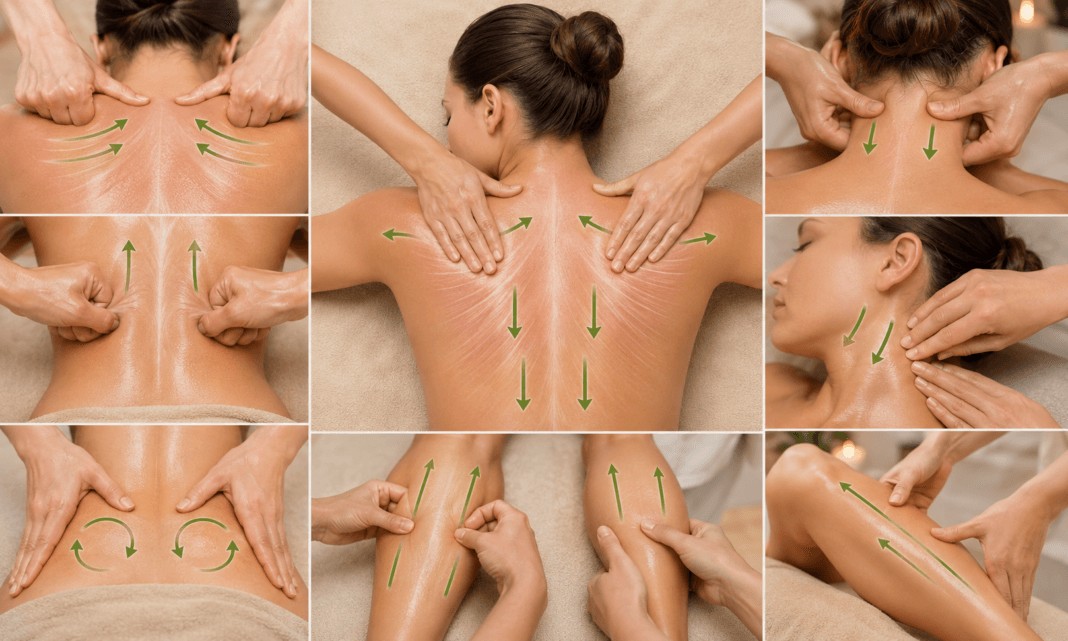
Technique — Effleurage (Warming Stroke): Place both hands flat on the upper shoulders, fingers pointing toward the neck. Apply firm, even pressure and glide your hands outward toward the shoulder joints. This warming stroke increases blood flow and prepares the muscle tissue for deeper work. Repeat 5–6 times.
Technique — Petrissage (Kneading): Using your thumb and fingers, grasp the trapezius muscle — the thick muscle running from the neck to the shoulder tip — and knead it like dough. Use a slow, rolling, squeeze-and-release motion. Work from the base of the neck outward toward the shoulder joint. Spend at least 2 full minutes here. Most people have knots in this area that respond well to sustained, rhythmic pressure.
Pressure tip: Use your body weight, not just your hand strength. Lean slightly into each stroke rather than pressing with tense arm muscles. This gives you more control and prevents hand fatigue.
The Upper Back: Releasing the Deep Muscles
The upper back contains the rhomboids, trapezius, and erector spinae muscles — all of which tighten significantly with poor posture and stress.
Technique — Long Gliding Strokes: Place both palms flat on either side of the spine (never directly on the spine itself). Apply firm pressure and glide both hands downward from the shoulder blades toward the mid-back. The movement follows the natural direction of muscle fibers, encouraging them to lengthen and release. Repeat 6–8 times.
Technique — Thumb Circles: Using both thumbs, work in small circular motions on either side of the spine. Move slowly upward from the mid-back to the base of the neck. When you encounter a knot or tight spot — you’ll feel it as a dense, cord-like area under the skin — hold sustained pressure on that point for 8–10 seconds before continuing. This is called trigger point release and it is one of the most effective techniques in massage.
Important: Always work on the muscles beside the spine, never directly on the vertebrae. The spine is a column of bone and nerve — it does not benefit from direct pressure and can be injured by it.
How to Massage the Neck Correctly (4–6 Minutes)
The neck is one of the most tension-prone and simultaneously most delicate areas of the body. It supports the entire weight of the head — approximately 5 kg (11 lbs) — through a complex system of small muscles that are almost always overworked.
Neck massage requires a lighter touch than the back, but it is no less important. Many headaches, shoulder tensions, and even jaw pain originate from tight neck muscles.
The Back of the Neck
Technique — Finger Kneading: Position yourself behind the person. Place your fingertips on either side of the cervical spine (the back of the neck). Using slow, circular motions, work from the base of the skull downward toward the shoulders. The suboccipital muscles — located at the very base of the skull — are often the primary source of tension headaches. Spend extra time here.
Technique — Slow Stretching Strokes: Place one hand at the base of the skull and one hand on the upper back. Apply gentle, simultaneous pressure in opposite directions — one hand pressing gently upward, the other downward. This creates a gentle traction effect that decompresses the cervical vertebrae and provides instant relief. Hold for 5–8 seconds.
The Sides of the Neck
Technique — Light Effleurage: Using the flat of your fingers (never the thumb alone), stroke gently downward from behind the ear toward the collarbone. This follows the path of the sternocleidomastoid muscle and the lymphatic vessels. Always stroke downward on the sides of the neck — never upward, as this can irritate the carotid artery region.
Pressure warning: The neck contains major blood vessels and nerves. Never apply deep or sustained pressure to the front or sides of the neck. Keep pressure light and movement fluid in this area.
How to Massage the Lower Back Correctly (4–6 Minutes)
Lower back pain affects over 80% of adults at some point in their lives, making it the most common pain complaint worldwide. The lower back supports the entire weight of the upper body and is under constant compressive load — especially when sitting for long periods.
Massage is one of the most effective non-pharmaceutical interventions for lower back pain, with multiple clinical studies supporting its benefits for both acute and chronic cases.
The Lumbar Region
Technique — Fist Gliding: Make loose fists with both hands and place your knuckles on either side of the lumbar spine (the lower back, just above the hips). Apply firm pressure and glide your fists slowly upward from the sacrum (tailbone area) to the mid-back. The knuckle technique delivers deeper pressure than flat palms and reaches the erector spinae muscles more effectively. Repeat 5–6 times.
Technique — Hip Circles: Place both palms flat on the top of the hip bones (the iliac crest). Apply firm, circular pressure moving outward and downward. This releases the quadratus lumborum — a deep muscle that runs from the lower ribs to the hip and is one of the most common sources of lower back pain. Spend 60–90 seconds here.
The Sacrum
Technique — Sacral Pressure: Place the heel of your hand flat on the sacrum — the flat, triangular bone at the very base of the spine. Apply firm, steady pressure and hold for 10–15 seconds. Then move your hand in slow, broad circles. Sacral massage releases deep pelvic tension and is particularly effective for people who sit for long periods or experience lower back stiffness in the morning.
Key reminder: Lower back massage should feel like deep pressure — not sharp pain. If the person reports sharp, shooting, or radiating pain during this section, stop immediately. This could indicate a nerve issue that requires medical attention rather than massage.
How to Massage the Legs Correctly (6–8 Minutes)
The legs contain the largest muscles in the body — the quadriceps, hamstrings, and calf muscles — and they work harder than almost any other body part throughout the day. Yet they are often the most neglected area in casual massage.
Leg massage improves circulation dramatically, which is especially important for people who stand or sit for long periods. It also accelerates muscle recovery, reduces swelling, and can help prevent conditions like deep vein thrombosis in at-risk individuals.
The Thighs (Quadriceps and Hamstrings)
Technique — Long Effleurage Strokes: Using both hands, apply firm pressure and glide from the knee upward toward the hip. Always massage toward the heart — this supports venous blood return and lymphatic flow. Use the full surface of both palms and maintain consistent pressure throughout the stroke. Repeat 6–8 times on each leg.
Technique — Bilateral Kneading: Using both hands in an alternating squeeze-and-roll motion, work the large muscles of the thigh. Imagine you are kneading bread dough — one hand lifts and squeezes as the other releases. Work from the inner thigh to the outer thigh, covering the full muscle mass. This technique is excellent for releasing lactic acid buildup after exercise.
The Calves
Technique — Two-Handed Wringing: Wrap both hands around the calf, fingers interlaced on one side and thumbs on the other. Apply firm pressure and use a wringing motion — one hand twisting slightly forward as the other twists back. Work slowly from the ankle upward to the back of the knee. The gastrocnemius and soleus muscles respond exceptionally well to this technique.
Technique — Thumb Stripping: Using both thumbs side by side, apply firm pressure along the center of the calf and glide slowly upward from ankle to knee. This technique targets the deep muscle fascia and releases chronic tightness that causes calf cramps and Achilles tension.
Important: Never apply deep pressure directly behind the knee — this area contains major blood vessels and nerves. Keep strokes moving through this area rather than stopping with sustained pressure.
The Complete Full Body Massage Routine at a Glance
| Body Area | Duration | Primary Techniques | Key Benefit |
|---|---|---|---|
| Torso (Shoulders & Upper Back) | 8–10 minutes | Effleurage, Petrissage, Thumb Circles | Releases deepest stress tension |
| Neck | 4–6 minutes | Finger Kneading, Traction, Light Effleurage | Relieves headaches & neck stiffness |
| Lower Back | 4–6 minutes | Fist Gliding, Hip Circles, Sacral Pressure | Reduces lower back pain |
| Legs | 6–8 minutes | Long Effleurage, Kneading, Wringing | Improves circulation & recovery |
Total session time: 22–30 minutes
Recommended frequency: Once or twice per week
Best time: Evening, 1–2 hours before sleep
The Science Behind Why Massage Works
A good massage does far more than feel pleasant in the moment. The physiological effects are well-documented and significant:
Improves mood. Massage stimulates the release of serotonin, dopamine, and oxytocin — the brain’s primary feel-good chemicals. A single 45-minute massage session has been shown to reduce anxiety and depression symptoms measurably.
Strengthens immunity. Studies published in the Journal of Alternative and Complementary Medicine found that massage increases the activity of natural killer cells — the immune system’s front-line defenders against viruses and abnormal cells. Regular massage recipients show consistently higher immune function markers.
Reduces inflammation. Deep tissue massage activates genes that reduce inflammation at the cellular level, particularly in muscle tissue. This is why massage accelerates recovery from both injury and intense exercise.
Lowers blood pressure. Regular massage has been shown to reduce both systolic and diastolic blood pressure in people with hypertension, making it a legitimate complementary tool for cardiovascular health.
Common Mistakes to Avoid
Using too much pressure too soon. Cold, unprepared muscles resist deep pressure. Always warm the tissue with light effleurage strokes before applying deeper techniques. Jumping straight to deep work causes guarding — the muscle tenses up defensively, making it impossible to release.
Working directly on the spine. The spine is not a muscle — it’s bone and nerve. Pressure directly on the vertebrae can cause injury. Always work on the muscles on either side of the spine.
Neglecting communication. Pressure preference is completely individual. What feels perfect to one person feels painful to another. Check in every few minutes — especially when moving to a new area.
Rushing. Slow strokes are more effective than fast ones. Speed signals the nervous system to stay alert. Slow, rhythmic movements signal safety and allow the parasympathetic nervous system to activate — which is what produces the deep relaxation response.
Forgetting to hydrate afterward. Massage releases toxins stored in muscle tissue into the bloodstream. Drinking a full glass of water immediately after a massage helps flush these out and prevents the mild headache some people experience post-massage.
How to Make Massage a Regular Wellness Practice
The greatest benefits of massage come from consistency, not occasional sessions. Here’s how to build it into your routine:
Schedule it like an appointment. Treat your weekly massage as non-negotiable self-care — not a luxury to do when you have time. You will never “have time.” You have to make time.
Learn to give and receive. If you have a partner, take turns. Learning to give a good massage is a skill that takes practice — and giving one is itself relaxing and meditative for many people.
Use self-massage tools on off days. A foam roller for the back and legs, a massage ball for the shoulders and feet, and a neck massager for the cervical spine can extend the benefits of manual massage between sessions.
Combine with stretching. Massage and stretching work synergistically. The 10–15 minutes immediately following a massage is the ideal time to stretch — the muscles are warm, loose, and receptive to lengthening.
Final Thoughts: Massage Is Not a Luxury — It’s Maintenance
Your body accumulates tension, stress, and physical strain every single day. Without regular release, that tension compounds — leading to chronic pain, reduced mobility, poor sleep, and lowered immunity. A correct, well-executed massage is one of the most powerful tools available for maintaining your physical and mental health.
You don’t need to be a professional to give or receive a great massage. You need the right technique, the right attention, and the commitment to make it a consistent part of your wellness routine.
Start with the routine in this guide. Take your time with each section. Pay attention to what your hands feel and what the person receiving tells you. The more you practice, the more effective you become — and the greater the benefit for both of you.
Save this complete guide, share it with someone who needs it, and explore more wellness and health tips at egella.com