

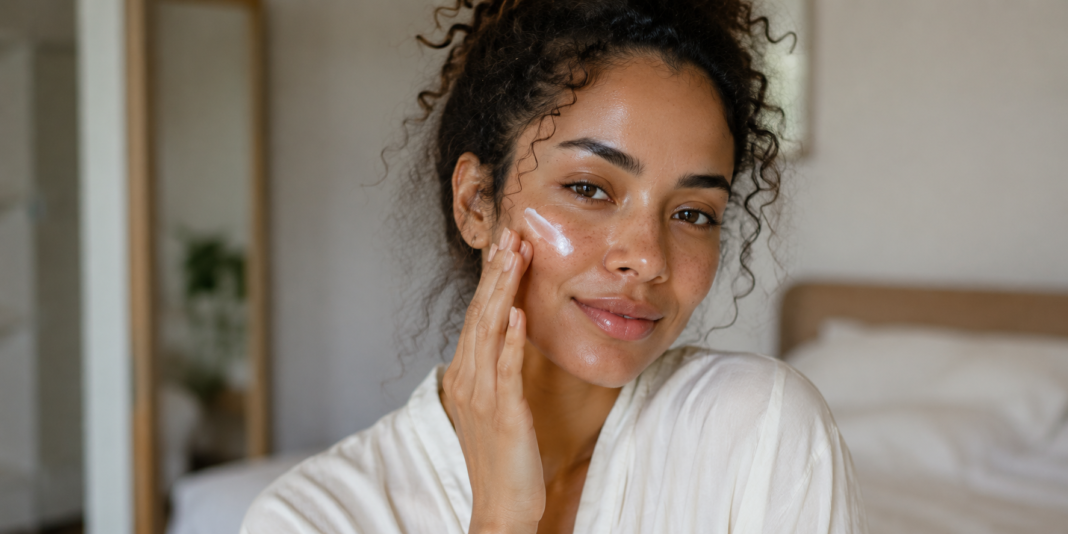
Slugging sounds unappealing at best and counterintuitive at worst. Sealing your face in a layer of petroleum jelly before bed goes against almost everything modern skincare marketing tells you. And yet, the dermatological case for it is surprisingly strong.
What Is Slugging?
Slugging is the practice of applying a thin layer of an occlusive product — most commonly plain petroleum jelly, though certain balms and barrier creams serve the same function — as the very last step of your nighttime skincare routine, over everything else you’ve applied. The name comes from the appearance: skin coated in a thin film of petrolatum has the slightly shiny, slick look of a slug trail. It is, admittedly, not a glamorous look. But what it does while you sleep is worth understanding.
The mechanism is occlusion — physically sealing the surface of the skin to prevent transepidermal water loss, the process by which moisture evaporates from the deeper layers of the skin through the epidermis and into the air. Transepidermal water loss, abbreviated TEWL, is one of the primary drivers of dry, reactive, and sensitized skin. When the skin barrier is compromised — through over-exfoliation, harsh cleansers, environmental exposure, or simple genetics — TEWL accelerates and the skin loses the ability to regulate its own hydration effectively. An occlusive layer on top of your moisturizer creates a temporary physical barrier that dramatically slows this process and gives the skin the conditions it needs to repair itself overnight.
Who Benefits Most from Slugging
Slugging is most transformative for people with chronically dry or dehydrated skin, those recovering from a compromised skin barrier — whether from retinol overuse, aggressive acid treatments, or environmental damage — and anyone dealing with eczema or atopic dermatitis, where barrier dysfunction is a defining feature of the condition. Dermatologists have long recommended plain petrolatum for these populations precisely because it is one of the most effective occlusives known, is completely non-allergenic, and contains no active ingredients that could further irritate already stressed skin.
People with oily or acne-prone skin are often told to avoid slugging categorically, but this deserves more nuance. Petroleum jelly is non-comedogenic — meaning it does not block pores or cause breakouts in the way that many plant oils and heavier butters can. The more relevant concern for oily or breakout-prone skin is that applying an occlusive over existing congestion or active breakouts can trap bacteria and worsen inflammation. The approach for oily skin, if slugging is desired, is to apply it only to dry patches or non-breakout areas rather than the entire face.
How to Slug Correctly
The order of operations matters enormously. Slugging works by locking in whatever is already on the skin — which means applying your full skincare routine first and then sealing it, not using petrolatum as a substitute for any of those steps. After cleansing, apply your toner, essence, serum, and moisturizer as normal. Wait five to ten minutes for the layers to absorb. Then apply the thinnest possible layer of petroleum jelly — less than you think you need — over the top of everything. You want a film, not a mask.
Start with one or two nights per week rather than every night, especially if your skin isn’t accustomed to occlusives. Pay attention to how your skin looks and feels the following morning. Most people with dry or sensitized skin notice an immediate difference in softness and plumpness. If your skin feels congested or you notice new breakouts after a few sessions, reduce frequency or restrict application to drier areas only.
The Ingredient Reality
One of the stranger aspects of slugging’s recent popularity is the resistance it encounters from people who have otherwise embraced complex, multi-step skincare routines costing hundreds of dollars per month. Petroleum jelly — available at any drugstore for a few dollars — consistently outperforms most “barrier repair” moisturizers in head-to-head studies of TEWL reduction, because nothing is as effective an occlusive as petrolatum. The skincare industry has little financial incentive to widely promote a $3 product that works as well as or better than $80 alternatives. That gap between the marketing landscape and the clinical evidence is exactly why slugging, known to dermatologists for decades, only recently reached mainstream beauty culture through social media.