

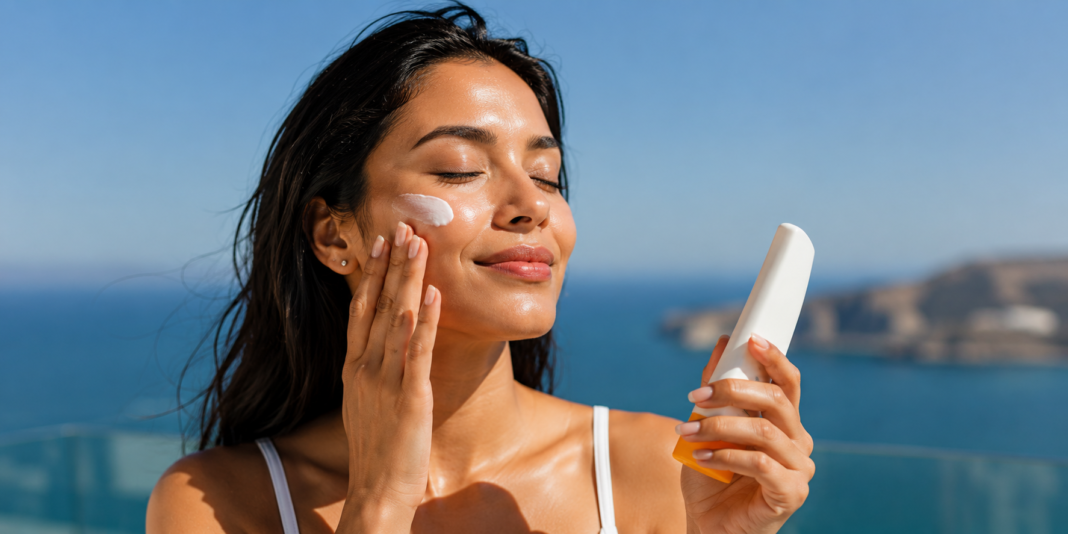
Sunscreen is the single most evidence-backed skincare product in existence. It’s also the most misunderstood. Let’s fix every common SPF misconception once and for all.
What an SPF Number Actually Means
SPF — Sun Protection Factor — is a measure of how much UVB radiation a sunscreen filters relative to completely unprotected skin. SPF 30 filters approximately 97% of UVB rays; SPF 50 filters approximately 98%. That one percentage point difference might seem trivial, but across the cumulative UV exposure of years and decades, it represents a meaningful reduction in DNA damage — particularly for people with photosensitive skin conditions, a family history of melanoma, or conditions like lupus that are directly worsened by UV exposure.
The number that matters more than the SPF rating, however, is the amount you apply. Research consistently shows that most people apply between a quarter and a half of the recommended amount of sunscreen, which reduces the effective SPF dramatically — a product labeled SPF 50 applied at half the tested quantity delivers protection closer to SPF 7. No upgrade in SPF number compensates for inadequate application.
Chemical Sunscreen
Chemical sunscreen filters work by absorbing UV radiation and converting it into heat, which is then dissipated from the skin. The active molecules — avobenzone, oxybenzone, octinoxate, octisalate, and others — are organic compounds that require fifteen to twenty minutes after application to fully bind to the skin and reach their effective protection level, which is why applying chemical sunscreen immediately before going outside provides less protection than the label suggests. The primary advantages are texture and cosmetic elegance: chemical sunscreens tend to be lightweight, absorb without residue, and disappear completely into the skin — making them far easier to wear daily, especially under makeup, and easier to formulate at higher SPF levels.
Mineral Sunscreen
Mineral sunscreens use zinc oxide, titanium dioxide, or a combination of both to physically deflect and scatter UV rays before they penetrate the skin. Unlike chemical filters, mineral sunscreens provide immediate protection upon application and are significantly less likely to cause irritation or sensitization, making them the standard recommendation for people with rosacea, eczema, sensitive skin, and post-procedure skin. They are also photostable — their protective capacity doesn’t degrade meaningfully in sunlight the way some chemical filters can. The historical disadvantage was a white or grayish cast on deeper skin tones, but advances in particle micronization and tinted formulas have largely addressed this in modern mineral sunscreens.
How Much to Apply
For the face alone, dermatologists recommend approximately a quarter teaspoon — about 1.25 milliliters — as the baseline for adequate protection. Most people use less than half this amount, effectively wearing a fraction of the protection they believe they’re getting. The neck, décolletage, and the tops of the ears are three of the most consistently sun-damaged areas on the body and three of the areas most reliably forgotten in daily SPF application. If you use a facial sunscreen that you love, extend it generously past the jaw every morning. If a product is expensive enough that a quarter teaspoon feels like a lot, consider whether the product is appropriate as a daily-use sunscreen or better suited as an occasional treatment.
The PA+ System and Broad Spectrum
UVA radiation — the type responsible for premature aging, hyperpigmentation, and a significant portion of skin cancer risk — penetrates glass, clouds, and car windows, and is present at relatively constant intensity throughout the day year-round. SPF measures only UVB protection. In the US and UK, “Broad Spectrum” labeling indicates that a product meets a minimum UVA protection standard, but doesn’t specify degree. The PA system used widely in Japanese and Korean sunscreens is more granular: PA++++ is the highest UVA protection currently available and represents a meaningful step above PA+++ in shielding against cumulative photoaging. For daily urban use, any broad-spectrum SPF 30 or higher provides adequate baseline protection; for prolonged outdoor exposure, the highest rated broad-spectrum SPF 50 or PA++++ mineral formula is worth the upgrade.