

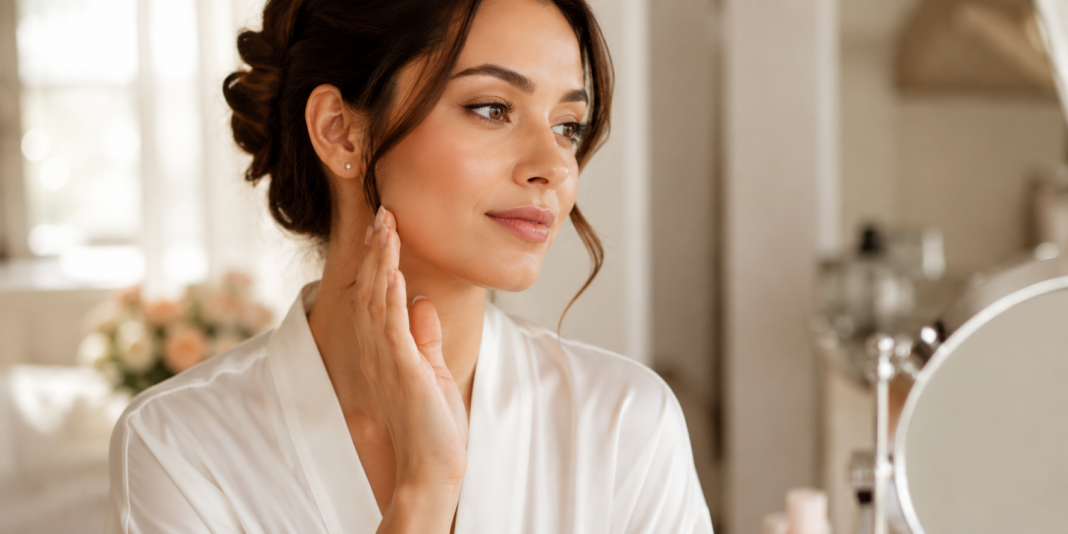
That “bridal glow” doesn’t happen in the salon chair on your wedding morning. It’s built in the months before. Here’s the exact timeline dermatologists recommend.
Why Six Months Is the Minimum
The most common skincare mistake brides make is starting too late. A new active ingredient — retinol, a vitamin C serum, an AHA exfoliant — typically requires eight to twelve weeks before it delivers visible, reliable results and before your skin has fully adapted to it. Starting retinol two weeks before your wedding is one of the most common horror stories in pre-bridal skincare: the purging phase arrives right on schedule, bringing with it unexpected breakouts, flaking, and redness at precisely the worst possible time. The six-month window exists to give your skin time to adapt to new actives, to course-correct if something doesn’t work, and to arrive at your wedding with skin that has been genuinely thriving for months rather than scrambling for days.
Month Six: Establishing the Baseline
Six months out, the goal is assessment and foundation — not transformation. Book a consultation with a dermatologist rather than jumping straight into an aggressive routine. Identify your specific concerns: hyperpigmentation, acne, texture irregularities, dryness, or early signs of aging. Establish a simple, consistent core routine: a gentle cleanser, a hydrating toner, a moisturizer appropriate for your skin type, and SPF 50 every single morning. Do not introduce any new actives yet. The first month is about building a stable baseline so you can measure changes accurately once you do begin adding ingredients.
Month Five: The Active Introduction
With a stable baseline established, month five is when the real work begins. Introduce retinol at the lowest available concentration — 0.025% or 0.05% — once per week, at night. Add a niacinamide serum to your routine; it supports barrier function, reduces redness, and minimizes pore appearance simultaneously. Begin monthly chemical exfoliation with a low-strength AHA or enzyme peel. If you have a specific concern like melasma or significant acne scarring, this is also the moment to discuss prescription options with your dermatologist — the earlier these are introduced, the more time they have to work.
Month Four: Deepening the Routine
As your skin’s tolerance for retinol builds, gradually increase the frequency based on how your skin is actually responding — not how fast you want results. This is also the right month for your first professional facial treatment. Hydrafacials and oxygen facials are particularly well-suited for this stage because they deliver deep hydration without the recovery time associated with more aggressive peels. Add a collagen-supporting serum if you haven’t already — vitamin C, peptides, or a combination formula applied in the morning supports the skin architecture that makes skin look genuinely luminous rather than just surface-bright.
Month Three: The Glow Phase
By month three, your skin has had significant time to adapt, and this is typically when the results become visibly rewarding. Consistent LED light therapy — either in-office or at home with a clinically validated device — supports collagen production and reduces inflammation without any downtime. Establish a facial massage ritual three to four nights per week using a gua sha stone or jade roller: the lymphatic drainage benefit is real, the increase in circulation is visible by morning, and the practice doubles as a stress-management tool during what is often an overwhelming planning period. Nutritionally, this is the month to meaningfully reduce refined sugar and dairy if you haven’t already — both are strongly associated with inflammation-driven breakouts, and three months is enough time to see the difference.
Month Two: Final Calibration
Your final dermatology check-in happens here. Address any remaining concerns with professional guidance while there’s still time to respond to treatment. Your bridal makeup trial should also take place this month — not the week before the wedding. Doing it two months out gives you time to adjust the foundation shade, test how your skin holds makeup through the day, and request changes without pressure. If a late-cycle breakout appears, treat it now with targeted intervention from your dermatologist rather than reaching for whatever is in your cabinet.
The Final Four Weeks
The final month of bridal skincare is governed by one rule above all others: do not introduce anything new. No new serums, no new masks, no new exfoliants, regardless of how tempting the recommendation. Your skin has been building a beautiful routine for five months — protect it. Two to three intensive hydration mask sessions per week keep the skin plumped and radiant. In the final week specifically, simplify entirely: gentle cleansing, moisturizer, SPF, sleep. Stress management is not a soft recommendation during this period — cortisol directly triggers sebum overproduction and inflammatory breakouts, and no serum can outpace a sleepless, stressed skin barrier.