

Part of the Egella Beauty Edit — the practical beauty knowledge worth having.
Beauty Safety Disclaimer: This article is for educational purposes only. If you develop persistent skin irritation, allergic reactions, eye discomfort, or signs of infection after using a cosmetic product, discontinue use immediately and consult a qualified healthcare professional or board-certified dermatologist. Product lifespan may vary depending on formulation, storage conditions, and manufacturer recommendations.
You are almost certainly using at least one expired product right now. Not because you’re careless — because makeup expiration is one of the least-discussed topics in beauty, and most products don’t announce when they’ve gone bad. They look the same. They smell the same. They apply the same. Until one day they don’t — and by then, your skin has already noticed.
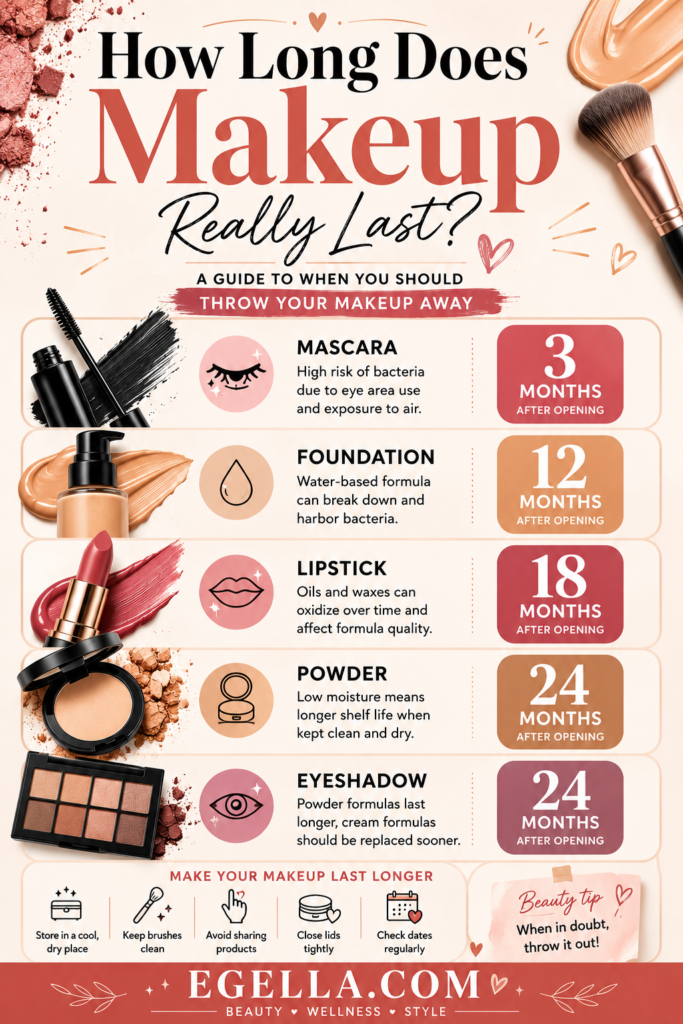
Quick Summary: Mascara → 3 months. Liquid eyeliner → 3–6 months. Liquid foundation → 6–12 months. Concealer → 6–12 months. Cream blush → 12 months. Lipstick → 12–18 months. Pressed powder → up to 24 months. Eyeshadow palettes → up to 24 months. Most important rule: products used near the eyes need replacing most frequently — and changes in smell matter more than calendar dates. When in doubt, throw it out.
This guide covers how long every makeup product actually lasts, what the open-jar PAO symbol means, the warning signs that matter more than expiration dates, the hygiene habits that shorten product life faster than anything else, and exactly when to replace without hesitation.
Editor’s Note — Isabella Reed: I threw away a mascara last month that I’d had for eight months. I know exactly how long I’d had it because I now keep a small label with the opening date on the bottom of every tube — a habit I started after getting a mild eye irritation that I’m fairly certain came from an old liner. The three-month mascara rule felt extreme to me until it didn’t. Now it just feels like maintenance. The same way I replace my toothbrush every three months without drama. Some things just have timelines, and fighting them doesn’t serve anyone.
Does Makeup Really Expire?
Yes — but probably not in the way most people imagine. Makeup doesn’t suddenly become unsafe on a specific calendar date. Instead, its ingredients gradually change over time. Preservatives lose effectiveness, oils begin to oxidize, pigments separate, and repeated exposure to air, fingers, brushes, and moisture introduces microorganisms that can continue growing each time a product is opened.
Every application exposes makeup to new bacteria. Even if you apply products with clean brushes, simply opening and closing a container allows oxygen and environmental contaminants to enter. That’s why two identical foundations can age very differently depending on how they’re stored and used — and why the calendar is only one part of the expiration equation.
Editor’s Note — Isabella Reed: If you can’t remember when you opened a product, place a small sticker with the opening date on the bottom of the packaging. It takes five seconds and makes every decluttering session significantly easier. I use a silver Sharpie on dark packaging. Once it’s a habit, it’s effortless.
Why Makeup Expiration Matters
Expired makeup isn’t just about reduced performance — though that’s part of it. As preservatives weaken, bacteria and mold have greater opportunity to grow. This risk is especially significant for products with higher water content, including liquid foundations, cream blushes, mascaras, and concealers. Products applied near the eyes are particularly sensitive.
Using expired makeup may cause:
- Foundation that separates or oxidises unevenly
- Mascara that dries out and flakes onto the lash line
- Lipstick that develops an unpleasant waxy or rancid smell
- Cream blush that applies patchily or drags on the skin
- Liquid eyeliner that loses pigmentation or dries out mid-application
- Skin irritation, clogged pores, or eye infections in more serious cases
Even when the effects aren’t harmful, they mean you’re no longer getting the product performance you originally paid for. For those with eczema, rosacea, acne-prone skin, or sensitive skin, replacing old makeup regularly reduces unnecessary irritation from degraded ingredients. For everyone else, it’s simply about ensuring your products are doing what you’re asking them to do. This connects directly to the barrier repair approach covered in our skin barrier repair guide — repeatedly using contaminated products on an already-compromised barrier slows recovery significantly.
Understanding the PAO Symbol
The small open-jar icon on makeup packaging is called the Period After Opening (PAO) symbol. Rather than showing a calendar expiration date, it tells you how long the product should remain stable after it’s first opened. The countdown begins when the seal is first broken — not when you purchased it.
| Symbol | Meaning |
|---|---|
| 3M | Use within 3 months after opening |
| 6M | Use within 6 months after opening |
| 12M | Use within 12 months after opening |
| 24M | Use within 24 months after opening |
This distinction matters for anyone who keeps backup products or buys during seasonal sales — a foundation you purchased six months ago and opened last week still has its full 12-month window ahead of it.
Complete Makeup Expiration Chart
| Product | Replace After Opening | Risk Level |
|---|---|---|
| Mascara | 3 months | ⭐⭐⭐⭐⭐ Highest |
| Liquid Eyeliner | 3–6 months | ⭐⭐⭐⭐⭐ Highest |
| Gel Eyeliner | 6 months | ⭐⭐⭐⭐ High |
| Liquid Foundation | 6–12 months | ⭐⭐⭐⭐ High |
| Concealer | 6–12 months | ⭐⭐⭐⭐ High |
| Cream Blush / Bronzer | 12 months | ⭐⭐⭐ Medium |
| Lip Gloss | 12 months | ⭐⭐⭐ Medium |
| Lipstick | 12–18 months | ⭐⭐⭐ Medium |
| Pencil Eyeliner | 12–24 months | ⭐⭐ Lower |
| Pressed Powder | 18–24 months | ⭐⭐ Lower |
| Powder Blush / Bronzer | 24 months | ⭐⭐ Lower |
| Eyeshadow Palette | 24 months | ⭐⭐ Lower |
How Long Does Every Makeup Product Really Last?
Not all makeup products age at the same rate. Ingredients, packaging, water content, and application method all influence how quickly products deteriorate. As a general rule: products containing water or used near the eyes should be replaced more frequently than dry powder formulas.
Mascara — 3 Months
Mascara has the shortest recommended lifespan of any cosmetic — and the strongest reason to honour it. Every time you pull the wand from the tube, air and bacteria enter the formula. Since mascara is applied directly to the eye area, an old tube presents a genuine risk of irritation and infection. If your mascara becomes dry, clumpy, develops an unusual smell, or flakes more than usual, replace it immediately — even if three months haven’t passed.
Important: Never pump the wand in and out of the tube. This pushes extra air inside and accelerates drying significantly.
Liquid Eyeliner — 3–6 Months
Liquid eyeliner shares many of mascara’s risk factors — it’s applied close to the eye, the applicator repeatedly contacts the lash line, and the formula can dry out quickly. Gel eyeliner typically lasts around six months. Wooden pencil eyeliners last significantly longer because sharpening removes the outer layer and reveals fresh product with each use.
Liquid Foundation — 6–12 Months
Liquid foundation contains water, emollients, pigments, and preservatives that slowly degrade after opening. Foundation may still look usable long after it has started separating internally. Watch for texture changes, unusual oxidation on the skin, an off smell, or permanent separation that doesn’t resolve after shaking. Pump bottles generally last longer than jars because they reduce exposure to air and fingers.
Concealer — 6–12 Months
Concealers share the same characteristics as liquid foundation, with one additional consideration: doe-foot applicators repeatedly contact skin before returning to the tube. This increases contamination risk, particularly for under-eye concealers that are applied close to the eye area. Never share concealer with others.
Cream Blush, Bronzer & Contour — 12 Months
Cream formulas have become increasingly popular for their natural finish and blendability, but they contain more water-based ingredients than pressed powders and break down more quickly as a result. Using a clean brush rather than fingers extends lifespan while reducing bacterial transfer. If cream blush is applying patchily, dragging on the skin, or smelling different than when you first opened it, it’s time to replace it. See our guide to blush draping technique for how to get the most from your cream blush while it’s fresh.
Lipstick & Lip Gloss — 12–18 Months
Lipsticks contain oils and waxes that gradually oxidise over time. A lipstick that has gone bad may develop a crayon-like or rancid smell, dry texture, visible sweating or oil separation, or a noticeable colour change. Lip glosses generally have slightly shorter lifespans than lipsticks because their doe-foot applicators repeatedly contact the lips before returning to the tube.
Pressed Powder, Powder Blush & Bronzer — 18–24 Months
Pressed powders generally last longer because they contain very little water, making them less hospitable to bacterial growth. That said, they can still become contaminated if brushes aren’t cleaned regularly — the oils and skin cells on unwashed brushes transfer into the powder with every use. Hard pan (the smooth, shiny layer that forms on top of powder products) is often caused by oils from the skin rather than product expiration, and can be removed by gently scraping the surface with a clean tool.
Eyeshadow Palettes — 24 Months
Powder eyeshadows typically remain stable for up to two years when stored properly. Cream eyeshadows, however, expire much sooner because they contain more moisture. Since eyeshadow is applied close to the eyes, clean brushes matter as much as replacing old formulas.
5 Signs Your Makeup Has Gone Bad
Sometimes the calendar isn’t the most reliable guide. Even products that haven’t reached their suggested lifespan may need replacing if they show obvious signs of deterioration:
- Unpleasant or noticeably different smell — sour, rancid, metallic, or waxy
- Visible colour changes — particularly oxidation in liquid foundations and lipstick
- Texture changes — drier, wetter, grainier, or lumpier than before
- Permanent separation — ingredients that no longer blend back together after shaking
- New irritation — a product causing stinging, redness, or breakouts that it previously didn’t
Editor’s Note — Isabella Reed: If you ever find yourself wondering whether a product has expired, that’s usually a good enough sign that it has. Makeup should feel like a reliable tool, not a question mark. When it becomes the latter, it’s already past the point of usefulness.
8 Makeup Hygiene Mistakes That Shorten Product Life
Even the highest-quality products won’t last as long as they should if handled carelessly. Your everyday habits often determine whether a product stays fresh for its full lifespan — or becomes contaminated much sooner.
1. Sleeping in your makeup
Leaving makeup on overnight contaminates brushes, sponges, and applicators with skin oils, sweat, and bacteria — which then get introduced back into products the next time they’re used.
2. Never washing makeup brushes
Dirty brushes collect oils, dead skin cells, dust, and leftover pigments. Each time those brushes return to powder products, they transfer those contaminants into the formula. A gentle brush cleanser or fragrance-free soap once a week is sufficient for most users.
3. Using fingers in cream products
Cream blushes, bronzers, concealers, and jar-packaged products are especially vulnerable to contamination from fingers. Use a clean brush or sanitised spatula whenever possible.
4. Keeping makeup in the bathroom
Heat and humidity accelerate ingredient breakdown and encourage microbial growth. A cool, dry drawer away from direct sunlight is a significantly better storage environment for almost all cosmetics.
5. Sharing makeup
Mascara, liquid eyeliner, lip gloss, and lip balm should never be shared. Products used around the eyes and mouth can easily transfer bacteria and viruses between users.
6. Adding water to dried products
Adding water to dried mascara or liquid eyeliner dilutes the preservative system while introducing additional contamination. Once a product has dried out, replacement is the safest option.
7. Ignoring smell changes
Smell is often the most reliable indicator that something has changed in a formula. If a product smells sour, metallic, waxy, or noticeably different than before, replace it — even if the calendar says it’s still within range.
8. Buying more than you can use
Unopened products don’t stay fresh indefinitely. Buying realistically and finishing products before replacing them is better for skin, for budget, and for reducing waste.
Makeup Expiration Myths vs. Facts
| Myth | Fact |
|---|---|
| If makeup looks fine, it’s still safe | Bacteria and preservative breakdown aren’t always visible — smell and texture are more reliable indicators than appearance |
| Powder products never expire | They last longer because of lower water content, but can still become contaminated through dirty brushes and storage |
| Luxury makeup lasts longer than drugstore | Price has very little effect on product lifespan — formulation and storage matter significantly more |
| Refrigerating makeup makes it last forever | Most cosmetics are designed for room-temperature storage; refrigeration can help some products but won’t extend lifespan indefinitely |
| Expired makeup always causes visible problems | Not necessarily — but the risk of irritation, poor performance, and bacterial contamination increases steadily over time |
When to Throw Makeup Away Immediately
Some situations don’t require guessing. Replace makeup immediately if you notice:
- Mould or dark spots anywhere in the product or packaging
- A strong sour, rancid, or chemical smell
- Oil and pigment that permanently separate and won’t blend back
- Any eye product used during an eye infection — replace it all
- Products exposed to excessive heat (left in a hot car) or flooding
- Packaging that no longer seals properly
- Burning or stinging on application that wasn’t there before
Safety Reminder: Eye infections can spread through contaminated makeup. If you’ve recently had conjunctivitis, replace your mascara, liquid eyeliner, and any eye products used during the infection — even if they appear and smell completely normal.
A Dermatologist’s Perspective
Dermatologists generally agree that most cosmetic preservatives are highly effective when products are used as directed. Problems arise when products are kept well beyond their recommended lifespan, stored improperly, or repeatedly exposed to contamination. This is especially true for cosmetics used around the eyes, where bacteria can more easily cause irritation or infection.
For people with eczema, rosacea, acne-prone skin, or sensitive skin, replacing old makeup regularly may reduce irritation caused by degraded ingredients interacting with an already-sensitive barrier. If your skin has been reacting unusually to products that previously felt comfortable, checking when you opened them is always the first step before switching formulas. Our skin barrier repair guide covers how contaminated products can compound barrier disruption.
How to Make Makeup Last Longer
While no cosmetic lasts forever, these habits extend both safety and performance:
- Store products away from direct sunlight and heat sources
- Keep lids tightly closed between uses
- Wash makeup brushes weekly with gentle cleanser
- Avoid storing makeup in humid bathrooms
- Never share eye or lip products
- Use a clean spatula for jar-packaged creams rather than fingers
- Label products with the date first opened
- Buy only what you can realistically finish within the product’s lifespan
The 10-Minute Makeup Declutter Checklist
Use this checklist every 3–6 months to keep your collection clean:
- ☐ Throw away any mascara older than 3 months
- ☐ Inspect all liquid products for separation, colour change, or odour
- ☐ Wash makeup brushes and beauty sponges
- ☐ Wipe down product packaging with alcohol wipes
- ☐ Check PAO symbols on regularly used products
- ☐ Replace anything that has caused irritation
- ☐ Sharpen eye and lip pencils
- ☐ Discard products with broken or unsealed packaging
- ☐ Organise remaining products by category so older items are used first
- ☐ Write the opening date on any newly opened products
The Egella Take
💄 Best for: anyone who keeps products longer than they should, those who’ve experienced unexplained skin or eye irritation, beauty lovers who want their makeup to actually work
🏆 The rule: when in doubt, throw it out — especially anything used near the eyes
⚠️ The honest truth: no amount of proper storage makes 3-month mascara safe at month 8. Some timelines exist for good reason and fighting them doesn’t serve anyone.
Building a thoughtful makeup collection isn’t just about discovering the newest launch or finding the perfect shade. It’s about knowing when to let products go. A well-maintained collection often contains fewer products — but every item earns its place because it’s safe, effective, and working at its best. Sometimes the most useful beauty decision isn’t buying something new. It’s finally saying goodbye to something that has already served its purpose.
Frequently Asked Questions About Makeup Expiration
Can I use makeup after its expiration date?
The PAO guideline isn’t a strict deadline, but products past their recommended lifespan should be inspected carefully for smell, texture, and colour changes before use. For anything used near the eyes, replacement is the safer choice.
Which makeup product expires fastest?
Mascara — typically around three months after opening — because it’s repeatedly exposed to air and used directly on the eye.
Do powder products really last longer?
Generally yes, because of their lower water content. Even so, dirty brushes can contaminate them and they should be replaced when they show signs of change.
Can expired makeup cause acne?
Old makeup doesn’t directly cause acne, but contaminated products may introduce bacteria or irritants that contribute to breakouts or barrier disruption.
Should I throw away makeup after an eye infection?
Yes, always. Replace mascara, liquid eyeliner, and any eye product used during the infection to prevent recontamination.
Does unopened makeup expire?
Unopened cosmetics last longer than opened ones, but they still have a shelf life influenced by ingredient stability, heat, and humidity. The PAO countdown begins at first opening, but ingredients can still degrade in the tube.
Is it safe to use lipstick that smells different?
No. Smell changes in lipstick usually indicate oil oxidation or preservative breakdown. Replace it.
Can I extend the life of my makeup?
Yes — clean brushes, proper storage away from heat and humidity, tightly closed packaging, and not sharing products all make a meaningful difference.
Sources & References
- U.S. Food & Drug Administration (FDA) — Cosmetics Safety & Shelf Life
- American Academy of Dermatology (AAD) — Cosmetic Safety & Skin Care
- American Optometric Association — Eye Cosmetics & Eye Health
- Mayo Clinic — Contact Dermatitis and Skin Irritation Resources
- Cleveland Clinic — Cosmetic Hygiene & Skin Health
- Personal Care Products Council — Cosmetic Preservation & Consumer Safety
This article was researched and written by the Egella editorial team using guidance from dermatology organisations, cosmetic safety recommendations, and publicly available scientific resources. Last updated: June 2026.
💄 Save this Makeup Expiration Guide to Pinterest for your next beauty decluttering session — and tag a friend who needs to check their mascara date.
Save this guide and explore more makeup guides at egella.com
What’s the oldest product still in your makeup bag right now? Tell us in the comments.