

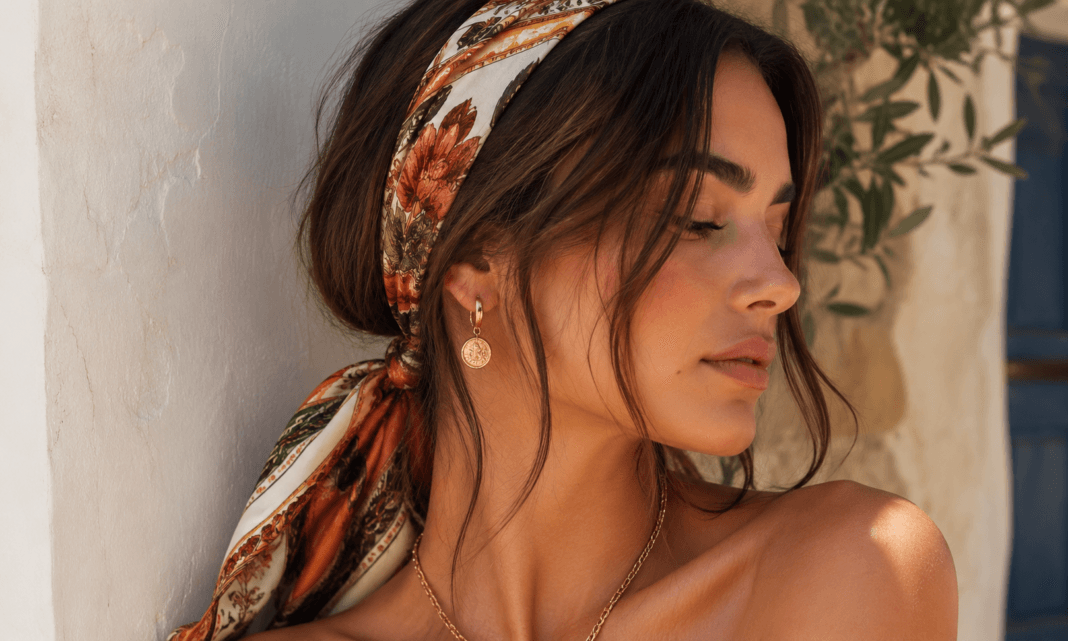
Part of the Egella Beauty Edit — the hair accessories worth understanding this season.
A silk scarf in your hair is one of those styling tricks that looks like you know something other people don’t. It showed up on the Spring/Summer 2026 runways at Hermès, Tod’s, Calvin Klein, and Ferragamo. Every celebrity hairstylist named it the #1 hair accessory trend of the summer. And yet the actual technique — tying a piece of fabric around your head or into your hair — is something anyone can do in under two minutes with one piece of silk they probably already own.
Quick Summary: The silk scarf hair trend is the summer’s most versatile hair accessory — worn as a headband, a headscarf, woven through braids, tied around a ponytail, or layered into a low bun. It works across hair types, lengths, and occasions. The key to making it look intentional rather than improvised: choose the right scarf size for the look you want, and secure it properly so it stays put through the afternoon. Own nothing silk? A cotton bandana works for most of these styles — the technique is the same, the vibe is slightly more casual.
This guide covers 6 ways to wear a silk scarf in your hair, what size and material to choose for each look, how to keep it from slipping by 3pm, and the occasion each style is best suited for.
Editor’s Note — Sophia Bennett: I have three silk scarves and have used all of them as hair accessories exactly once each, usually on vacation, before putting them back in a drawer. What changed my relationship with this trend was understanding that silk scarves slip — that’s the material, not the technique — and a small preventive knot at the very end of whatever you’re tying stops 80% of the slippage. That one piece of information is why this style now stays in my hair instead of migrating to my bag. The fix is genuinely that small.
Why the Silk Scarf Is Summer 2026’s Hair Accessory
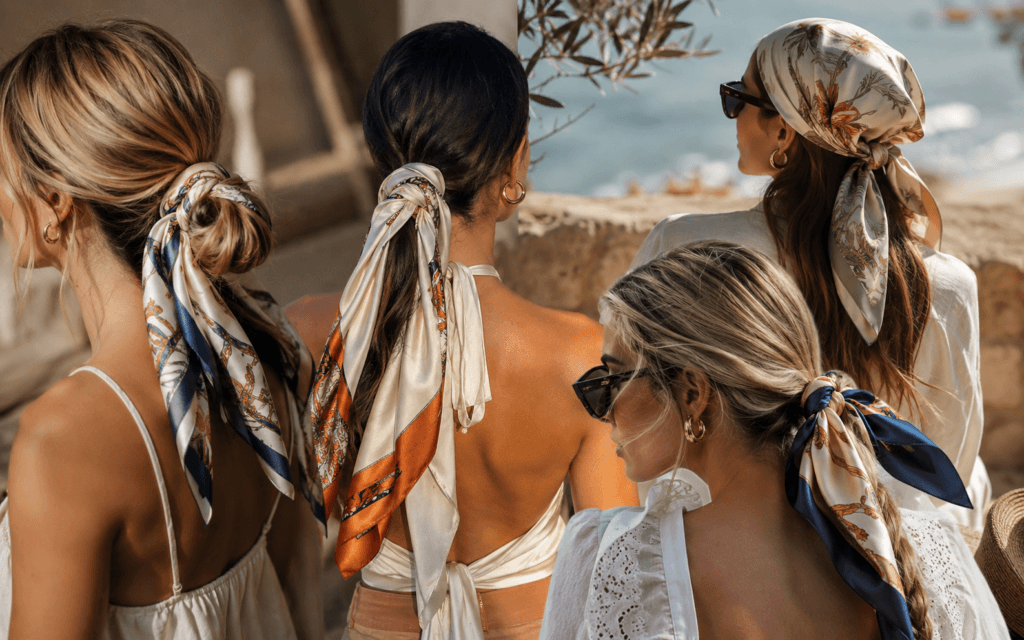
The timing connects to a broader mood. Celebrity hairstylist Christine Bellemare captures it: “The best accessories right now feel like part of the outfit, not just something functional.” A silk scarf in your hair does exactly that — it reads as an outfit decision as much as a hair decision, which means it elevates a very simple hairstyle (a low bun, a ponytail, loose hair pinned back) into something that looks considered.
It also fits perfectly with the summer’s dominant aesthetic directions — Euro Summer in particular, where the silk headscarf has been a defining accessory since Brigitte Bardot wore it along French coastlines. The trend is both nostalgic and completely current, which is the ideal combination for something that can carry a whole summer of wear.
Choosing the Right Scarf Size
The size of the scarf determines what’s possible with it:
- Twilly / narrow scarf (5–8cm wide, 80–100cm long): Best for tying around a ponytail, looping through braids, or wrapping around a bun as an accent. The length makes it easy to tie a bow; the narrowness keeps it from overwhelming shorter hair
- Small square (45×45cm): The most versatile size — works as a headband, a loose headscarf, or tied at the nape for a bandana effect. Fold corner-to-corner for a triangle, then roll for a band
- Medium square (70×70cm): The classic headscarf size — enough fabric for a proper crown-to-nape wrap, a halter-style tie at the back, or a loose babushka. More dramatic, more visible
- Large square (90cm+): For the full headscarf look or turbans — these require more fabric to achieve the volume. Less practical for daily use but very effective for the statement version of the trend
6 Ways to Wear a Silk Scarf in Your Hair
1. The Headband — The Most Wearable Daily Version
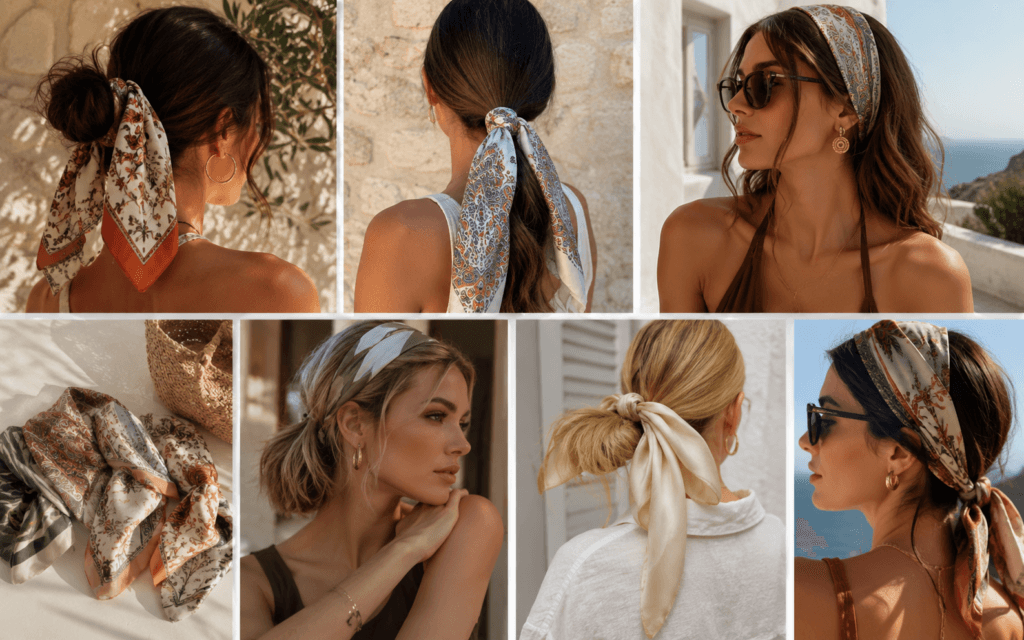
Fold a small square scarf corner-to-corner into a triangle, then roll it from the wide edge toward the point until you have a band about 3–4cm wide. Place it over the crown of the head with the ends falling behind the ears, then tie at the nape of your neck or underneath your hair. The knotted end can be tucked under or left visible.
This works on all hair lengths and types, from very short hair to long, and can be worn over loose hair, a bun, or a ponytail. It’s the most consistently wearable daily version of the silk scarf hair trend because it doesn’t require the hair to be in any particular style to look right.
Best with: A 45×45cm square. Best for: Every day, all occasions, all hair lengths.
2. The Babushka / Crown Wrap — The Most Euro Summer
Lay a medium or large square scarf over the crown of your head, with the point facing forward at the forehead. Bring the two side corners down under your chin or tie them at the nape of your neck, tucking the point under or letting it fall forward. This is the style most directly associated with French and Italian coastal dressing — Grace Kelly, Brigitte Bardot, every image of a woman in a convertible along a cliff road. It photographs extremely well and feels much more glamorous than its simplicity suggests.
Best with: 70×70cm or larger. Best for: Vacation, outdoor events, beach days, Euro Summer aesthetic outfits.
3. The Ponytail Wrap — The Fastest Upgrade
Tie your hair into a ponytail as normal. Take a twilly or narrow scarf and wrap it around the elastic, looping it several times around the base of the ponytail before tying into a bow. Leave the ends trailing if you have enough length. The silk scarf replaces the visible hair tie and transforms a simple ponytail into something that looks deliberate. Hairstylists note a small preventive knot at the very end of the bow prevents the silk from unraveling throughout the day.
Best with: Twilly or narrow scarf. Best for: Quick daily upgrade, athletic or active occasions where a simple ponytail is practical but you want more interest.
4. Woven Through a Braid — The Most Editorial Version
Take a twilly or long narrow scarf and weave it through a loose braid — threading it over and under the sections alongside the hair so the print surfaces every few inches along the plait. The result looks as if the scarf grew there, which is the ideal quality for this kind of styling. It works best with a relaxed, slightly undone braid rather than a tight, precise one.
As one stylist describes it: “Weave a longer scarf through a braid so the print keeps surfacing along the plait, every few inches, like it grew there.” A small knot at the very tail of the braid prevents the scarf from slipping free by afternoon.
Best with: Twilly or narrow scarf in a print that reads well at small scale. Best for: Occasions where you want something more intricate-looking without the technical skill of complex braiding.
5. Tied at the Hairline — The Most Fashion-Forward Version
Lay the scarf over your hairline like a very wide headband, bringing the ends underneath the hair at the nape rather than tying at the visible front. This creates a more structured, headband-like effect than the babushka but uses the full scarf rather than a rolled narrow band. A second variation: tie at the side of the head just above the ear, with the knot visible, for a more asymmetric, deliberately imperfect effect.
This is described by the Who What Wear team as the most fashion-forward approach to the trend right now — “less twee, more editorial” than the classic ponytail tie or headband versions.
Best with: 45×45cm or 70×70cm. Best for: Fashion events, editorial-inspired looks, anyone who wants the scarf to be the focal point of the hairstyle.
6. Low Bun with Scarf Accent — The Easiest Elevated Look
Twist hair into a low bun at the nape and secure with an elastic. Take a twilly or small rolled square scarf and wrap it around the bun — either looped through the bun structure, tied in a bow around the base, or wrapped flat and knotted at the side. This is the easiest option for heat — hair is up, scarf is decorative, the combination looks much more intentional than either would on its own.
Best with: Twilly or 45×45cm rolled into a band. Best for: Summer events, occasions where hair needs to be up, anyone who wants a quick polished look without styling.
Editor’s Note — Sophia Bennett: The prints that work hardest in hair: classic geometric patterns at small scale, tone-on-tone (silk in a color close to your hair reads as a natural extension of the style), and any print that has some contrast between light and dark areas, which photographs better than uniform patterns. What tends to work less well: very large prints that are difficult to read at the scale of a hair accessory, and very bright neon prints that compete visually with your face rather than framing it. When in doubt: a neutral-ground scarf with any print reads more elegantly in hair than a bright-ground one.
How to Stop a Silk Scarf from Slipping
Silk slips — that’s the material, not a technique problem. The practical solutions:
- The preventive knot: Add a small, tight knot at the very end of whatever bow or tie you’ve created. Not decorative — just functional. This single addition prevents 80% of slippage
- Bobby pins: Placed discreetly under the scarf at the points where it tends to slide, bobby pins anchor the fabric to the hair without being visible
- A texturizing spray on the hair first: Silk grips rough, textured hair better than smooth, freshly washed hair. A light texturizing spray before tying gives the scarf something to hold onto
- Cotton as an alternative: A cotton bandana or cotton scarf grips hair naturally without any of these adaptations — if slippage is consistently a problem with silk, a cotton version achieves the same look with significantly more staying power
Who This Silk Scarf Hair Trend Is Best For
Best for: anyone wanting a fast, impactful hair upgrade without heat styling, those building an overall summer aesthetic that includes Euro Summer fashion elements, people who already own silk scarves that aren’t being used, and anyone looking for a versatile accessory that works across hair types and lengths.
Less ideal for: very fine or slippery hair without access to texturizing products — the scarf will need significant anchoring, which can increase styling time and sometimes defeat the purpose of the “easy” aesthetic.
The Egella Take
The silk scarf hair trend earns its moment because it genuinely requires less effort than it looks. A rolled square at the hairline, a twilly around a bun — both take under two minutes and produce something that reads as a considered style decision rather than a hair tie. The one investment worth making: a preventive knot. That’s the detail that separates a silk scarf that stays in place all evening from one that ends up in your bag by noon.
Frequently Asked Questions About Silk Scarf Hair
Does the silk scarf hair trend work on short hair?
Yes — the headband and hairline-tie versions work on all lengths, including very short hair. The ponytail and braid variations require enough length for those styles, but the decorative headscarf options are actually particularly effective on short hair because the scarf becomes the focal point rather than a secondary element.
What’s the difference between a silk scarf and a twilly?
A twilly is a specific format — a long, narrow scarf (typically 5–8cm wide and 80–100cm long) that was originally designed by Hermès for wrapping around bag handles. It’s become the most popular format for ponytail ties and braid weaving because its narrow width is easier to work with than a folded square.
Can I use a regular scarf rather than a silk one?
Yes — a cotton bandana, a lightweight printed cotton scarf, or any similar fabric works for most of these styles. Silk produces the most luxurious-looking result and photographs best, but cotton grips hair better and is more practical for daily wear.
How do I choose which scarf style works for my face shape?
The babushka / crown wrap adds height and slightly narrows the face — suits round and wide face shapes well. The headband-style ties work across most face shapes. The hairline-tie version draws attention to the forehead and works best when the forehead is a feature you want to highlight rather than minimize.
One Piece of Silk, Endless Summer
The silk scarf hair trend is the easiest upgrade in this summer’s accessory lineup — and the most useful, because the same piece of fabric that ties around a low bun at brunch can wrap into a headscarf at the beach and loop around a bag handle for the evening. You don’t need a collection. You need one scarf you love and the muscle memory of one good knot.
Save this guide and explore more hair guides at egella.com
Which silk scarf style are you most likely to try first? Tell us in the comments.
