

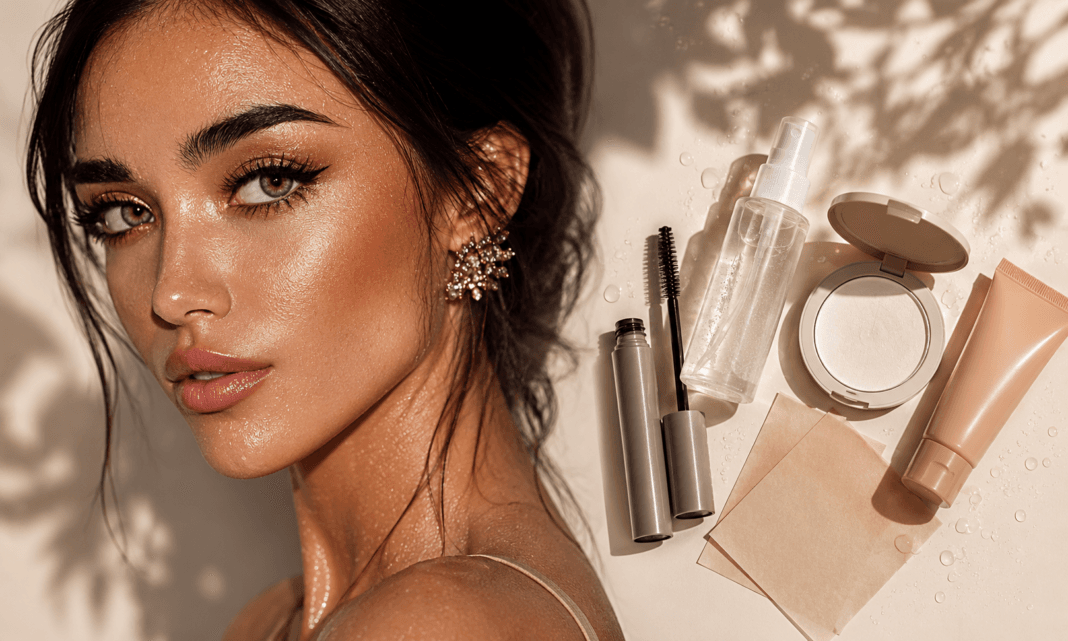
Part of the Egella Beauty Edit — practical makeup techniques that actually work.
You’ve done your makeup. You look great. You walk outside. By noon, your foundation has moved to places it wasn’t applied, your eyeliner has migrated south, and whatever you did with your cheeks has redistributed itself somewhere near your hairline. Sweatproof makeup isn’t about using products that don’t feel like anything — it’s about understanding why summer heat destroys a regular makeup routine and making smarter choices at every step.
Quick Summary: Sweatproof makeup starts with skincare prep (lighter textures, no heavy oils), continues through formula choices (sheer or lightweight base, waterproof eye products, long-lasting lip formulas), and is locked in by setting powder and setting spray. The biggest mistake is applying too much product — in heat, less stays on better than more. Most important single step: setting spray applied as the final step, held 8–10 inches from the face.
This guide covers a complete step-by-step system for makeup that holds in heat and humidity — including the products to avoid, the formulas that work best, and how to touch up mid-day without ruining what you’ve built.
Editor’s Note — Isabella Reed: The summer makeup lesson that took me an embarrassingly long time to learn: heavy coverage doesn’t stay on better than light coverage in heat — it stays on worse. The more product you apply, the more there is to slide, crease, and migrate as soon as your skin starts producing oil and sweat. Switching to a skin tint or tinted SPF as my base in summer and spot-concealing only where needed genuinely extended how long my makeup looked intentional from about four hours to a full day. The less-is-more principle in hot weather isn’t about being minimal. It’s about physics.
Why Heat Destroys Regular Makeup
The problem starts with the skin. In high temperatures, the body produces more sebum (natural oil) and perspiration — both of which break down the ingredients in conventional makeup formulas. Heavy cream foundations contain occlusive ingredients that can’t breathe in heat, which leads to sliding and caking. Chemical SPF converts UV light to heat inside the skin, which can increase surface temperature and worsen breakdown. Traditional talc-heavy powders absorb initial oil but can look cakey as the day progresses.
Understanding this means the solution is largely about starting with less and choosing formulas designed to work with the skin’s summer behavior rather than against it.
Step-by-Step: Building a Sweatproof Makeup Routine
Step 1 — Skin Prep (The Foundation of Everything)
Switch to a lighter moisturizer texture in summer — water-based or gel formulas rather than rich creams or balms. Heavy moisturizers add a layer of slip under the makeup that encourages sliding from the first application. If you have oily skin, consider an oil-free moisturizer specifically.
SPF is non-negotiable — but choose a mineral or lightweight fluid formula that sits well under makeup rather than a heavy chemical sunscreen. Give every skincare product a few minutes to fully absorb before moving to makeup. Rushing this step means your foundation is sitting on wet skincare rather than on skin, which is a significant contributor to early breakdown. This connects to the broader SPF reapplication habits that matter as much as the initial application.
Step 2 — Primer (Optional but Worth It in Heat)
A mattifying or oil-absorbing primer creates a surface that makeup grips better than it does on bare skin — particularly useful for oily skin types or anyone expecting to be in humidity. Apply in a thin, even layer and let it set for 30 seconds before foundation. Don’t skip this step thinking you’ll compensate with more foundation — primer reduces the amount of base product you need.
Step 3 — Base (The Most Important Formula Decision)
This is where most summer makeup routines go wrong: applying the same foundation in July that works in January. Heavy, full-coverage foundations feel uncomfortable in heat and break down faster than lighter alternatives.
For summer: skin tints, tinted moisturizers with SPF, or lightweight BB creams are significantly more heat-stable than traditional foundation. Apply in thin layers — one sheer coat, then spot-conceal only where you actually need coverage. If you prefer more coverage, build it in two thin layers rather than one thick application.
Waterproof concealer applied only to specific areas (under eyes, around nose, any blemish coverage needed) holds significantly better than full-face concealer applied over a heavy base.
Step 4 — Setting (The Step Most People Skip or Rush)
Translucent setting powder, pressed lightly (not rubbed) over the T-zone and any area prone to shine, absorbs oil before it starts breaking down the base. Press with a powder puff or brush rather than rubbing — rubbing disturbs what you’ve applied underneath.
If you have dry skin: powder only in your oiliest areas (typically T-zone) and skip it entirely on drier cheeks and forehead to avoid a cakey finish.
Step 5 — Color (Formula Matters More Than Application)
For sweatproof makeup in summer heat, the formula of blush and bronzer matters more than most people expect:
- Powder blush and bronzer hold significantly better than cream formulas in heat and humidity — creams can migrate once the skin warms up
- Exception: cream blush applied and then set with a light dusting of powder over the top can work well if you prefer the dewy, blended finish that cream provides
- Avoid glittery or shimmer formulas on oily areas — the shimmer particles migrate with oil and end up redistributed by midday
Step 6 — Eyes (Waterproof Everything)
Summer eye makeup should be entirely waterproof. Non-waterproof mascara and eyeliner will smudge in heat regardless of how carefully you apply them — it’s not technique, it’s formula. Waterproof mascara and smudge-resistant gel or liquid liner hold through sweat, humidity, and the reflexive eye-rubbing that comes with wearing sunglasses all day.
For eyeshadow: an eyeshadow primer applied before any shadow prevents the creasing that happens when eye area sweat breaks down the product. Transfer-resistant liquid eyeshadows also hold better than loose powder shadows in humidity.
Step 7 — Lips (Stains Over Glosses)
Glossy lip formulas are actively counterproductive in summer — they migrate, they transfer, and they feel sticky in heat. For sweatproof lip wear, lip stains deliver sheer color that lasts for hours without smudging or transferring. Long-wearing matte lipstick is the other option for more coverage, though it can feel drying on already-dehydrated summer skin.
Glossy lips work beautifully as a finished look in controlled environments. On a hot day outdoors, treat them as a touch-up option rather than a base — apply a lip stain for longevity, then add gloss over it if you want the finish for photos or specific moments.
Step 8 — Setting Spray (The Most Important Final Step)
A setting spray applied as the very last step creates a breathable barrier between the makeup and everything that will try to destroy it throughout the day. Hold the bottle 8–10 inches from the face and mist in a light, even layer — don’t soak the skin, especially in humid weather where excess moisture on top can work against you.
This is the single highest-return addition to a summer makeup routine if you’re not already using one. The difference between a base that holds four hours and one that holds eight hours is often just this one step.
Editor’s Note — Isabella Reed: On touch-ups: blotting papers first, then powder if needed, setting spray to finish. The sequence matters — if you go straight to powder on an oily midday face, you push the oil into the powder and create a cakey layer. Blotting papers remove the surface oil first without disturbing the makeup underneath, leaving a clean surface for a light powder press if the shine returns. This three-step touch-up takes 90 seconds and resets a look that’s been in heat for six hours. Worth carrying all three in your bag.
Products to Avoid in Summer
- Heavy cream or oil-based foundations — occlusive ingredients prevent skin from breathing and accelerate breakdown in heat
- Thick, heavy setting powders applied all over — looks cakey in heat as oil mixes with excess powder
- Glittery or shimmery base products — shimmer particles migrate with oil, ending up in unintended places
- Creamy lip glosses as a primary lip product — these are designed for shine, not longevity, and will transfer and migrate throughout the day
- Multiple heavy product layers — in heat, each additional layer increases the total product load that can slide
Mid-Day Touch-Up Kit
These five items fit in any bag and reset a summer face between activities:
- Blotting papers — remove oil without disturbing makeup
- Pressed translucent powder — press (don’t rub) onto blotted areas
- Setting spray — mist over the finished touch-up
- Waterproof mascara — for touch-ups if needed
- Lip stain or long-wear lip color — reapply the color that’s been eaten off throughout the day
Who This Guide Is Best For
Best for: anyone whose makeup consistently breaks down before the end of summer days, those spending time outdoors, at events, or in humid environments, people building a summer beauty routine alongside skin barrier care and a consistent SPF routine.
Less ideal for: those who prefer no-makeup looks — this guide is about making makeup last, not about minimalism. If your summer preference is bare skin with SPF, our skincare guides are more relevant to you.
The Egella Take
Sweatproof makeup in summer is mostly about subtracting. Less base, lighter textures, fewer layers, smaller amounts of product — and then protecting what’s there with setting spray. The formula choices matter, but the biggest shift is usually just applying less. Your skin can’t be perfectly covered in heat. It can look healthy, intentional, and maintained — which is better anyway.
Frequently Asked Questions About Sweatproof Makeup
Does setting spray actually work?
Yes — it’s one of the highest-evidence steps in summer makeup longevity. The barrier it creates between the finished makeup and external heat, humidity, and sweat significantly extends how long formulas remain where they were applied.
Should I use primer if I have dry skin?
A hydrating primer (rather than a mattifying one) can help dry skin in summer by creating a moisture buffer between skincare and makeup. If your skin is very dry, look for primers described as “hydrating” or “dewy” rather than “mattifying.”
What’s the best way to reapply SPF without ruining makeup?
Our dedicated SPF reapplication guide covers this in full — powder SPF, setting sprays with SPF, and application technique that doesn’t disturb the base underneath.
Is waterproof mascara bad for lashes?
Waterproof mascara itself doesn’t damage lashes — but aggressive removal of waterproof mascara does. Using a dedicated oil-based makeup remover or micellar water dissolves the formula without the rubbing that causes lash breakage.
Stay Unmelted
Building a sweatproof makeup routine is mostly about understanding what heat does to product and working with that reality rather than against it. Lighter formulas, waterproof eye products, setting powder, setting spray — and significantly less of everything else. Summer makeup that holds all day looks less like armor and more like skin. That’s the goal.
Save this guide and explore more makeup guides at egella.com
What’s the one product that’s made the biggest difference in your summer makeup? Tell us in the comments.
