

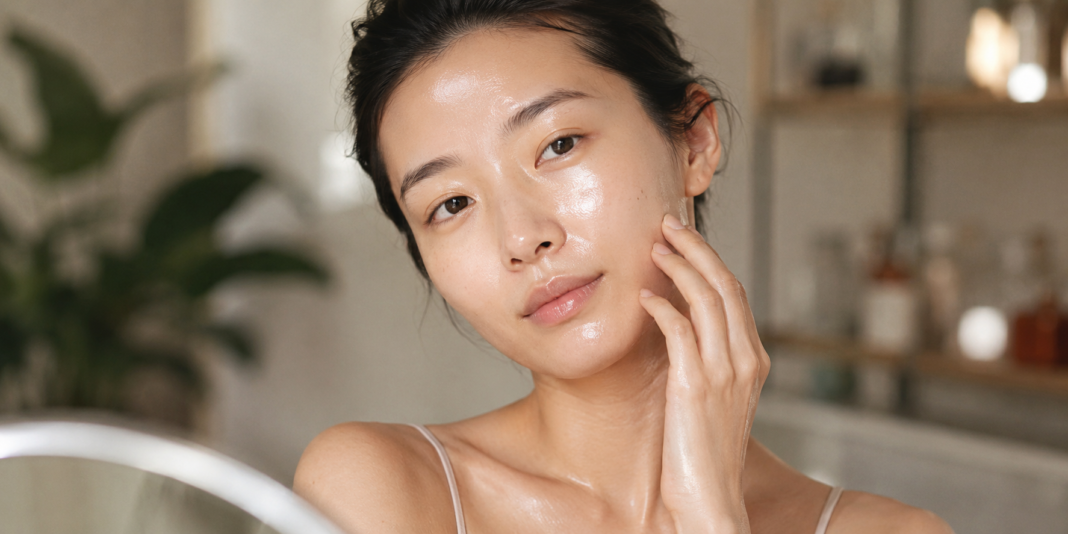
Glass skin isn’t just a highlighter trick. It’s a layered technique built on intentional skincare prep and the right product choices. Here’s how to genuinely nail it.
What Does Glass Skin Actually Mean?
The term originates from Korean beauty culture and describes skin that looks translucent, deeply hydrated, and so smooth it reflects light almost like glass — a luminosity that seems to come from inside the face rather than sitting on top of it. The most critical misunderstanding in Western beauty content is the assumption that glass skin is a makeup finish you can apply. It isn’t. It’s a skin condition that makeup can enhance, but never create from scratch. Roughly seventy percent of the work happens in your skincare prep before a single drop of foundation is involved.
Building the Canvas: Skincare Prep
The foundation of glass skin is a double cleanse. Start with an oil-based cleanser to remove SPF, makeup, and the day’s sebum buildup, then follow with a gentle foam or gel cleanser to restore your skin’s natural pH balance. Clean, properly pH-balanced skin absorbs everything that comes after it significantly more effectively.
From there, the approach most associated with Korean beauty is layering a lightweight, hyaluronic-acid-rich toner in multiple thin applications — sometimes called the seven-skin method, though three to four layers is plenty for most people. Rather than applying one heavy coat, you’re building up hydration cumulatively, waiting a minute between each layer, patting gently rather than wiping. The effect is a deep, plumped quality to the skin that no single product application can replicate.
A fermented essence applied after toning evens out skin texture and adds a natural luminosity that’s distinctly different from shimmer or highlight. Follow this with a niacinamide serum to minimize pore visibility — that near-poreless appearance is central to the glass skin look. If you have time, a sheet mask applied twenty to thirty minutes before makeup provides an additional surge of hydration that shows up beautifully under foundation and makes the finish last longer.
Seal everything in with a moisturizer, and consider adding two or three drops of a lightweight facial oil — squalane and rosehip are both excellent options — on top. This is what creates the dewy, “lit from within” quality that makes glass skin so distinctive, before a single makeup product has touched your face.
The Makeup Application
Wait ten full minutes after your skincare routine before applying any makeup. This step is almost universally skipped, and it makes a meaningful difference. Hydration that hasn’t fully absorbed causes foundation to move, separate, or sit on top of the skin in a way that looks patchy rather than seamless.
Start with a dewy or satin-finish primer — one that contains hydrating ingredients rather than silicone-heavy pore-filling formulas, which create a surface that light bounces off rather than through. For foundation, a skin tint or BB cream with light to sheer coverage is ideal. Apply it with a damp sponge using gentle tapping and pressing motions rather than swiping, which can disturb the skincare layers underneath. Mix one or two drops of a liquid highlighter into your foundation before application to give the entire base a lit quality.
Cream blush applied with your fingertips to the cheekbones blends into the skin naturally and maintains the dewy finish that powder blush immediately undermines. Finish the whole look with a hydrating setting spray rather than a powder — mist it from about ten inches away and let it dry naturally rather than pressing it in.
What to Avoid
Powder is the single biggest enemy of glass skin. If your T-zone absolutely requires setting, use the smallest possible amount of a finely milled translucent powder on that zone only — and consider whether you actually need it, or whether you’ve just been conditioned to reach for it. Matte foundation, full-coverage formulas, and heavy contour all work directly against the luminous, transparent finish you’re building toward. If you contour at all, use a soft cream bronzer blended until it’s barely visible. Structure kills the illusion. Light does the work.
