

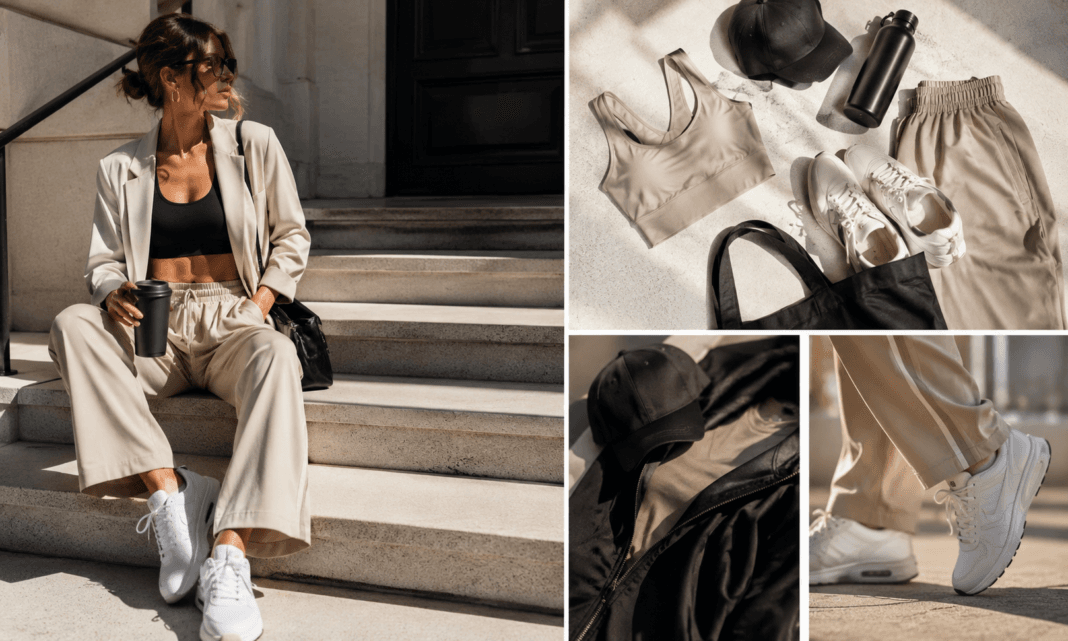
Part of the Egella Style Decoded Series — understanding the aesthetics worth building a wardrobe around.
The sport luxe trend is the fashion direction that refuses to go away — and the reason it keeps coming back is simple: it solves a problem that most other aesthetics don’t. How do you look deliberate, elevated, and put-together while also being comfortable enough to actually live in the clothes? Sport luxe is the answer. And in summer 2026, Pinterest’s official Trend Report named it the primary fashion direction of the season.
Quick Summary: Sport luxe is the pairing of athletic or sports-inspired pieces with elevated, tailored, or luxury elements — think structured blazer over cycling shorts, or a silk slip dress with sneakers. The look works because the contrast between sporty and elevated is the point, not a problem. It’s been building across runways since early 2026 and is now everywhere on Pinterest, particularly in the context of the tennis aesthetic and summer-ready dressing. Easiest entry point: one quality sneaker paired with something you’d normally wear with heels.
This guide covers what sport luxe actually means in practice, the combinations that work, the ones that don’t, and how to build the aesthetic without buying an entirely new wardrobe.
Editor’s Note — Amelia Brooks: Sport luxe is one of those trends I’ve noticed people getting wrong in a very specific way: they buy expensive athletic wear and assume the luxury component is covered by the price tag. It isn’t. What creates the sport luxe effect is the contrast between something athletic and something not-athletic in the same outfit — tailoring with a track element, a sleek athletic piece with a formal one. Two expensive athletic pieces worn together is just an expensive gym outfit. One athletic piece deliberately paired with something elevated is sport luxe. The distinction is the combination, not the price.
What Sport Luxe Actually Means in 2026
Sport luxe in its current iteration is specifically about the contrast between athletic and elevated — not about wearing athletic wear casually, which is simply athleisure. The defining quality is intention: choosing to pair a sport-coded piece with something that would usually be worn without it, and making that combination look deliberate rather than accidental.
The summer 2026 version has a specific visual vocabulary that distinguishes it from earlier sport luxe cycles. It’s less about logomania or obvious brand signaling and more about silhouette: streamlined, body-aware athletic pieces paired with structured tailoring or fluid elegant pieces. The tennis aesthetic that’s been building across fashion (and hair — see our tennis-core slicked-back ponytail guide) has fed directly into this direction, pushing sport-coded pieces into non-athletic contexts.
The Sport Luxe Formula
Most successful sport luxe outfits follow one of three formulas:
Formula 1: Athletic Bottom + Elevated Top
Cycling shorts, track trousers, or bike shorts paired with a structured blazer, a silk blouse, or an oversized tailored shirt. The athletic piece anchors the comfort; the elevated top signals that this is a style decision. The most important variable: the athletic piece must be fitted and sleek — wide, baggy athletic pieces read as casual rather than luxe.
Works best: Cycling shorts with a longline blazer. Tailored track trousers with a silk camisole. Fitted performance leggings with an oversized silk shirt.
Formula 2: Elevated Dress + Athletic Shoe
A silk slip dress, a midi dress, or a tailored dress worn with a clean, minimal sneaker or a low-profile athletic shoe. The footwear does the sport work; the dress does the luxe work. This is the most universally accessible version of sport luxe because it requires the smallest wardrobe addition — one quality sneaker can be rotated across multiple existing outfits.
Works best: Silk slip dress with white leather low-top sneakers. Tailored midi skirt with minimal running shoes in a neutral color. Maxi dress with clean white tennis shoes.
Formula 3: Athletic Top + Structured Bottom
A fitted athletic top — a racerback, a sleek sports bra worn as a top, a performance-fabric tank — paired with tailored trousers, a structured midi skirt, or wide-leg formal pants. Less common than the other two formulas but very effective when executed well. The athletic piece must be genuinely high-quality — visible elastic, pilling, or budget fabric actively undermines the luxe component.
Works best: Fitted ribbed athletic tank with wide-leg tailored trousers. Sleek sports bra with a high-waisted midi skirt and blazer over the top. Performance fabric camisole with structured cigarette trousers.
The Pieces That Do Most of the Work
The White Leather Sneaker
The single most versatile piece in sport luxe styling. A clean, minimal white leather sneaker — low-profile, no chunky sole, no aggressive branding — pairs with dresses, tailoring, jeans, and almost everything else in a wardrobe. This is the one piece worth investing in if you’re approaching sport luxe from scratch, because it does the sport work in Formula 2 across an enormous range of existing outfits.
The Structured Blazer
In sport luxe, the blazer is what elevates athletic pieces into something that reads as intentional. A well-fitted blazer over cycling shorts is an outfit. Cycling shorts without it is activewear. The blazer doesn’t need to be expensive — it needs to fit well. This is where tailoring makes the most difference: a blazer that fits precisely reads as luxe regardless of its price point.
Fitted Performance-Fabric Pieces
Cycling shorts, fitted track pants, athletic tanks — these pieces need to be sleek and close-fitting to work in sport luxe. The relaxed, baggy athletic aesthetic is a different direction entirely. Sport luxe in its current form is about streamlined athletic silhouettes, not volume.
The Silk or Elevated Fabric Piece
The luxury component doesn’t need to be literal silk — it needs to be something that reads as elevated: a fluid fabric that drapes rather than clings, a structured material that holds its shape, or simply a piece that wouldn’t look out of place in a non-athletic context. This is what prevents sport luxe from collapsing into athleisure.
Editor’s Note — Amelia Brooks: The shoe decision is everything in sport luxe. A chunky platform sneaker reads as streetwear, not sport luxe. A technical trail running shoe reads as outdoor wear. What works: a clean, minimal silhouette — ideally leather or leather-look, low-profile sole, neutral colorway. The sneaker should look like it could be worn in an office if the dress code allowed it. That quality of restraint is what allows it to function as the “luxe” element despite being athletic footwear. When in doubt: go simpler, go lower-profile, go more neutral.
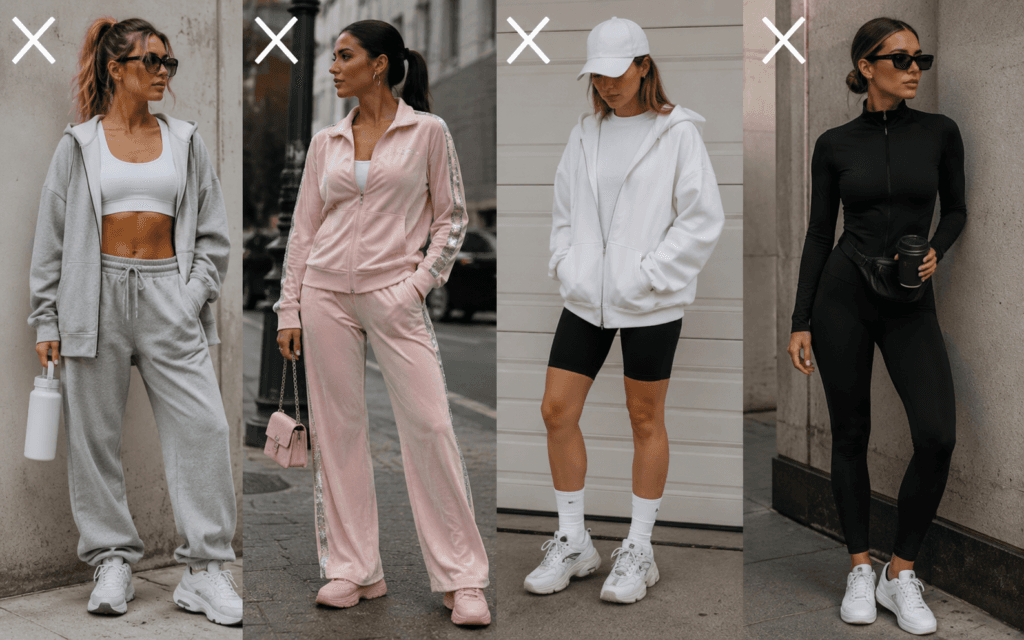
What Doesn’t Work in Sport Luxe
- Two overtly athletic pieces together: Sports bra and cycling shorts is a gym outfit, not sport luxe, regardless of how expensive they are
- Chunky, maximalist sneakers: The platform-chunky sneaker trend is a different aesthetic direction that fights against the streamlined elegance sport luxe requires
- Visible logos on the athletic piece: Heavy branding shifts the aesthetic toward streetwear and away from the understated contrast that defines sport luxe
- Ill-fitting athletic pieces: The streamlined athletic silhouette depends on fit — baggy athletic wear with elevated pieces looks like a changing room decision, not a style one
- Trying to make everything match: Sport luxe works because of contrast. Matching the sneaker color to the blazer color to the athletic piece to the bag removes the contrast and flattens the effect
Sport Luxe vs. Related Aesthetics
| Aesthetic | Core Quality | Vs. Sport Luxe |
|---|---|---|
| Athleisure | Athletic wear worn casually | Less elevated — sport luxe requires the contrast element |
| Tennis Core | White, preppy, court-inspired | Subcategory — tennis core is sport luxe with a specific visual language |
| Quiet Luxury | Understated, expensive-looking | Overlap in quality and restraint; sport luxe adds the athletic element |
| Euro Summer | Mediterranean coastal ease | Can overlap — a silk dress with sneakers reads as both |
Who Sport Luxe Is Best For
Best for: anyone whose lifestyle moves between active and social contexts and who wants a wardrobe that works for both without changing entirely, those who already own quality athletic wear and want to integrate it into non-gym outfits, people building a versatile summer wardrobe alongside Euro Summer or quiet luxury pieces that can be cross-styled.
Less ideal for: those who prefer very formal or very casual dress codes with no middle ground — sport luxe lives in the between, and that might not suit every lifestyle or workplace context.
The Egella Take
Sport luxe keeps coming back because the underlying problem it solves — looking put-together while being genuinely comfortable — doesn’t go away. The 2026 version is more restrained than previous cycles: less logo, less volume, more streamlined athletic silhouettes paired with genuinely elevated pieces. The key insight is that one quality sneaker with deliberate styling does the work of a whole new wardrobe. Start there, see what you already own that pairs with it, and build outward from that single combination.
Frequently Asked Questions About Sport Luxe
What’s the difference between sport luxe and athleisure?
Athleisure is athletic wear worn in casual, non-gym contexts — yoga pants to brunch. Sport luxe specifically requires the contrast between an athletic element and an elevated, non-athletic one in the same outfit. The combination is what creates the aesthetic; athleisure is just one half of it.
Do I need expensive athletic wear for sport luxe?
The athletic piece needs to look sleek and fit well — visible wear, pilling, or obviously cheap fabric undermine the luxe element. But expensive branding isn’t required. A well-fitting, minimally branded cycling short from a mid-range brand works as well as a designer equivalent if the silhouette is right.
Can sport luxe work in a workplace context?
In creative, casual, or fashion-adjacent workplaces, yes — a blazer over tailored track trousers, or a structured dress with white sneakers, reads as polished sport luxe. In conservative formal environments, the athletic element typically won’t translate. This is a context-dependent aesthetic.
What colors work best for sport luxe?
Neutrals are the most versatile: white, black, navy, cream, and camel allow the silhouette contrast to read clearly without color competing with the aesthetic. One accent color can work — a camel blazer over black cycling shorts, for example — but the simpler the palette, the more elevated the result.
Comfort That Looks Like a Decision
Sport luxe is the aesthetic for people who want both things — comfort and intention — without treating them as mutually exclusive. One quality sneaker with a dress you already own. A blazer over the cycling shorts you wear anyway. The contrast does the work. That’s the whole approach.
Save this guide and explore more fashion guides at egella.com
Are you team athletic bottom with elevated top, or team dress with sneakers? Tell us your go-to sport luxe combo in the comments.
