

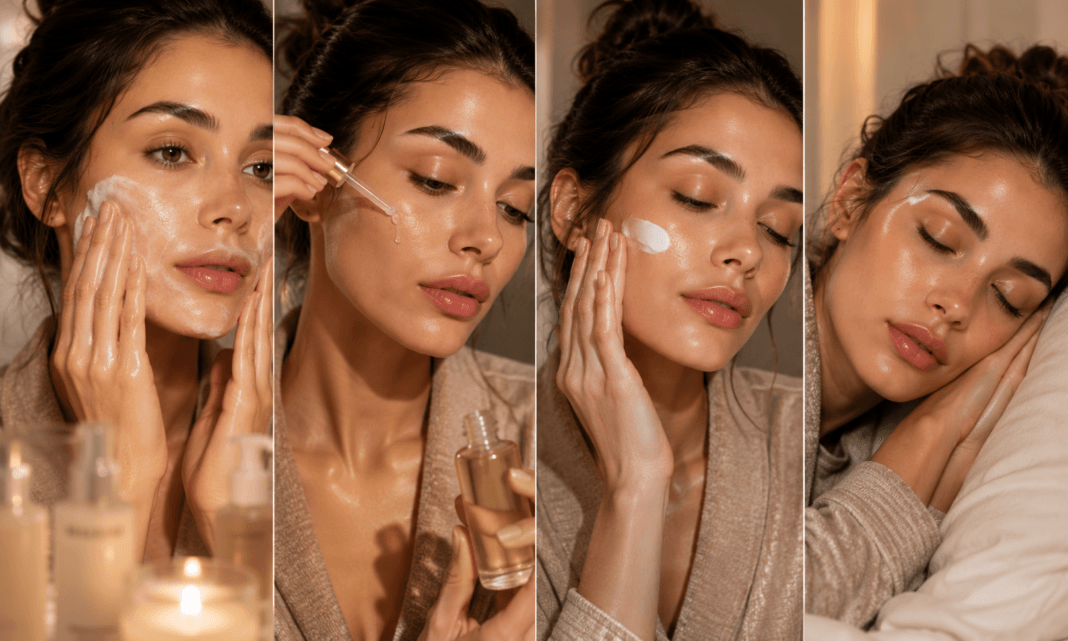

If your bathroom shelf is crowded with retinol, vitamin C, exfoliating acids, and three different serums — all used every single night — your skin may be reading that dedication as aggression rather than care. Skin cycling offers a different approach: a structured 4-night routine that alternates active ingredients with recovery nights, and it’s one of the few viral skincare trends that dermatologists genuinely stand behind.
This guide explains exactly what skin cycling is, the night-by-night framework, and how to know whether it’s the right approach for your skin.
Editor’s Note: The biggest mental shift with skin cycling isn’t the routine itself — it’s giving yourself permission to do less on two out of every four nights. If you’re used to feeling like a “good” skincare routine means more steps and more products, the recovery nights can initially feel like you’re not doing enough. In our experience, that feeling fades quickly once you notice your skin isn’t reacting the way it used to.
What Is Skin Cycling?
Skin cycling is a structured approach to skincare developed by board-certified dermatologist Dr. Whitney Bowe that involves rotating active ingredients on a set schedule to optimize benefits while minimizing irritation. Rather than layering powerful actives every night, skin cycling uses a four-night cycle: a treatment night, a retinoid night, and two recovery nights — then the cycle repeats.
The logic is straightforward: by giving skin strategic breaks between powerful actives, you allow it to repair, rebuild, and respond more effectively to treatment. It’s a therapeutic, time-based approach designed to give skin a break rather than piling on ingredients that may not pair well together.
Why Skin Cycling Has Lasting Power in 2026
Unlike many viral skincare trends that fade quickly, skin cycling has held up under scrutiny — largely because it isn’t selling a specific product, just a smarter structure for using products you may already own. People who try to layer seven actives nightly typically quit within a week; skin cycling offers an antidote to that burnout.
The trend connects to a broader 2026 shift toward Skin Barrier Repair and skin minimalism — fewer, better-chosen products used strategically rather than an ever-expanding routine. Many people adopting skin cycling discover that their skin was quietly compensating for chronic low-level irritation from over-layering actives, and that simplifying the schedule reveals improvements in texture and tone they hadn’t expected.
The 4-Night Skin Cycling Framework
Night 1: Exfoliation
Start with a chemical exfoliant — typically an AHA (alpha hydroxy acid) like glycolic or lactic acid, or a BHA (beta hydroxy acid) like salicylic acid for oilier skin types. This night removes dead skin cells and enhances how well subsequent products penetrate.
For sensitive or inflamed skin, gentler alternatives — antioxidants, exosomes, or peptide-based formulas — can replace aggressive acids on this night while still supporting the cycle’s overall goal.
Night 2: Retinoid
This is the night for retinol or a prescription retinoid. The routine: cleanser → moisturizer → a pea-sized amount of retinoid → moisturizer again. Applying moisturizer both before and after the retinoid (the “sandwich method”) helps buffer its intensity, particularly for those newer to retinoids.
Beginners should start with retinol rather than stronger prescription retinoids, gradually building tolerance before increasing strength or frequency.
Nights 3 and 4: Recovery
No exfoliants, no retinoids — just gentle cleansing followed by hydrating, barrier-supporting products. This is where ingredients like ceramides, hyaluronic acid, and peptides do their work, allowing the skin to repair after the more intensive nights 1 and 2.
After night 4, the cycle repeats: back to exfoliation on the next “night 1.”
How Long Until You See Results from Skin Cycling?
Most people notice improvements in texture and hydration within two to four weeks — roughly four or five full cycles. More significant changes, such as visibly reduced fine lines and improved overall skin tone, typically appear after eight to twelve weeks of consistent skin cycling.
This timeline matters because it sets realistic expectations — skin cycling is a structural change to how products are used, not a fast-acting treatment, and its benefits compound gradually.
Editor’s Note: A question we see often is whether skin cycling works for mature skin specifically. The recovery nights, when loaded with peptides, can genuinely support the look of skin aging — not just make the routine gentler. If you’re already using actives daily and considering skin cycling, the adjustment period may reveal more about your skin’s baseline tolerance than you expected.
Who Skin Cycling Is Best For
Best for: people starting out with active ingredients for the first time, anyone whose current routine causes redness, irritation, or a compromised Skin Barrier Repair need, those who’ve been layering multiple actives nightly without seeing proportional results, and people wanting a structured, easy-to-follow framework.
Less ideal for: those with active flares of conditions like rosacea or eczema without dermatologist guidance first, and anyone wanting an intensive, fast-results approach rather than a gradual, sustainable one.
If you currently use actives daily and your skin feels generally fine, skin cycling may still reveal whether your skin was quietly tolerating more irritation than ideal — many people are surprised by what the recovery nights reveal about their baseline.
Skin Cycling vs. Daily Active Use
| Approach | Structure | Best For | Risk Level |
|---|---|---|---|
| Skin Cycling | 4-night rotating cycle | Beginners, sensitive or reactive skin | Low |
| Daily Actives | Same actives every night | Tolerant, experienced skin | Medium-High |
| Skin Barrier Repair Focus | Pause actives, rebuild first | Compromised or irritated skin | Low |
Frequently Asked Questions About Skin Cycling
What is skin cycling?
Skin cycling is a four-night skincare routine developed by Dr. Whitney Bowe that rotates active ingredients — exfoliation, retinoid, then two recovery nights — to maximize results while minimizing irritation.
Can skin cycling help with a damaged skin barrier?
Yes. The recovery nights in skin cycling are specifically designed to support [[Skin Barrier Repair]], giving skin time to rebuild between more intensive treatment nights.
How long does it take to see results from skin cycling?
Most people notice improved texture and hydration within two to four weeks. More significant changes, like reduced fine lines, typically appear after eight to twelve weeks of consistent use.
Is skin cycling safe for sensitive skin or conditions like rosacea?
Modified versions can work, but introducing exfoliants or retinoids during an active flare isn’t advisable. A dermatologist can help identify safe actives and an appropriate pace for condition-prone skin.
Final Thoughts: Sometimes Less Really Is More
In a world where skincare routines have become increasingly complex, skin cycling offers a refreshing return to intelligent simplicity. The structure isn’t about doing less for its own sake — it’s about giving skin the recovery time it needs to actually benefit from the active ingredients you’re already using.
Save this guide, try one full 4-night cycle, and explore more skincare guides at egella.com