

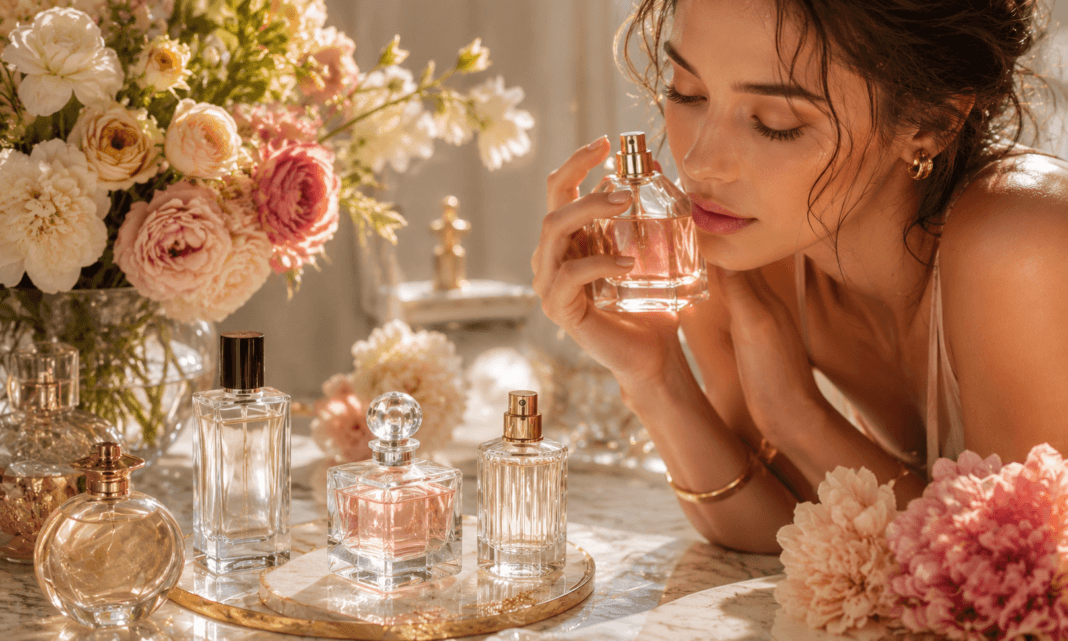
Have you ever walked into a room and caught a trace of perfume that you couldn’t quite place — something layered, complex, and unmistakably personal? That’s not a single bottle. That’s scent stacking, and it’s officially 2026’s biggest fragrance movement.
Instead of relying on one signature scent, fragrance lovers are building personalized combinations from body washes, lotions, oils, and perfumes — creating something that genuinely belongs to them. This guide explains what scent stacking is, why it’s taking over, and how to do it without ending up in a fragrance cloud that gives everyone a headache.
Editor’s Note: Our first attempt at scent stacking was, honestly, a mess — we tried combining a vanilla body lotion with a citrus perfume and a rose mist, and the result was overwhelming rather than interesting. What actually worked was starting with just two products instead of three or four. If you’re new to this, resist the urge to use everything in your collection at once.
What Is Scent Stacking?
Scent stacking — also called fragrance layering — is the practice of wearing more than one fragrance product at a time to create a combination that’s entirely your own. Rather than committing to a single signature perfume, fragrance lovers are blending oils, lotions, and perfumes to build something bespoke.
Importantly, scent stacking doesn’t have to mean layering multiple perfumes. It can start much earlier in your routine — with your body wash, followed by a scented lotion, body oil, or hair fragrance, before finishing with your perfume. Each layer builds on the next, helping the scent last longer and develop more complexity throughout the day. Instead of fading quickly, the fragrance evolves gradually.
This isn’t an entirely new idea. In Middle Eastern perfumery, layering oud, musk, rose, and amber has been standard practice for centuries — Arab perfume culture has long understood that scent applied in layers carries more complexity and soul than a single composition. What’s new is that the rest of the world is finally catching up to a technique niche fragrance lovers have used for years.
Why Scent Stacking Is Trending in 2026
According to Pinterest Predicts 2026, fragrance lovers — especially Gen Z and Millennials — are moving away from single fragrances and embracing layered combinations that feel bespoke. The shift reflects a broader move away from the idea that everyone needs only one fixed signature scent.
The emotional driver is simple: people are tired of smelling like everyone else. That moment of walking into a room and realizing several other people are wearing the exact same “signature scent” has become a genuine frustration for fragrance lovers — and scent stacking is the antidote. Instead of wearing what a brand decided should smell good, you become your own perfumer.
Moreover, fragrance is increasingly being treated like an accessory that shifts with mood, moment, or season — rather than a single fixed choice. Body mists have matured into part of a broader body-care ritual, and the idea of a “scent wardrobe” — a collection of layerable products rather than one bottle — is becoming the new normal.
How to Scent Stack — The Three-Layer Method
While experimentation is part of the fun, a structured approach helps avoid the “headache cloud” problem. One widely used framework breaks layering into three stages, based on how long each type of fragrance lasts on the skin:
1. The Base (Fixative Layer)
Apply your longest-lasting, heaviest products first — typically a scented body lotion or oil. This layer acts as a fixative, trapping perfume molecules and preventing them from evaporating too quickly, especially on dry skin. Rich, warm scents like vanilla, sandalwood, or musk work particularly well here.
2. The Heart (Intense Fragrances)
Next, apply your most resinous, woody, or spicy scents. Because these have a higher molecular weight, they provide the long-lasting dry-down and depth that stay with you for hours. This is often your main eau de parfum or the “anchor” scent of your stack.
3. The Crown (Volatile Top Notes)
Finish with your lightest scents — citrus, sheer florals, or fresh aquatic notes. These evaporate fastest, so applying them last means they’re the first impression people get, while the heavier base and heart notes develop underneath throughout the day.
Scent Stacking Combinations That Actually Work
Combining contrasting notes often creates the most interesting results — but “contrasting” doesn’t mean random. Here are combinations that tend to work well together:
- Warm + Fresh: A vanilla or amber base layer with a citrus or green top note creates depth without heaviness
- Floral + Woody: A rose or jasmine heart layered with sandalwood or cedar adds richness to a floral that might otherwise feel one-dimensional
- Gourmand + Aquatic: A sweet, dessert-like base (think caramel or coffee notes) paired with a clean, marine top note creates an unexpectedly balanced result
- Musk + Light Florals: A soft musk base grounds delicate florals like water lily or lotus, preventing them from fading too quickly
The key rule: think in profiles, not just individual notes. Consider whether each product reads as fresh versus warm, soft versus assertive, or transparent versus enveloping — and aim for combinations that complement rather than compete.
Editor’s Note: One detail that made a real difference for us: applying layers to pulse points specifically — wrists, neck, and behind the ears — rather than spraying everything all over. Body heat at these points activates layered fragrance most effectively, and it also means you can apply different layers to different points if you want even more control over how the combination develops throughout the day.
Common Scent Stacking Mistakes to Avoid
- Using too many products at once — three layers is usually the practical maximum; more often becomes overwhelming
- Combining very strong, assertive scents — two dominant fragrances competing for attention rarely works
- Ignoring scent families entirely — completely random combinations (vanilla + citrus + rose, for example) can create a “headache-inducing cloud” rather than something new
- Applying everything to the same spot — spreading layers across different pulse points allows each to develop more distinctly
- Not testing combinations before committing — what smells good in the bottle can shift significantly once layered on skin
Building Your Scent Stacking Wardrobe
Rather than thinking of your fragrance collection as a shelf of finished products, scent stacking reframes it as a palette — raw material to be mixed and composed. A practical starting wardrobe includes:
| Layer | Product Type | Role |
|---|---|---|
| Base | Scented body lotion or oil | Fixative, longevity |
| Heart | Eau de parfum (warm/woody) | Main character, depth |
| Crown | Light mist or citrus spray | First impression, freshness |
| Optional | Hair fragrance | Subtle movement-activated scent |
Frequently Asked Questions About Scent Stacking
What is scent stacking?
Scent stacking, or fragrance layering, is the practice of wearing more than one fragrance product at a time — combining body washes, lotions, oils, and perfumes — to create a personalized scent that’s uniquely yours rather than a single pre-made fragrance.
How many products should I layer when scent stacking?
Two to three layers is a practical starting point. Beginners often find that starting with just two products — a base layer like lotion and one perfume — produces the most balanced results before experimenting further.
Can scent stacking make my perfume last longer?
Yes. A scented lotion or oil applied as a base layer acts as a fixative, helping to trap perfume molecules and slow evaporation — particularly helpful for those with dry skin, where fragrance tends to fade faster.
Where should I apply layered fragrances?
Pulse points — wrists, neck, and behind the ears — are ideal, as body heat activates fragrance most effectively at these points. You can also apply different layers to different pulse points for more control over how the scent develops.
Final Thoughts: Your Fragrance Collection Is a Palette, Not a Shelf
Scent stacking represents a genuine shift in how people think about fragrance — from a single fixed choice to an evolving, personal practice. The goal isn’t to follow a formula exactly, but to develop a sense of what combinations feel like you.
Start small. Two products. One pulse point. See how it develops over a few hours. The most interesting scent you’ll ever wear might not come from a single bottle at all.
Save this guide, try a simple two-layer combination this week, and explore more lifestyle and beauty guides at egella.com